guide · 10 min read
Can you go in an onsen in Japan with a tattoo?
Some of Japan's baths take tattoos, some want them under a cover sticker, and most publish no rule at all. Here is the routine at the taps and in the tub, the baths that say yes, and the ones that say no.
By Adam BognarPublished
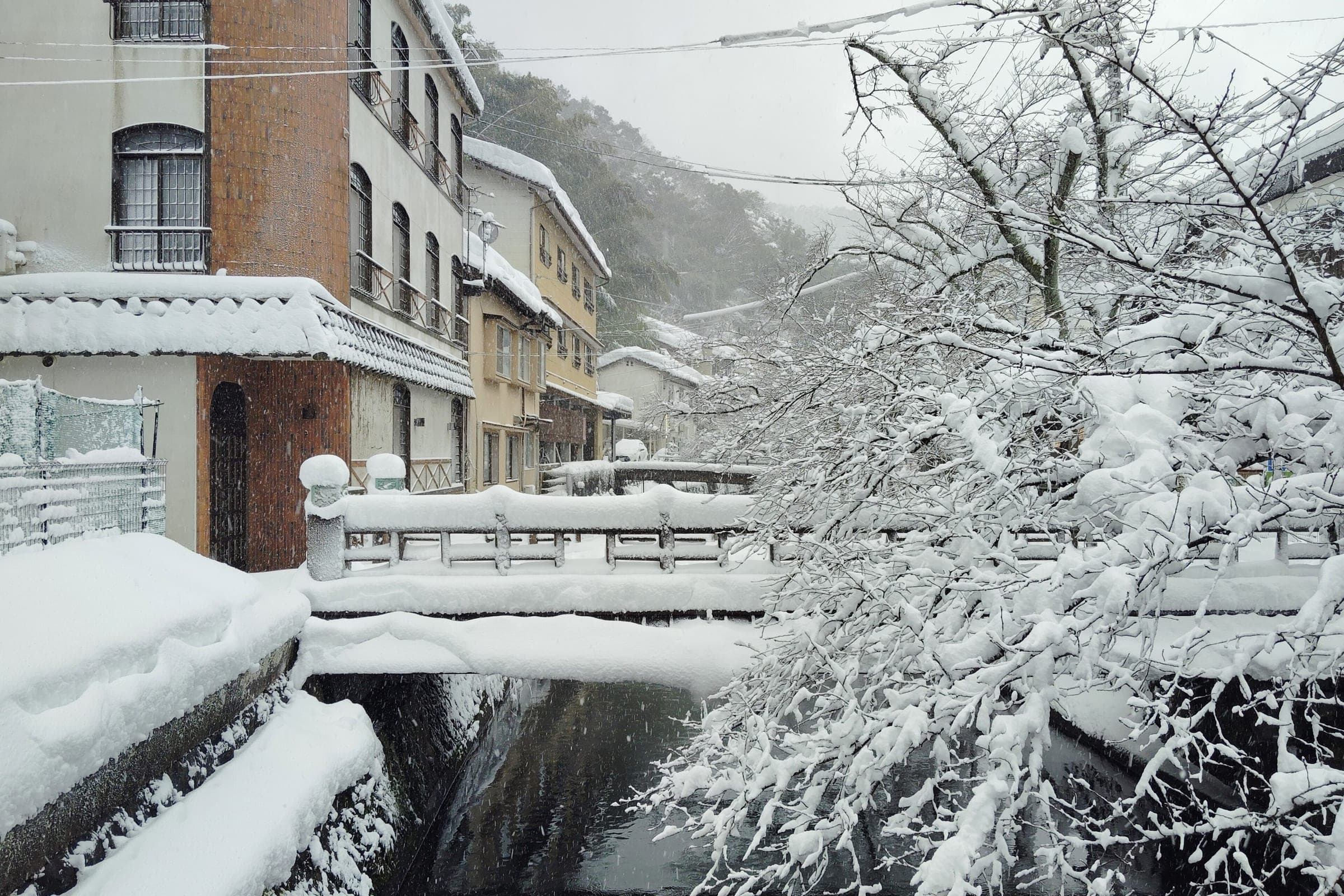
Yes, at the baths that say so. Kinosaki's public bathhouses take tattoos of any size without covers, and the day baths Kusatsu's tourism corporation runs say they don't refuse them either. Plenty of other baths want the ink hidden under a cover sticker or turn it away outright. Most publish no rule, so ask at the window before you pay. Wherever you go, wash at the taps before you get in and keep your towel out of the water.
We read the published tattoo rule of every bath and every onsen hotel on Riding Japan on 11 October 2026. Of 82 onsen pages, 13 carry a published rule; of 263 stays, 24 do. The rest publish nothing we could find. This guide covers Japan from Aomori to Kagoshima. For Hokkaido's baths, read Ride Hokkaido's onsen guide.
Which baths take tattoos?
These day baths publish that they take tattooed bathers, or take them under a cover. Prices are each bath's published adult fare.
| Bath | Where | Tattoo rule as published | Adult price | What to know |
|---|---|---|---|---|
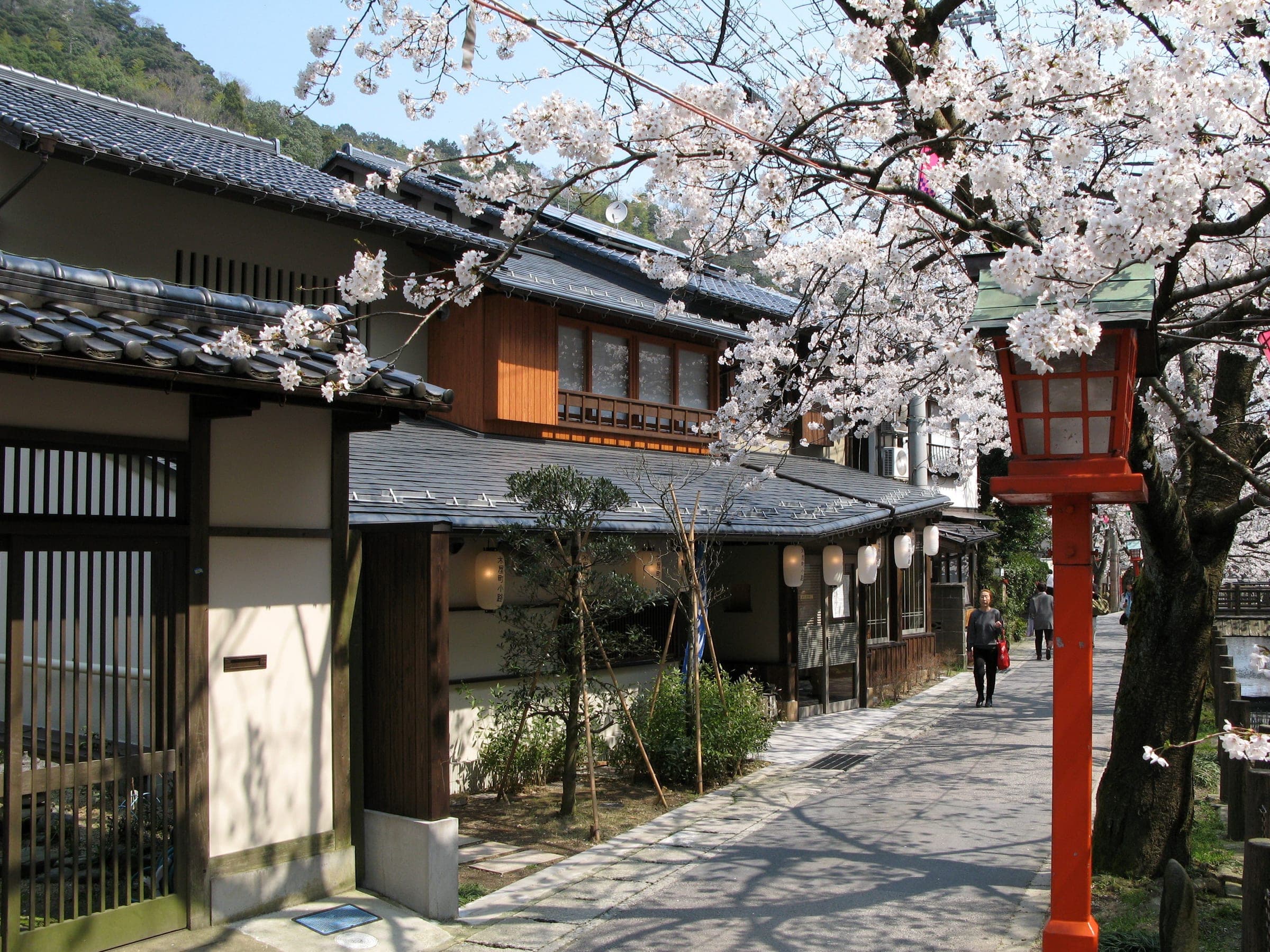
| Kinosaki Onsen public baths | Kinosaki, Hyogo | Visit Kinosaki says all seven public bathhouses take tattoos of any size without covers | ¥800 for one bath, ¥1,500 for the Yumepa day pass (2026) | Two of the seven are shut in October 2026, and baths inside the inns set their own rules |
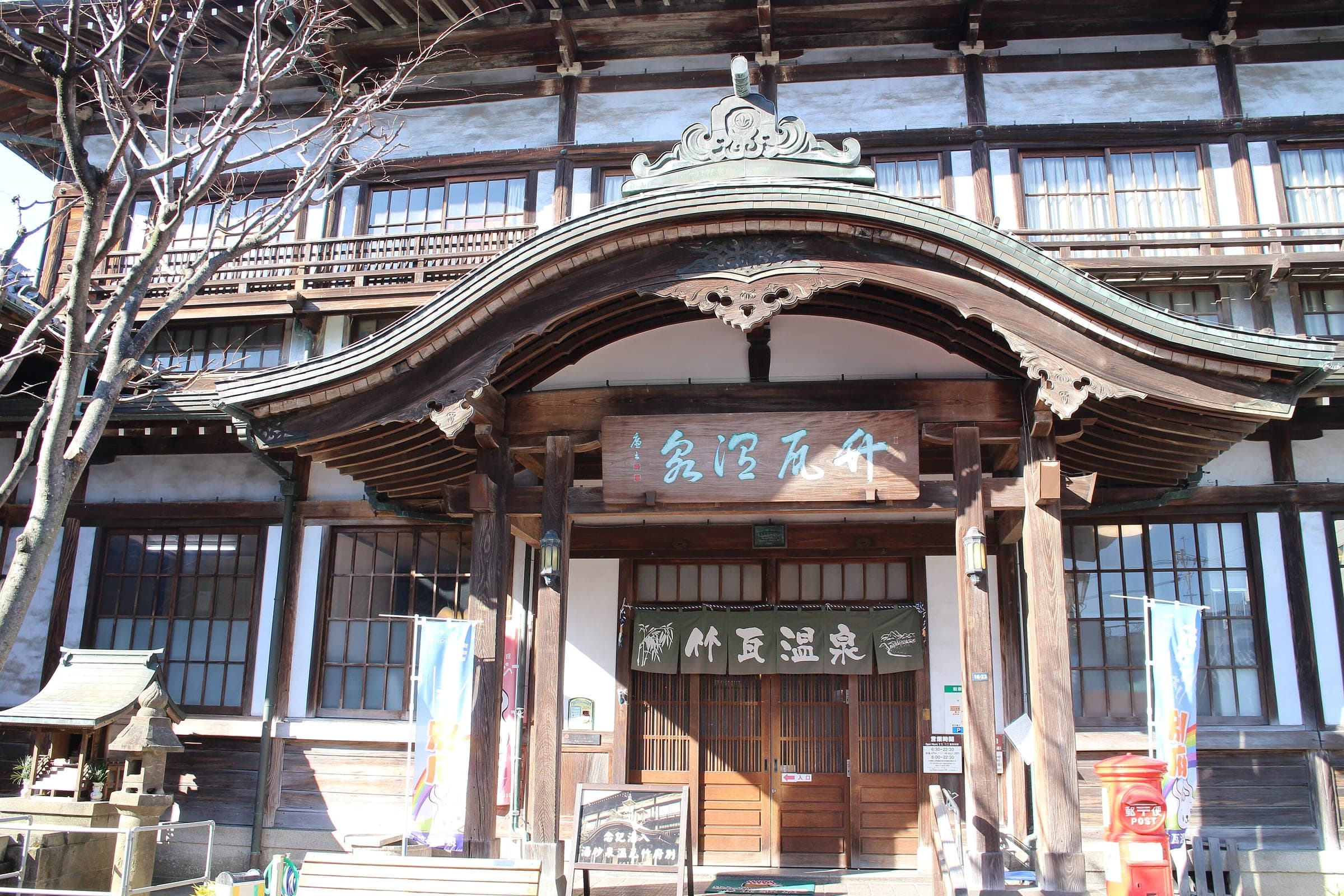
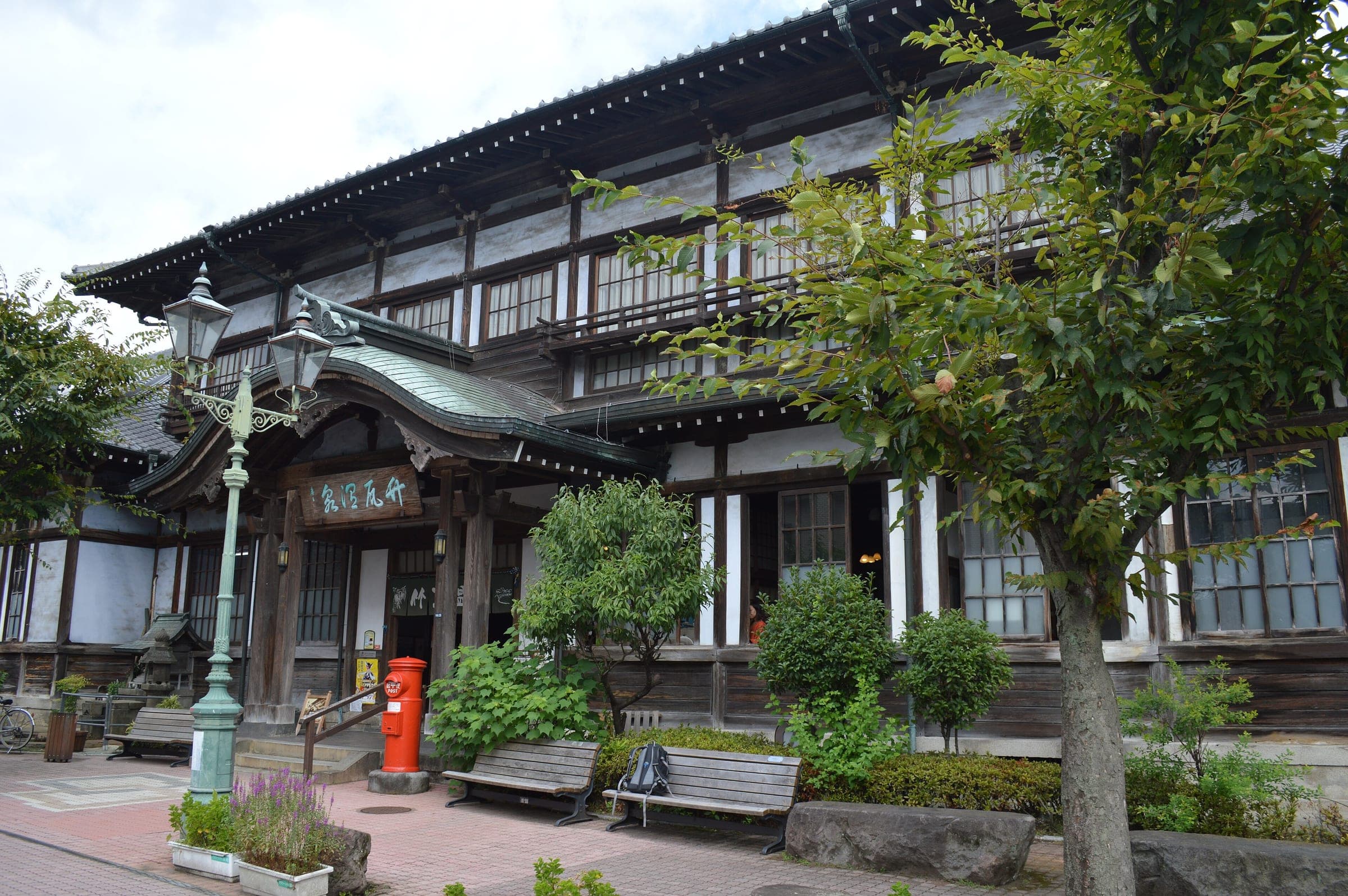
| Takegawara Onsen | Beppu, Oita | Beppu's official tourism site lists it as tattoo-friendly | ¥300 (city price, updated November 2025) | The sand bath costs ¥1,500 and often has a queue |
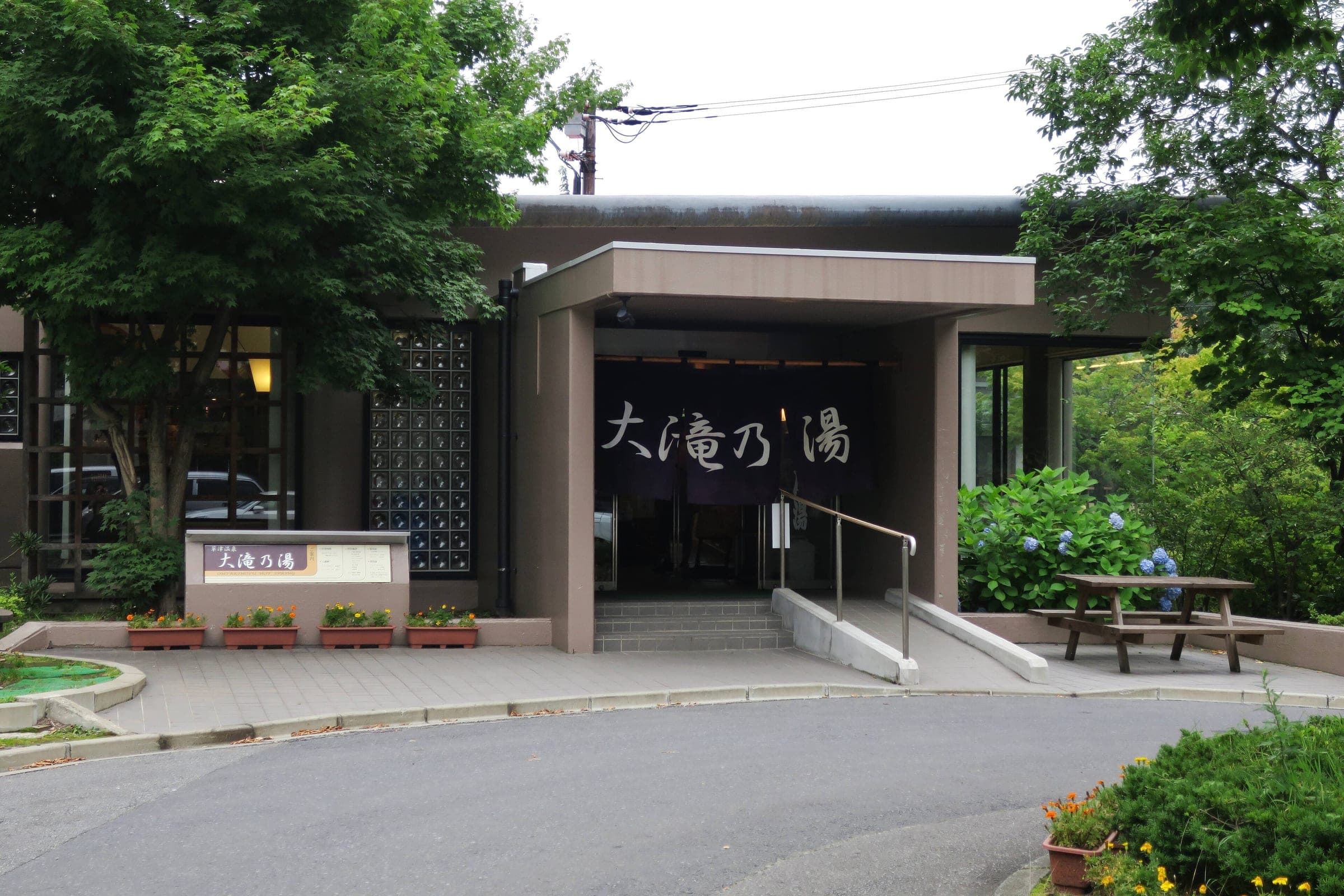
| Otaki-no-yu | Kusatsu, Gunma | The operator says it does not refuse tattooed guests | ¥1,200 (2026) | It costs the most of Kusatsu's three town baths |
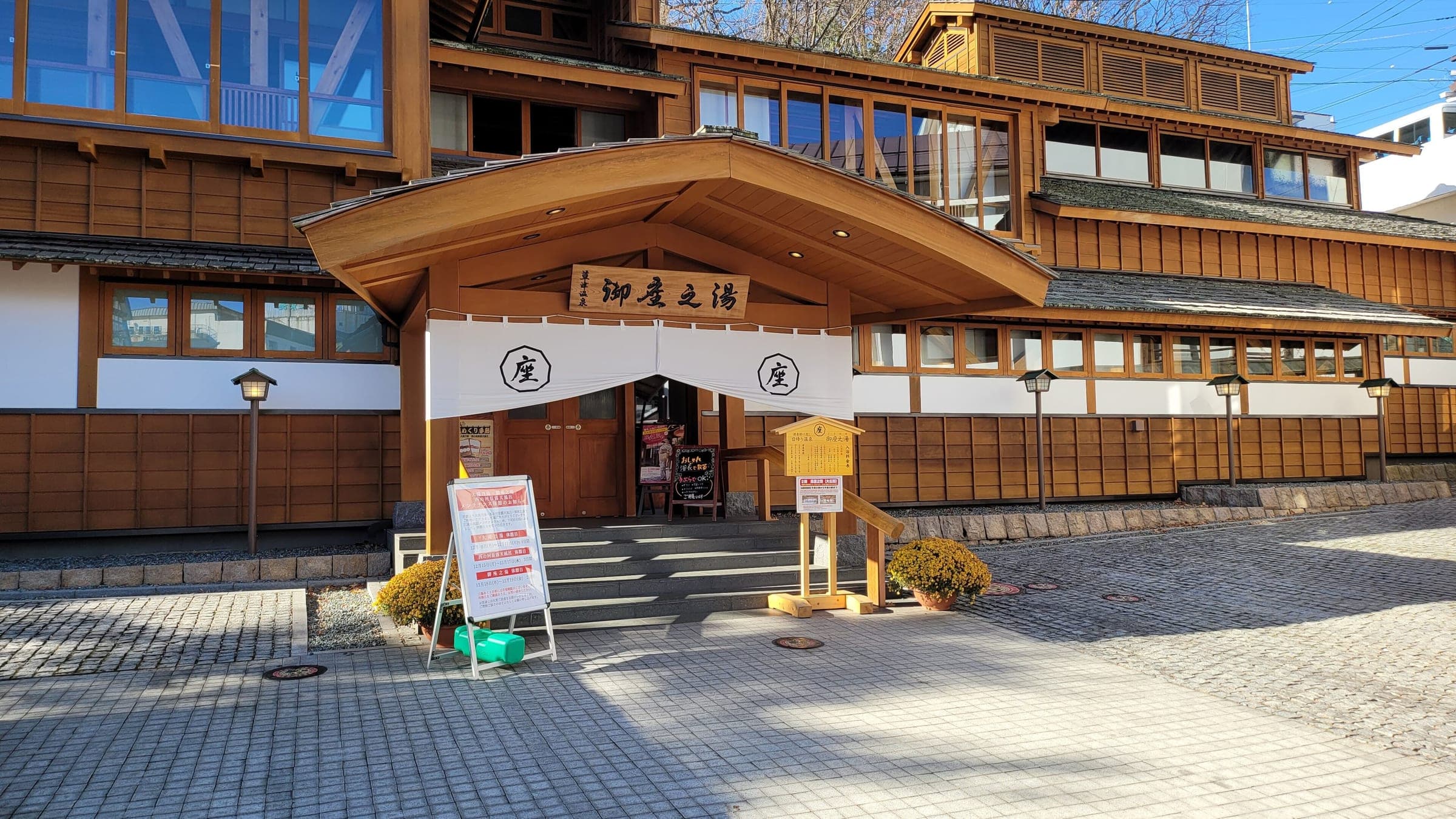
| Gozanoyu | Kusatsu, Gunma | Same operator, same rule | ¥900 (2026) | It has no outdoor pool |
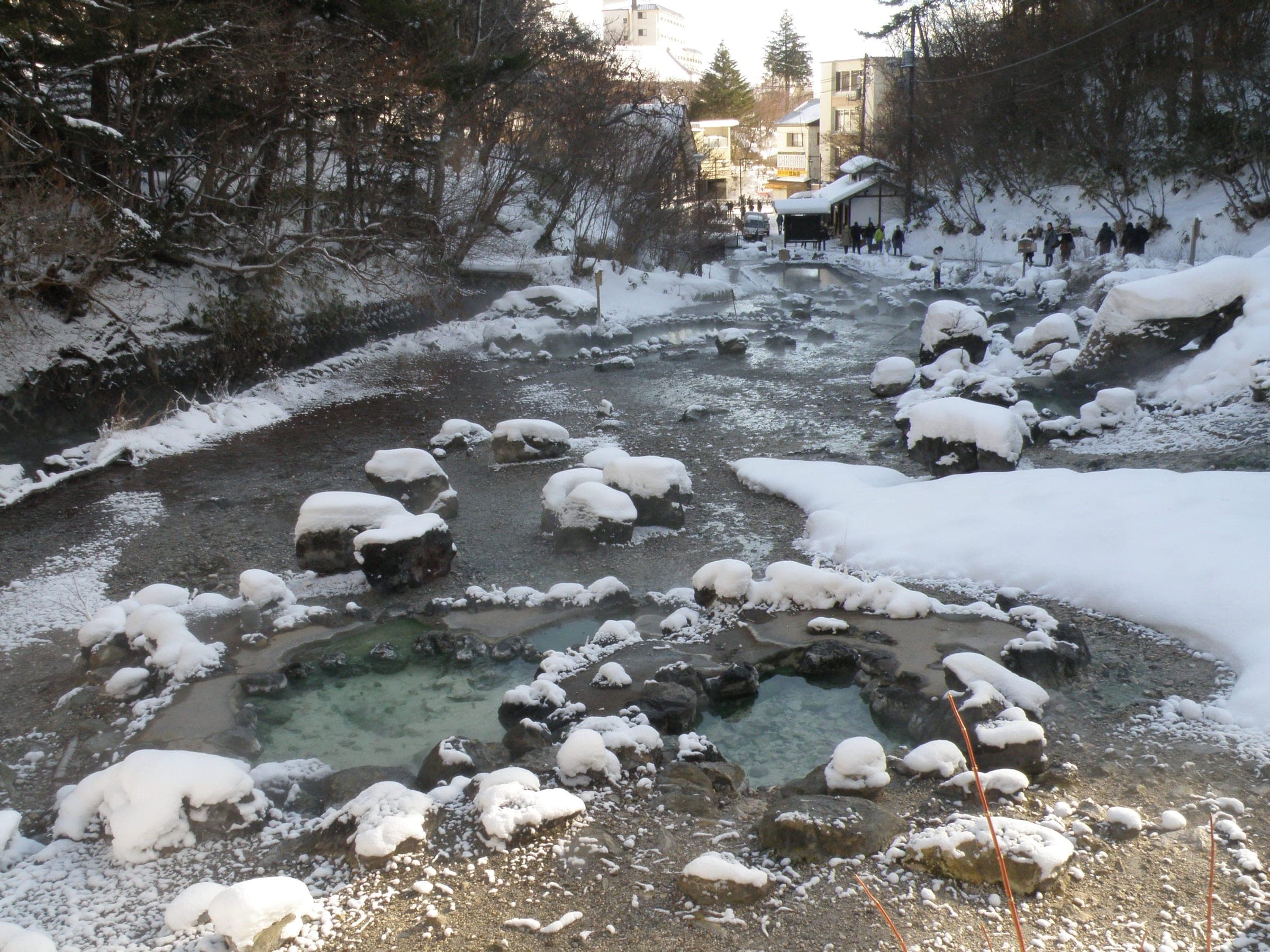
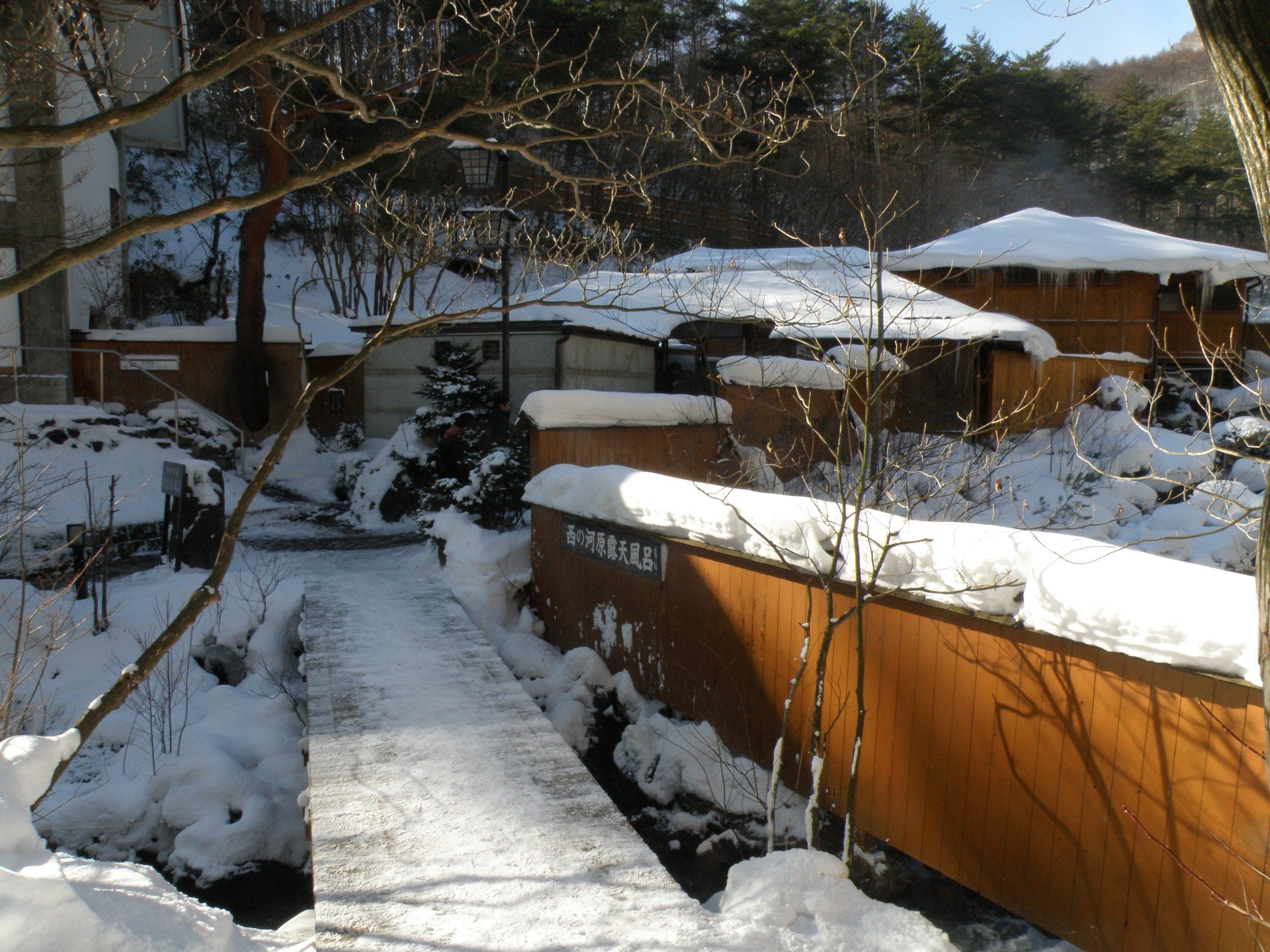
| Sai-no-kawara Rotenburo | Kusatsu, Gunma | Same operator, same rule | ¥800 (2026) | It has no taps, so wash at your inn first |
| Tenzan Tohji-kyo | Hakone, Kanagawa | Takes a tattooed bather who comes alone; two or more are asked to leave | ¥1,450, cash only (2026) | It takes no bookings and no groups over about six adults |
| Hakone Yuryo | Hakone, Kanagawa | Large baths only if the bath's own 10 by 14 cm cover sticker hides every tattoo; the private open-air rooms take tattoos | ¥1,700 to ¥2,200 (2026) | It costs about twice a public bath |
| Happo no Yu | Hakuba, Nagano | A 2018 sign text bans tattoos in the water unless a skin-coloured waterproof sticker covers them; the bath's 2026 pages say nothing | ¥1,000 (2026) | Ask at the counter, because the current rule is unpublished |
Kusatsu's operator puts it plainly on its FAQ: the three baths do not refuse tattoos, and it wants bathers from every background to enjoy Kusatsu as long as they keep the house manners. Tenzan explains its own rule as a matter of rest and cure. It accepts one tattooed person on their own, and its FAQ says it will ask anyone who causes trouble to leave.
Which onsen hotels and inns take tattoos?
Staying at an inn that takes tattoos solves the question for the whole trip. These stays on our pages publish a rule that lets you bathe.
| Stay | Town | Rule as published | What it means for you |
|---|---|---|---|
| KAI Okuhida | Hirayu Onsen, Gifu | Hoshino Resorts does not restrict tattoos | Staff may refuse the big bath if they judge other guests would be frightened |
| Risonare Atami | Atami, Shizuoka | Hoshino Resorts policy, with cover seals offered | Same proviso as every Hoshino hotel |
| Ryokan Asunaro | Takayama, Gifu | The FAQ says tattooed guests may use the large bath | Indoor baths only, with no rotenburo |
| K's House Ito Onsen | Ito, Shizuoka | The hostel calls itself tattoo friendly | Hostel rooms, at a hostel price |
| Fuji View Hotel | Kawaguchiko, Yamanashi | Two free cover seals of 10 by 15 cm, a trial rule since July 2017 | A tattoo bigger than two seals stays out |
| Ubuya | Kawaguchiko, Yamanashi | Two cover seals of 10 by 10 cm from the front desk | Same limit, slightly smaller seals |
| ANA Crowne Plaza Resort Appi Kogen | Appi, Iwate | Shirakaba no Yu sells 8 by 10 cm seals for ¥200 | Anything the seals can't hide goes to MAKIBA, a paid private bath you book ahead |
| Kusatsu Onsen Hotel Village | Kusatsu, Gunma | Small tattoos a sticker covers completely | Stickers sell at reception |
| Naraya | Kusatsu, Gunma | Paid private baths; a small tattoo fully under a sticker may use the large baths | Book the private bath when you book the room |
| Fujiya Hotel | Hakone, Kanagawa | Tattooed guests stay out of the spa baths and the pool | Every room's bath runs on Miyanoshita onsen water |
| Hida Hotel Plaza | Takayama, Gifu | Refused at the large baths | Some designer rooms have a private onsen tub |
| Kounkaku | Akakura Onsen, Niigata | One group rents the whole house and its bath | You cook your own meals |
Hoshino Resorts publishes its rule on one page for all its hotels. It respects guests' cultural backgrounds and does not restrict tattoos, and it keeps the right to refuse the big bath when staff think another guest could be frightened.
Which baths turn tattoos away?
These places publish a refusal, so plan your soak somewhere else. Suimeikan in Gero refuses tattoos at every bath and rejects stickers and body paint too. Minakami Hotel Juraku refuses any tattoo, temporary sticker tattoos included. In Kusatsu, Hotel Sakurai and Hotel Ichii keep tattoos out of their baths, which makes the town's three day baths the place to go.
The list goes on with NASPA New Otani in Yuzawa, Zao Kokusai Hotel, Zao Shiki no Hotel and Oomiya Ryokan at Zao Onsen, Matsukawa-so at Hachimantai and Imabari Kokusai Hotel. NASPA's paid private baths are the alternative to ask about. Dormy Inn Mishima and Dormy Inn Express Fujisan Gotemba turn tattoos away on their bath pages, though the chain's FAQ says some hotels lend cover seals for small ones.
Among day baths, Benifuji no Yu on Lake Yamanaka refuses any tattoo, fake tattoos and stickers included, and it is shut for renovation until March 2027 anyway. Ishiwari no Yu and Fuji-chobo no Yu Yurari near the Fuji lakes refuse tattoos, and so do Kitaomi no Yu and Makino Kogen Onsen Sarasa on Lake Biwa.
How do you bathe at an onsen?
Shoes come off at the door and go in a locker or on a shelf. Tickets come from a machine or a window, and the changing rooms split by the curtain: 男 for men and 女 for women. Everything comes off in the changing room, and a small towel is the only thing you carry into the bathing area.
Sit on a stool at the taps and wash properly, hair included, then rinse off every trace of soap. Japan's Ministry of the Environment suggests pouring water over yourself from the feet and hands inwards before you get in, so your body gets used to the heat. Kusatsu's Otaki-no-yu builds that idea into the building: its linked tubs cool as the water runs from one to the next, and you start in the coolest. At Nozawa Onsen's soto-yu, which run at 45–49°C by the resort's guide, ask the bathers already in before you run the cold tap, and turn it off once the tub is bearable.
Keep your towel out of the water. The ministry's onsen leaflet says so, and so does nearly every bath's posted rules. Fold it on your head or leave it on the edge. Keep your head above the surface and your voice low. Phones and cameras stay in the locker: Happo no Yu's sign text bans photos anywhere in the bathing area, and Hoshi Onsen and Sukayu keep cameras out of the bathhouse.
Dry off with your small towel before you walk back into the changing room. The ministry suggests leaving the onsen water on your skin rather than showering it off, with one exception. Rinse after acidic water such as Kusatsu's, where Sai-no-kawara runs at pH 1.7, or whenever your skin is sensitive.
What should you bring to an onsen?
Bring a small towel and cash. Town-run and village baths often supply nothing: the Nozawa Onsen soto-yu are free and ask you to bring your own towel and soap, and the locals' baths around the Kusatsu Yubatake have no locking lockers, so leave valuables at the inn. Bigger day baths sell towels at the desk; Hakone Yuryo sells a bath towel for ¥550 and rents none. Cash matters at the small places. Tenzan takes cash only, and Sukayu's ticket machine takes nothing else. Our money guide covers where cards stop working.
Take off rings and watches before acidic or sulphur water. Toshichi Onsen above Hachimantai warns that its acid changes the colour of jewellery.
How do cover stickers and private baths work?
A cover sticker is a skin-coloured waterproof patch that hides a small tattoo, so a sleeve or a back piece won't fit under one. The bath decides whether it counts, and the published sizes run from 8 by 10 cm at Appi's Shirakaba no Yu to 10 by 15 cm at Fuji View Hotel, which allows two. Buy them at the bath when it sells its own, since Hakone Yuryo accepts only the sticker it sells.
A private bath (kashikiri-buro) is the way round any rule. Naraya in Kusatsu and Appi's MAKIBA rent them out, and Gozanoyu charges ¥2,000 an hour for a private 12-mat room upstairs. At Fujiya Hotel every room's own bath runs on onsen water. When a bath publishes nothing, ask at the window before you pay. Our phrase guide gives you the line in Japanese:
タトゥーがあるんですが、入浴できますか? Tatū ga aru n desu ga, nyūyoku dekimasu ka? I have a tattoo. Can I bathe here?
If the answer is no, thank them and go to the next bath on your list.
What happens at a mixed bath?
Mixed bathing (kon'yoku) survives at a handful of old mountain inns, and each one sets its own rule on what you wear. Takaragawa Onsen above Minakami hands everyone its own bathing wear for the three mixed river pools and keeps the lowest pool for women. At Sukayu in Aomori you may wear a yuami-gi bathing wrap, but only one Sukayu rents for ¥500 or sells for ¥1,300. Hoshi Onsen in Gunma bans bathing wear and towel wraps in its mixed bath, and keeps 20:00 to 22:00 for women.
In any mixed pool, keep your eyes to yourself and give people room to get in and out. Sai-no-kawara opens a mixed session on Friday evenings, and men must wear the bathing wear it lends for free.
How soon after a ride or a ski day can you get in?
Wait half an hour. The Ministry of the Environment's onsen leaflet tells bathers to avoid the water when they are worn out or within 30 minutes after exercise. It also says to drink water before and after, and to skip the bath straight after a meal or a drink. The ministry advises older bathers and anyone with high blood pressure or a heart condition to stay out of water at 42°C or hotter and to start with 3 to 10 minutes at a time.
Quick answers
Can you use public baths in Japan with a tattoo?
Some public baths in Japan take tattoos, and most publish no rule. Kinosaki's public bathhouses and Kusatsu's town-run day baths publish that they accept tattooed bathers, so ask at the window anywhere else.
Do tattoo cover stickers work at Japanese onsen?
Cover stickers work only where the bath says so, and only for small tattoos. Fuji View Hotel allows two free 10 by 15 cm seals, Ubuya two 10 by 10 cm seals, and Appi's Shirakaba no Yu sells 8 by 10 cm seals for ¥200. Suimeikan in Gero and Minakami Hotel Juraku refuse covered tattoos too.
Do Hoshino Resorts hotels allow tattoos in the bath?
Yes. Hoshino Resorts does not restrict guests with tattoos, and its staff may still refuse the big bath when they judge other guests would be frightened.
Do you wear a swimsuit in an onsen?
No. At most onsen you bathe naked and keep a small towel out of the water. A few mixed baths hand out their own bathing wear, such as Takaragawa Onsen in Gunma, and Sukayu lets you rent a yuami-gi wrap for ¥500.
How long should you wait after exercise before an onsen?
Wait at least 30 minutes after exercise before an onsen. The Ministry of the Environment's onsen leaflet gives that figure and tells bathers to drink water before and after.
Where can I read about onsen rules in Hokkaido?
Ride Hokkaido covers Hokkaido's onsen and their tattoo rules in its own onsen etiquette guide at ridehokkaido.com.
We write from operators’ and agencies’ own pages, open map data and published research, and we date every fact we check. How we research.
Sources (21)
- https://www.env.go.jp/nature/onsen/pdf/top_en.pdf
- https://visitkinosaki.com/faqs-visitor-info/guides/tattoos-in-kinosaki-onsen/
- https://beppu-tourism.com/onsen/takegawara-onsen/
- https://onsen-kusatsu.com/sainokawara/faq/
- https://www.tenzan.jp/qa/
- https://www.hakoneyuryo.jp/qa/
- https://www.mlit.go.jp/tagengo-db/H30-00618.html
- https://hoshinoresorts.com/ja/sp/tattoo/
- https://yado-asunaro.com/faq/
- https://kshouse.jp/ito-e/faq.html
- https://www.fujiview.jp/news/information04.html
- https://www.ubuya.co.jp/qa/
- https://www.appi.co.jp/experience/onsen/shirakaba-no-yu/
- https://www.hotelvillage.co.jp/en/
- https://www.kusatsu-naraya.co.jp/faq/index.html
- https://fujiyahotel.net/spa/
- https://www.hida-hotelplaza.co.jp/faq/
- https://www.suimeikan.co.jp/hotspring/
- https://www.hotel-juraku.co.jp/minakami/faq/
- https://www.benifuji.co.jp/faq/
- https://ridehokkaido.com/guides/onsen-etiquette
Places in this piece関連

Read next案内
guide · 8 min read
Which Japanese phrases help on a ski or cycling trip in Japan?
Two words carry most of a trip, and about forty more get you a lift pass, a new inner tube, a seat for a bagged bike and help when something goes wrong. Each line comes with its kana and a romaji reading you can say out loud.
guide · 11 min read
How do you stay safe on a cycling trip in Japan?
Heat sends far more people to hospital than anything with teeth, so the heatstroke alert is the first thing to read on a summer morning. After that come hornets and bears on forest roads, dark tunnels, typhoons from August, and what to do when the ground shakes near the sea.
guide · 8 min read
Do you still need cash in Japan?
Cards and a tap-to-pay travel card cover most of a trip to Japan, and plenty of village baths, soba counters, temple gates and bike-hire desks still want yen. This guide sets out what to carry and how tax-free shopping changes on 1 November 2026.