guide · 11 min read
How do you stay safe on a cycling trip in Japan?
Heat sends far more people to hospital than anything with teeth, so the heatstroke alert is the first thing to read on a summer morning. After that come hornets and bears on forest roads, dark tunnels, typhoons from August, and what to do when the ground shakes near the sea.
By Adam BognarPublished
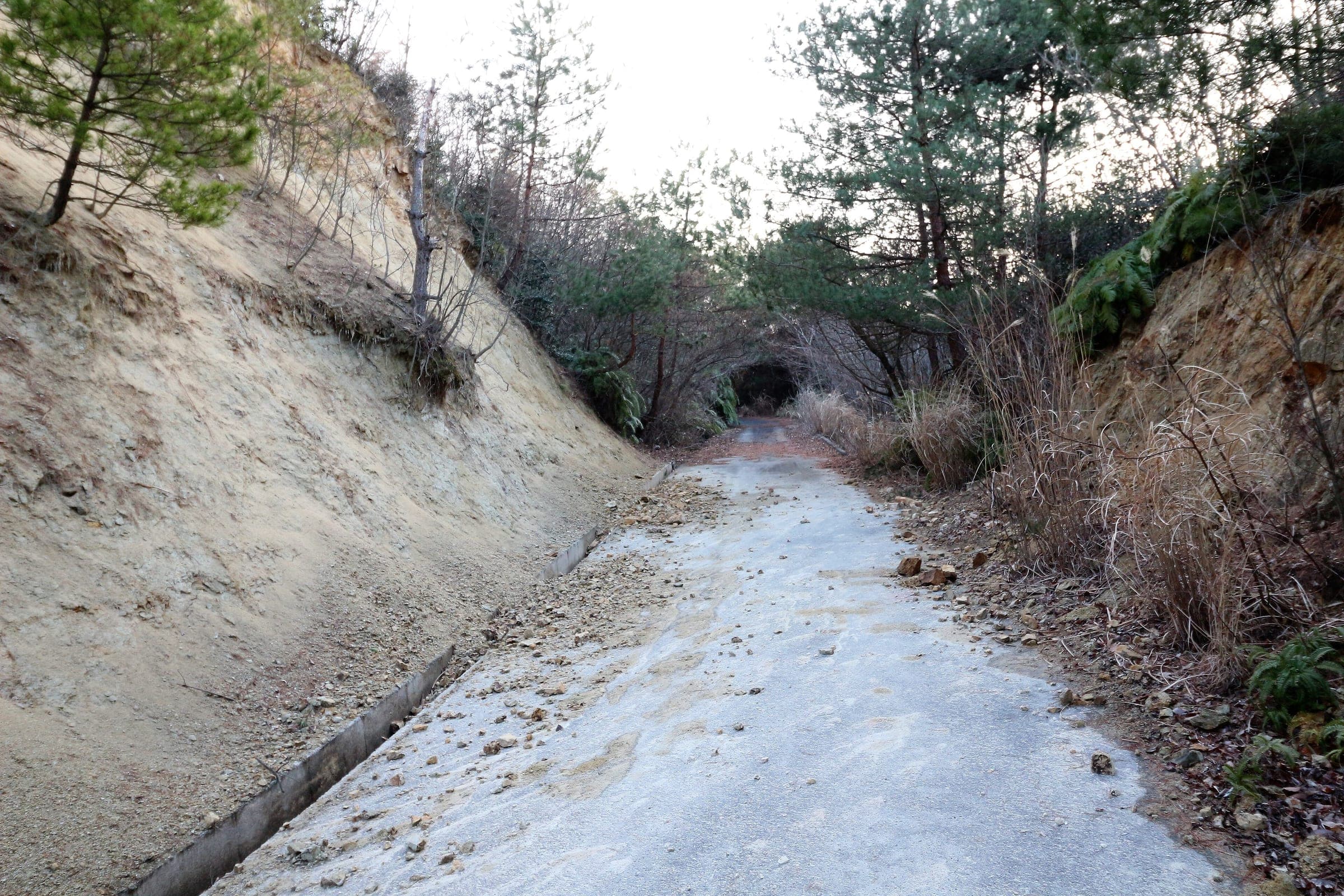
Check the heat first. From May to September, Japan's heat sends far more people to hospital than any animal on the roadside, and the Ministry of the Environment publishes a heatstroke alert for every prefecture each day. On forest roads, give hornet nests and long grass a wide berth, and carry a bell where bears live. Turn your lights on in every tunnel. Typhoons come mostly in August and September, and if the ground shakes hard near the coast, ride uphill without waiting for the warning.
This guide covers Honshu, Shikoku and Kyushu. We built it from the official pages of the Ministry of the Environment, the Fire and Disaster Management Agency, the Forestry Agency, the Japan Meteorological Agency (JMA), the Japan Tourism Agency and the National Police Agency, read on 11 October 2026, and from the alerts on Riding Japan's own route and town pages. Ride Okinawa's road guide covers habu and the island's typhoons, and our cycling rules guide covers the fines.
| Hazard | When | Where riders meet it | What to check | What to do |
|---|---|---|---|---|
| Heat | May to September, by the ambulance figures | Everywhere, worst on low roads and lake loops | The Ministry of the Environment's heatstroke alert map | Ride at dawn, stop often, drink and take salt |
| Hornets | Summer, when the nests are big | Road banks and bushes on forest roads | Nothing published per road | Back away slowly from any hornet buzzing round you |
| Mamushi | Spring to autumn; they hibernate from November to March | Long grass, stone walls, paddy edges and streams | Nothing published per road | Stay on the tarmac, and call 119 if bitten |
| Bears | Spring and autumn above all | Forests in Tohoku and the Alps | Prefecture sighting maps and our alerts | Carry a bell, and leave quietly if you see one |
| Tunnels | All year | Mountain passes and rocky coasts | Your own lights | Lights on front and back before you enter |
| Typhoons | July to October, peaking in September | Every region, hardest on the Pacific side | JMA's typhoon map | Stay off the bike and plan around train cuts |
| Earthquake and tsunami | Any time | Coast roads | The Safety tips app | Head for high ground at once after strong or long shaking |
How dangerous is the summer heat for cyclists in Japan?
Very dangerous on the hottest days. The Fire and Disaster Management Agency counted 100,510 people taken to hospital by ambulance with heatstroke between May and September 2025, the most since its survey began in 2008. About 20% of them were on roads when it struck. The agency notes that summer 2025 was Japan's hottest on record and that heat alerts went out more often than ever before.
The Ministry of the Environment issues its heatstroke alert (熱中症警戒アラート) for a forecast area when the day's maximum heat index there is forecast to reach 33. The index is WBGT, which folds temperature, humidity and sunshine into one number. A special alert (熱中症特別警戒アラート) goes out when every observation point in a prefecture is forecast to reach 35, and towns then open their designated cooling shelters. The alert map updates at 05:00 for the day and at 14:00 and 17:00 for the next day.
On an alert day the ministry tells people to stop exercising anywhere that isn't cool. For a rider that means starting at first light and finishing before the worst of it, with water and salt at every stop. Shiga Prefecture warns that long hours in strong sun on a summer lap of Biwaichi carry a high risk of heatstroke. Convenience stores make good rest stops, with cold drinks and air conditioning.
Watch your riding partners as well as yourself. The ministry's first-aid chart lists the signs, among them dizziness or fainting, cramp, heavy sweating, a headache, nausea and a high temperature. If the rider doesn't answer when you speak to them, call 119 and don't force water on them. If they answer, get them into the shade, loosen their clothes and cool them down, with ice at the neck, armpits and groin if you have it. A rider who can't drink by themselves needs a doctor, and one who can should take water and salt and rest until they recover. Our phrase guide has the line for "I think it's heatstroke".
What should you do about hornets on forest roads?
Keep away from the nest and back off slowly when a hornet starts circling you. The Forestry Agency counts 18 people in Japan who died from bee and wasp stings in 2024, and names hornets (suzumebachi) and paper wasps as the dangerous ones. It flags summer as the time to watch, and the nests stay busy on into the autumn.
The agency describes how hornets warn before they attack. Guards at the nest first watch whatever comes near, then fly at it and buzz loudly around it. Ignore that, or shake the nest, and many come out at once and sting. If a hornet starts buzzing round your head, don't swat at it. Move slowly back the way you came.
The agency lists the signs that need help at once: struggling to breathe, trouble swallowing, a hoarse voice, weakness all over and feeling faint. Call 119 straight away. If you carry an adrenaline auto-injector at home, bring it.
Are there venomous snakes on Japan's roads?
Yes. The mamushi is a pit viper that lives across Honshu, Shikoku, Kyushu and Hokkaido. It keeps to forest and scrub from the lowlands to the mountains, often near water, and turns up at the edges of hill paddies and small streams. It hibernates from November to March. In Kyushu it moves about by day in spring and October and mostly at night from June to September.
Bites mostly happen to hands and feet, often to people weeding or picking mountain vegetables, and to feet in sandals. On a ride that means staying on the tarmac and looking before you reach into long grass or sit on a stone wall. If you're bitten, call 119, keep as still as you can and don't cut the bite or try to suck it out. Hospitals give mamushi antivenom, and treatment within six hours is the standard advice. Ride Okinawa covers the habu on its own islands.
How do you ride safely where bears live?
Make noise as you ride, and leave quietly if you see one. Asian black bears live in the forests of Honshu, and injuries from bears rose sharply in the 2025 fiscal year. The Ministry of the Environment's provisional figures, updated on 2 October 2026, count 238 people injured and 13 killed by bears across Japan in the year from April 2025 to March 2026. Between April and August 2026, 62 people were injured and 6 died. Most of those injuries happened in Tohoku, where Akita counted 67 people hurt and Iwate 40. The ministry's table records no bear injuries in Shikoku, and it leaves Kyushu out because there have been no recent sightings or captures there.
The ministry's leaflet for people heading into the mountains gives this advice:
- Carry a bell or a radio, and call out or clap where you can't see far ahead or can't hear over a stream.
- Keep away from places with recent sightings, which prefectures and visitor centres post online.
- Take extra care in spring and autumn, when accidents happen most.
- If a bear hasn't noticed you, leave quietly. If it's about 50 m away, wave your arms so it knows you're there, and back away slowly without taking your eyes off it. Closer than that, don't run or shout; back away slowly and try to put a tree or a rock between you.
- A cub means its mother is close, and she'll defend it.
Our alert for Tohoku tells riders to use forest roads in daylight and keep to busier roads at dawn and dusk. Iwate has had a bear warning in force since 22 April 2026, and Aomori's runs to 30 November 2026. Akita added an advisory for October. You'll see the alert on our pages for Hachimantai, Hakkoda and Lake Tazawa. Our pages for the Norikura climb, the Shibu Pass and the Japan Alps Cycling Road in Nagano, and for Gassan in Yamagata, all carry bear notes. At the Tour de Utsukushigahara in 2026, organisers ran safety checks before the start after bears were seen near the course. The information centres at Tsumago report bears coming down near the villages too.
What do you need for tunnels in Japan?
Switch on your front and rear lights before you go in. Japanese law requires vehicles to show lights at night, and in tunnels and other dark places where visibility on an ordinary road drops to 50 m or less, under the Road Traffic Act and Article 19 of its enforcement order. A bicycle counts as a vehicle. Since 1 April 2026 a rider aged 16 or over can get a ¥5,000 blue-ticket fine for riding without a light at night, by the National Police Agency's rulebook.
Many tunnels have a raised footway along one side. A footway is a pavement, and you ride on it only where a sign allows bicycles; otherwise stay in the lane, as far left as is safe, or walk the bike on the footway. MLIT's National Cycle Route guide uses a narrow Route 127 tunnel in Kyonan on the Pacific Cycling Road as its example of signs warning drivers about cyclists inside. On the Noto peninsula, Hosaka Tunnel on the Ishikawa Satoyama Satoumi route reopened on 18 September 2026, and Ishikawa warns of sharp curves and steep grades through the works section. Read the prefecture's current road map before you plan a Noto ride.
When are typhoons, and what do you do when one is coming?
Typhoons come mostly from July to October. By JMA's 1991–2020 averages, 25.1 typhoons form each year and 11.7 of them come within 300 km of a Japanese weather station. An average of 3.0 a year make landfall on Honshu, Hokkaido, Kyushu or Shikoku. Approaches to the main islands peak in September (1.9 a year) and August (1.6), with 1.0 in July and 0.9 in October.
When one is forecast, plan a day off the bike and check your trains, because rail lines and roads can stay cut for weeks afterwards. Typhoon No. 25 damaged the JR Uchibo line on the Boso peninsula in late September 2026, and landslides closed Route 127 between Hama-Kanaya and Hota. Our pages for Nokogiriyama and the Pacific Cycling Road carry the current detour. Rental desks shut too: Kamochari+ in Kamogawa lends no bikes during typhoon warnings. Follow the storm on JMA's typhoon map. JMA's warnings step up to emergency warnings for the rarest storms, and the Japan Tourism Agency's Safety tips app pushes them to your phone.
What should a visitor do in an earthquake or a tsunami warning?
Install the Safety tips app before you go, and on the coast, head for high ground the moment strong or long shaking stops. The Japan Tourism Agency's Safety tips app pushes alerts for earthquakes and tsunami, along with JMA's weather warnings, in English and 14 other languages, with an evacuation flowchart and phrases for asking people around you.
An earthquake early warning sounds on phones and TV seconds before strong shaking arrives. The agency's advice is to stay calm and protect yourself first, even if you can't feel anything yet. On a bike, stop and get off, away from anything that could fall on you. JMA issues a tsunami warning about three minutes after a quake when it expects damage. The agency tells people on the coast to start for higher ground as soon as they feel strong shaking, or weak shaking that goes on a long time, without judging the risk for themselves. Stay there until the warning is lifted, because tsunami strike again and again over a long period.
On coast routes such as the Pacific Cycling Road and the Toyama Bay Cycling Route, look out for signs marking tsunami evacuation areas (津波避難場所, tsunami hinan basho), and note the nearest one when you stop for lunch. Local councils name schools and community centres as evacuation shelters, and some hotels and inns take evacuated people too, so ask yours.
Which volcano alerts affect riders right now?
These alerts on our pages touch riders in October 2026. JMA keeps Mt. Aso at level 2, which closes the ground around Nakadake's first crater and the roads up to it, and the Aso caldera rim roads sit well outside that zone. Kusatsu-Shirane sits at level 1 with Yugama's crater area closed, which matters for the Shibu Pass road and the upper slopes at Kusatsu Onsen. The Zao Echo Line past Okama closes at night from 13 October and for the winter from 4 November. Each page carries the alert with JMA's link, and the level can change within a day.
Who do you call in an emergency in Japan?
Call 119 for an ambulance or a fire, and 110 for the police. JNTO's Japan Visitor Hotline on 050-3816-2787 answers in English, Chinese and Korean 24 hours a day, every day of the year, and helps with accidents, illness and natural disasters.
Quick answers
What is a heatstroke alert in Japan?
A heatstroke alert in Japan is the Ministry of the Environment's warning that the heat index (WBGT) in an area is forecast to reach 33. A special alert follows when every point in a prefecture is forecast to reach 35, and the alert map updates at 05:00, 14:00 and 17:00.
Is it safe to cycle in Japan in summer?
Cycling in Japan in summer is manageable if you plan around the heat. Check the Ministry of the Environment's heatstroke alert and start at dawn; ambulances took 100,510 people to hospital with heatstroke between May and September 2025.
Are bears a danger to cyclists in Japan?
Bears are a real risk on forest roads in Tohoku and the Alps, mostly in spring and autumn. The Ministry of the Environment's provisional figures count 238 people injured and 13 killed by bears in Japan from April 2025 to March 2026, so carry a bell and ride in daylight.
Do you need lights in tunnels when cycling in Japan?
Yes. Japanese law requires lights in tunnels and other dark places where you can see 50 m or less, and a rider without a light at night can get a ¥5,000 fine.
When is typhoon season in Japan?
Typhoon season in Japan runs from July to October and peaks in September. JMA's 1991–2020 averages put 11.7 typhoons a year within 300 km of Japan and 3.0 making landfall on the four main islands.
What app warns visitors about earthquakes in Japan?
The Japan Tourism Agency's Safety tips app warns visitors about earthquakes in Japan. It pushes earthquake early warnings, tsunami warnings and weather warnings in English and 14 other languages.
We write from operators’ and agencies’ own pages, open map data and published research, and we date every fact we check. How we research.
Sources (21)
- https://www.wbgt.env.go.jp/alert.php
- https://www.wbgt.env.go.jp/about_alert.php
- https://www.wbgt.env.go.jp/about_special_alert.php
- https://www.fdma.go.jp/disaster/heatstroke/post3.html
- https://www.fdma.go.jp/disaster/heatstroke/items/r7/heatstroke_nenpou_r7.pdf
- https://www.rinya.maff.go.jp/j/routai/anzen/yonn.html
- https://ja.wikipedia.org/wiki/ニホンマムシ
- https://www.env.go.jp/nature/choju/effort/effort12/effort12.html
- https://www.env.go.jp/nature/choju/effort/effort12/injury-qe.pdf
- https://www.env.go.jp/nature/choju/effort/effort12/kuma-info-citizen.html
- https://www.env.go.jp/nature/choju/docs/docs5/docs5-kuma.pdf
- https://www.pref.iwate.jp/kurashikankyou/shizen/yasei/1049881/1043255.html
- https://laws.e-gov.go.jp/law/335CO0000000270
- https://www.npa.go.jp/bureau/traffic/bicycle/pdf/rulebook.pdf
- https://www.data.jma.go.jp/yoho/typhoon/statistics/average/average.html
- https://www.jma.go.jp/bosai/map.html#contents=typhoon
- https://www.jma.go.jp/bosai/map.html#contents=tsunami
- https://www.jnto.go.jp/safety-tips/eng/
- https://www.jnto.go.jp/safety-tips/eng/app.html
- https://www.japan.travel/en/plan/hotline/
- https://rideokinawa.com/guides/riding-on-okinawa-main-island
Places in this piece関連


Read next案内
guide · 7 min read
What are Japan's cycling rules and fines in 2026?
Since 1 April 2026 the police can hand any rider aged 16 or over a blue ticket with a fixed fine. Holding a phone costs ¥12,000 and a red light ¥6,000, and the rules apply on a rental bike the same as on your own.
guide · 8 min read
Which Japanese phrases help on a ski or cycling trip in Japan?
Two words carry most of a trip, and about forty more get you a lift pass, a new inner tube, a seat for a bagged bike and help when something goes wrong. Each line comes with its kana and a romaji reading you can say out loud.
guide · 10 min read
Can you go in an onsen in Japan with a tattoo?
Some of Japan's baths take tattoos, some want them under a cover sticker, and most publish no rule at all. Here is the routine at the taps and in the tub, the baths that say yes, and the ones that say no.