Okama Crater
御釜38°08′ N 140°27′ ECrater lakeSeasonal
Okama suits drivers and riders on the Zao Echo Line between late April and early November who want to look into an active volcano's crater lake; the road shuts all winter and the summit often sits in cloud.
Road closure
The Zao Echo Line shuts at night from 13 October and for the winter from 4 November
The mountain road over Zao closes every night from 13 October 2026 and shuts for the season from 17:00 on 4 November until 23 April 2027. Okama crater sits at JMA alert level 1 and the road can also close when the level rises.
Checked 2026-10-11 · zao-machi.com
Photo OKJaguar · Wikimedia Commons · CC BY-SA 4.0 and others, credited in the gallery
Access
Cars park at the Zao summit rest house beside the viewpoint.
Okama is the crater lake at the heart of the Zao range, on the Miyagi side of the ridge. The Yamagata tourism association says the crater opened in an eruption in 1182 and started holding water after rumblings in 1820. People also call it Goshiki-numa, which means five-colour pond, because its water changes colour through the day. You look down on it from a viewpoint by the Katta summit rest house. Nobody may go down to the water.
The road up is the Zao Echo Line from Togatta Onsen in Miyagi or from Bodaira in Yamagata, then the short Zao Highline toll road to the summit car park. In 2026 the Echo Line opened on 24 April. From 13 October it closes every night from 17:00 to 8:00, and from 17:00 on 4 November it closes for winter until 23 April 2027. From the Yamagata side the Zao Katta lift also climbs from the Katta pass car park.
Zao is an active volcano. JMA has held it at alert level 1 since 6 March 2018, and fumaroles and volcanic gas vent in the Maruyamazawa and Furikozawa valleys inside the Umanose caldera that holds Okama. At level 2, JMA's warning covers about 1.2 km from the caldera, which takes in the viewpoint. At level 3 it reaches about 3.5 km from Okama. Check JMA's Zao page before you set off, and leave the caldera at once if you notice anything unusual.
Worth knowing
- Leave time before 16:00 if you visit after mid-October, because the Highline gate takes its last cars then and the Echo Line closes at 17:00.
- The Echo Line closes on wet or icy days even in season. Zao town's tourism association posts the day's decision by 8:00.
Quick answers about Okama Craterよくある質問
When can you visit Okama crater in Zao?
From late April to early November, when the Zao Echo Line and Zao Highline are open. In 2026 the roads close for winter at 17:00 on 4 November and reopen on 23 April 2027.
Is Okama crater safe to visit?
JMA has held Zao at alert level 1 since March 2018. At level 2 the warning covers about 1.2 km from the Umanose caldera, which takes in the viewpoint, so check JMA's Zao page first.
What are the opening hours of Okama Crater?
Okama Crater keeps these hours: Mon–Sun 07:30–17:00.
When is the best time to visit Okama Crater?
Okama Crater: Come between late April and early November while the roads are open. Autumn colour along the Echo Line peaks in October. On fine weekends in Golden Week, summer and the foliage season the queue for the Highline toll gate can stretch far down the Miyagi side, and the tourism association suggests driving up from Yamagata and down to Togatta Onsen.
Within 12 km
Places to eat and drink nearby食

Within 12 km
Places to stay nearby宿
Within 12 km
Sights nearby見どころ
In the journal and guides
Read more about Okama Crater特集
Snow feature · 11 min read
When should you ride Zao and Hakkoda for the snow monsters?
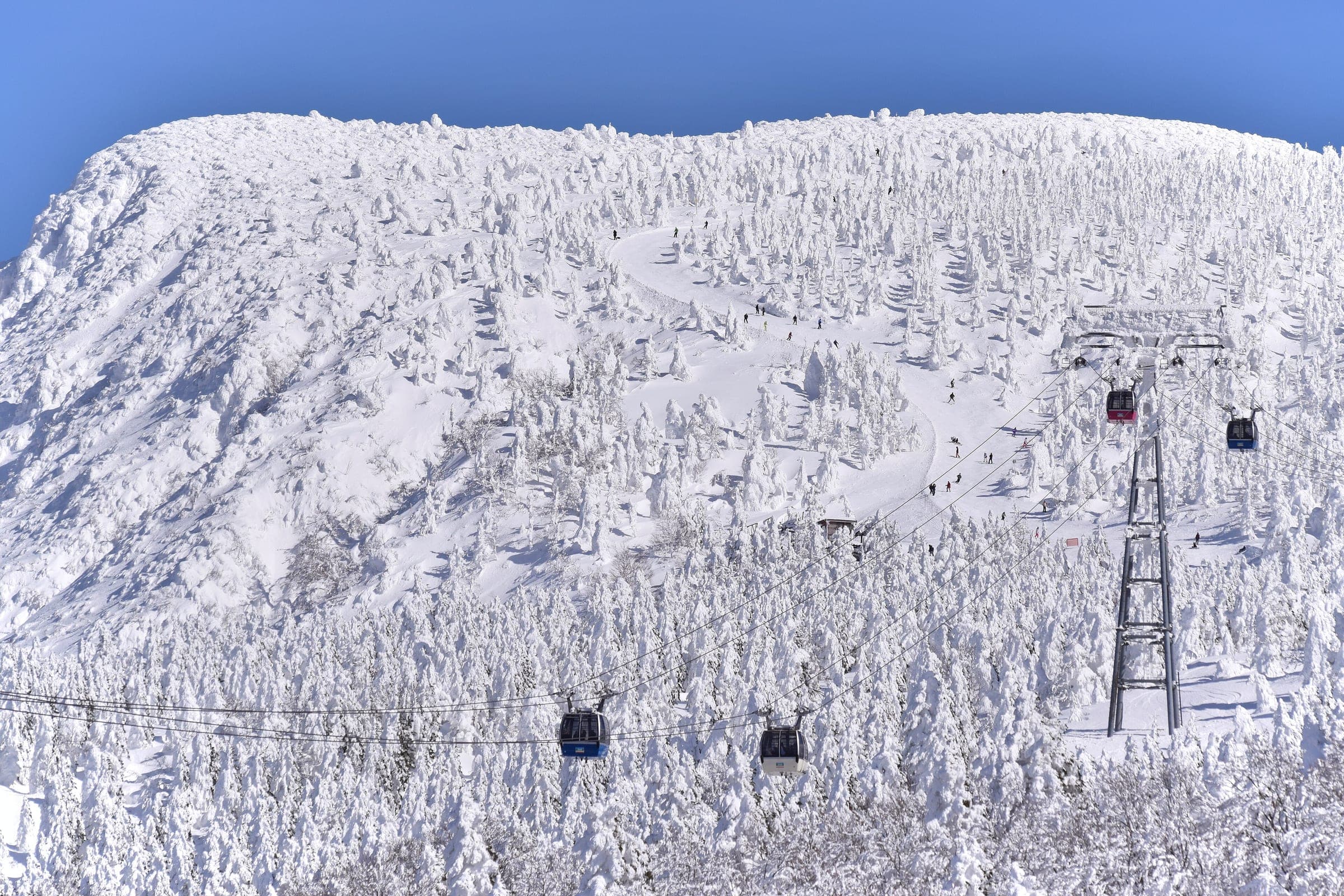
February is the month. Zao Ropeway puts its snow monsters at full size then, on a big ticketed mountain above a sulphur onsen village. Hakkoda gives one ropeway and two ungroomed courses through its own fir groves, with tour routes opening from early March.
Guide · 11 min read
How do you stay safe on a cycling trip in Japan?
Heat sends far more people to hospital than anything with teeth, so the heatstroke alert is the first thing to read on a summer morning. After that come hornets and bears on forest roads, dark tunnels, typhoons from August, and what to do when the ground shakes near the sea.