guide · 7 min read
What are Japan's cycling rules and fines in 2026?
Since 1 April 2026 the police can hand any rider aged 16 or over a blue ticket with a fixed fine. Holding a phone costs ¥12,000 and a red light ¥6,000, and the rules apply on a rental bike the same as on your own.
By Adam BognarPublished
Since 1 April 2026, a police officer in Japan can give any cyclist aged 16 or over a blue ticket (青切符, aokippu) with a fixed fine. Holding a phone while you ride costs ¥12,000, and running a red light or riding against the traffic costs ¥6,000. The National Police Agency (NPA) says officers will go on stopping riders and warning them in most cases, and they will ticket the riding they judge malicious or dangerous. The NPA prints its leaflet on the new system in English and Chinese for riders from abroad, and the Road Traffic Act draws no line between a resident and a visitor on a rental bike.
We read the NPA's table of offences and fines, its English and Japanese leaflets and its summary of the main rules for cyclists in October 2026. Every fine on this page is the NPA's published figure for 2026, and each rule links to the NPA document that sets it.
Which fines can a cyclist get in Japan?
The NPA's table covers every offence a bicycle or other light vehicle can commit, and the rows below are the ones a touring rider is most likely to meet. The full list sits in the NPA's table of offences and fines, in Japanese.
| Offence | Japanese term | Fine (published, 2026) | What it looks like on the road |
|---|---|---|---|
| Holding a phone while riding | 携帯電話使用等(保持) | ¥12,000 | Calling with the phone in your hand, or looking at its screen while you move |
| Entering a level crossing as the gate closes | 遮断踏切立入り | ¥7,000 | Riding under a barrier that is coming down |
| Running a red light | 信号無視 | ¥6,000 | A flashing red costs ¥5,000 |
| Riding on the wrong side or on a closed pavement | 通行区分違反 | ¥6,000 | Riding on the right, or on a pavement with no sign allowing bikes |
| Getting in the way of people on a crossing | 横断歩行者等妨害等 | ¥6,000 | Riding through a zebra crossing while someone walks across it |
| Missing a stop sign | 指定場所一時不停止等 | ¥5,000 | Rolling through where the 止まれ sign says stop |
| No light at night | 無灯火 | ¥5,000 | Riding after sunset with the front light off |
| Faulty brakes | 自転車制動装置不良 | ¥5,000 | A fixed-gear bike with no brake, or brakes that do not work |
| Breaking a prefecture's own rules | 公安委員会遵守事項違反 | ¥5,000 | Riding with an umbrella in your hand where the prefecture bans it |
| Riding two abreast | 並進禁止違反 | ¥3,000 | Riding side by side where no sign allows it |
| Riding fast on a pavement | 歩道徐行等義務違反 | ¥3,000 | Riding a permitted pavement at speed, or away from the road side |
| Carrying a passenger | 軽車両乗車積載制限違反 | ¥3,000 | Two people on a bike built for one |
Who gets a blue ticket, and how do you pay?
A rider aged 16 or over who commits one of the listed offences in front of an officer can get the ticket. It is a written note of what you did, and it comes with a notice to pay the fixed fine. Pay it and the case ends there, with no prosecution and no criminal record, as the NPA's English leaflet explains. Leave it unpaid and the case goes on to the criminal process.
Officers never collect the money at the roadside. Toyama Prefectural Police warn that people posing as officers have demanded cash from cyclists in other prefectures since the blue ticket began, and they ask anyone in that spot to refuse and call 110 (Toyama police warning).
A rider caught again and again for dangerous riding can be ordered onto a cyclists' training course by the prefecture's public safety commission. Running a red light, missing a stop sign, phone use and riding on the wrong side all count toward that order. Skip the course and the fine runs up to ¥50,000.
Which offences skip the blue ticket?
The serious ones go straight to the red ticket and the criminal courts. The NPA names riding after drinking, aggressive riding that obstructs others, phone use that puts traffic in danger and leaving the scene of a crash. For riding after drinking, the NPA's rule summary gives a maximum of five years in prison or a ¥1,000,000 fine.
Where do you ride: on the road, on the left or on the pavement?
Ride on the road and keep to its left edge. Where a road has marked lanes, use the leftmost one, and where it has a cycle track, ride in the cycle track. The NPA's five rules for safe cycling put this first, and riding on the right side of the road is the ¥6,000 offence in the table.
A pavement opens to bikes where a blue sign or a road marking says ordinary bicycles may use it (普通自転車歩道通行可). Under the NPA's summary, children and older riders may also use pavements, and so may anyone when the road is too busy or narrow to ride safely. On a pavement you ride slowly on the half nearest the road and stop whenever you would hold up someone walking. Riding a pavement with no reason to be there is the ¥6,000 offence, and riding a permitted one too fast costs ¥3,000.
Do you have to wear a helmet when cycling in Japan?
The law asks every rider to make an effort to wear a helmet, and there is no fine for riding without one. Article 63-11 of the Road Traffic Act sets that duty, and it also asks parents to put helmets on their children. The NPA's helmet leaflet says about 60% of the cyclists killed in Japanese traffic accidents die of head injuries. It also found that in 2020 riders without helmets died about 3.0 times as often in crashes as riders who wore them. Giant Store Onomichi and Biwaichi Bike both include a helmet in every hire.
Do you need lights on a bike in Japan?
Yes. From sunset to sunrise a bike on the road needs its front light on, and it needs a rear reflector unless the rear light is lit. The fine for riding without a light is ¥5,000. Long routes run through tunnels, and a front light that stays on all day makes sense there even in daylight.
Can you ride two abreast in Japan?
No, unless a road sign allows it. Bikes ride single file, and on the roads where a sign does allow pairs, three across is still against the law. The fine is ¥3,000. Keep to a line on the Shimanami Kaido's bridges in particular, where mopeds or people on foot share the path.
Do you need cycle insurance in Japan?
Some prefectures require it by their own ordinance, and Toyama joined them on 1 October 2026. From that date Toyama Prefecture requires every rider to carry insurance that pays out if the rider kills or injures someone, and parents carry it for riders under age. Rental businesses in Toyama must hold cover that includes accidents caused by the people who hire their bikes. The prefecture's page sets no minimum amount and names no fine, and it does not say how the rule treats visitors. Check that your travel insurance includes liability for cycling before you ride in Toyama, and ask the rental desk what its own cover pays.
How do the rules work for visitors on rental bikes?
The same way they work for everyone else. The blue ticket applies to any rider aged 16 or over, whatever the passport. An electric-assist bike counts as a bicycle only when its motor meets the Road Traffic Act's standard for assistance. The NPA warns that some products sold as e-bikes fall outside that standard, so they count as motorised bikes and need a licence. Our guide to bikes on the Shinkansen covers the separate rules for taking a bike by train.
Quick answers
What is the fine for using a phone while cycling in Japan?
The fine for holding a phone while cycling in Japan is ¥12,000 under the blue-ticket system that began on 1 April 2026. Phone use that puts traffic in danger goes to the criminal courts instead, with a maximum of one year in prison or a ¥300,000 fine.
How much is the fine for running a red light on a bike in Japan?
Running a red light on a bike in Japan costs ¥6,000 under the 2026 blue-ticket system, and ignoring a flashing red costs ¥5,000. The fines apply to riders aged 16 and over.
Can I ride a bike on the pavement in Japan?
Only where a sign allows it, or where the road is too dangerous to ride. On a permitted pavement you ride slowly on the road side and stop for people on foot. Riding a pavement with no reason costs ¥6,000.
Is a helmet compulsory for cyclists in Japan?
No. Japan's Road Traffic Act asks every cyclist to make an effort to wear a helmet and sets no fine for riding without one.
Do the 2026 cycling fines apply to tourists in Japan?
Yes. The blue-ticket fines apply to every cyclist aged 16 or over on a Japanese road, and the NPA publishes its leaflet on the system in English and Chinese for riders from abroad.
Will a police officer in Japan ask me to pay a cycling fine on the spot?
No. Japanese police never collect a blue-ticket fine at the roadside. Toyama Prefectural Police ask anyone asked for cash this way to refuse and call 110.
We write from operators’ and agencies’ own pages, open map data and published research, and we date every fact we check. How we research.
Sources (11)
- https://www.npa.go.jp/bureau/traffic/bicycle/info.html
- https://www.npa.go.jp/bureau/traffic/bicycle/pdf/jitensyahansokukoui.pdf
- https://www.npa.go.jp/english/bureau/traffic/document/r7_leaflet_jitensya_en.pdf
- https://www.npa.go.jp/bureau/traffic/bicycle/pdf/r7_leaflet_jitensya.pdf
- https://www.npa.go.jp/bureau/traffic/bicycle/pdf/3-11.pdf
- https://www.npa.go.jp/english/bureau/traffic/document/4eigo.pdf
- https://www.npa.go.jp/english/bureau/traffic/AllBicycleRidersShouldWearHelmets.pdf
- https://www.npa.go.jp/english/bureau/traffic/index.html
- https://www.npa.go.jp/bureau/traffic/bicycle/index.html
- https://www.pref.toyama.jp/810211/jitensya/20220106.html
- https://police.pref.toyama.jp/6115/anzen/koutsuuanzen/jitensha/jitenshasagi.html
Places in this piece関連

Read next案内
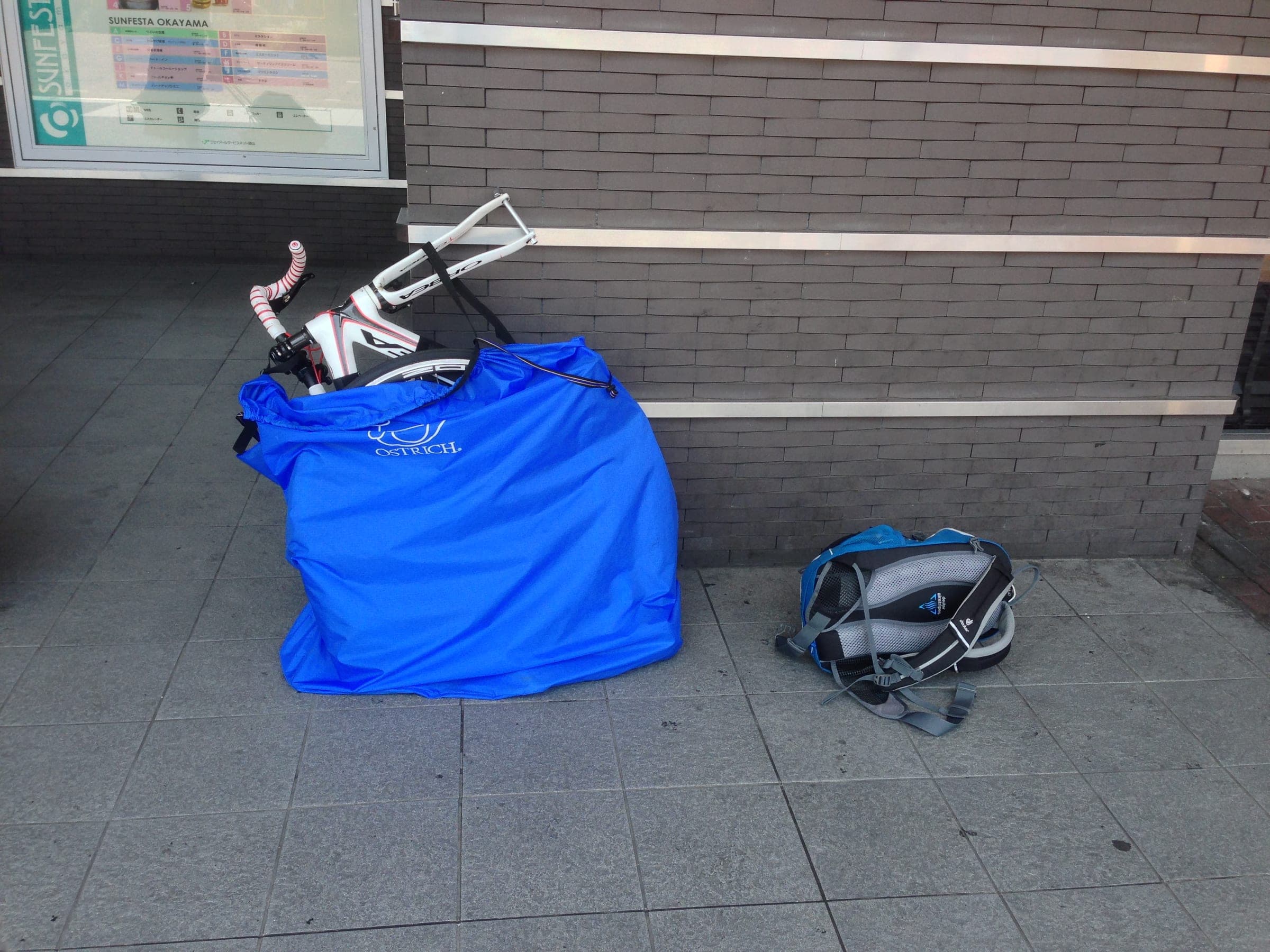
guide · 7 min read
Can you take a bike on the Shinkansen?
Every Shinkansen takes a bike packed as rinko, wheels off and fully bagged, up to 250 cm and 30 kg. West of Tokyo you should book the seat with the space behind it, and north of Tokyo there is nothing to book.
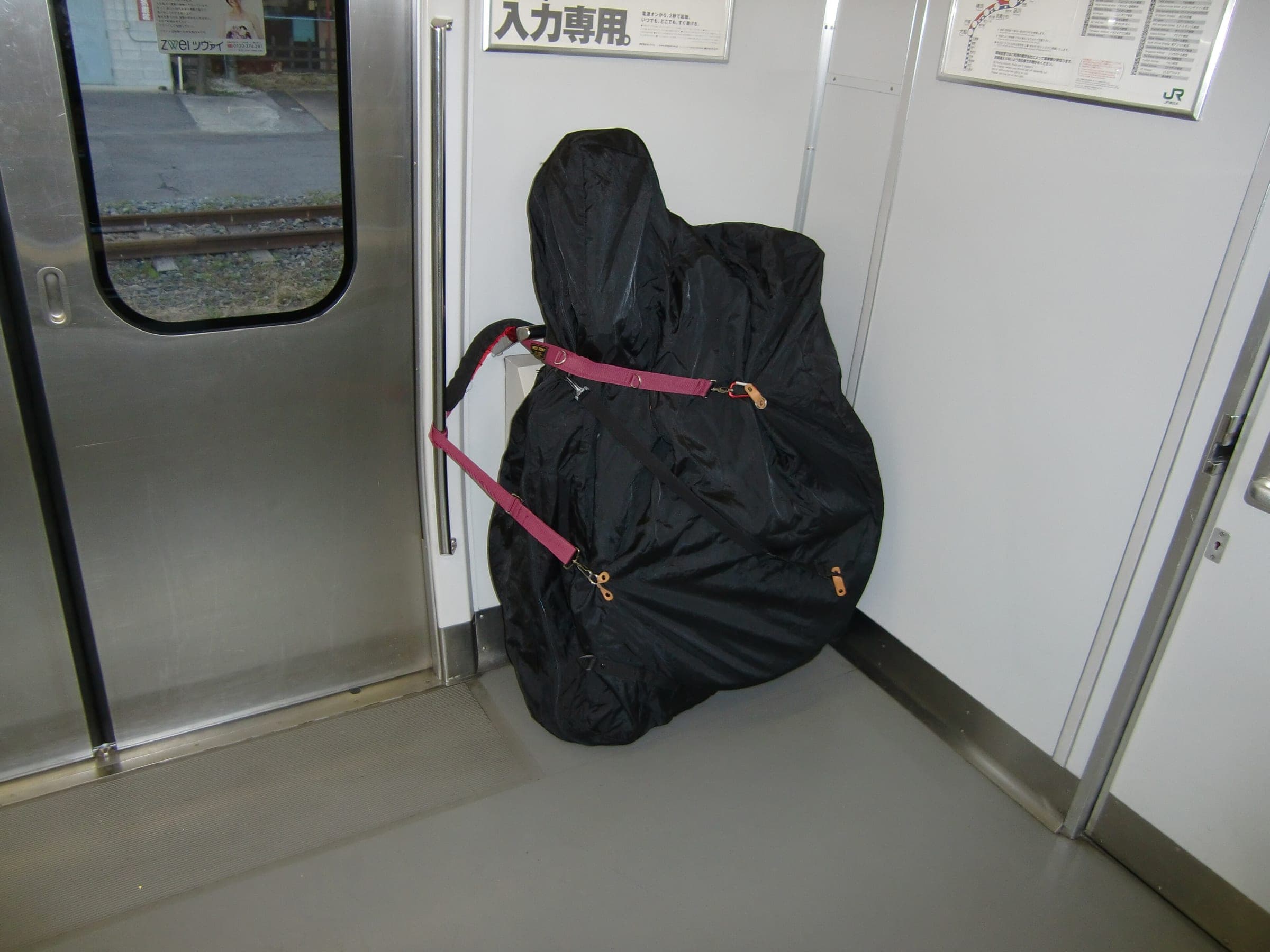
guide · 6 min read
What is a rinko bag, and which one do you need for Japan's trains?
A rinko bag is the soft cover that turns a bike into luggage for Japan's trains. JR wants every part inside it and the whole bag within 250 cm and 30 kg, and a shop like Y's Road in Ueno will match one to your frame.
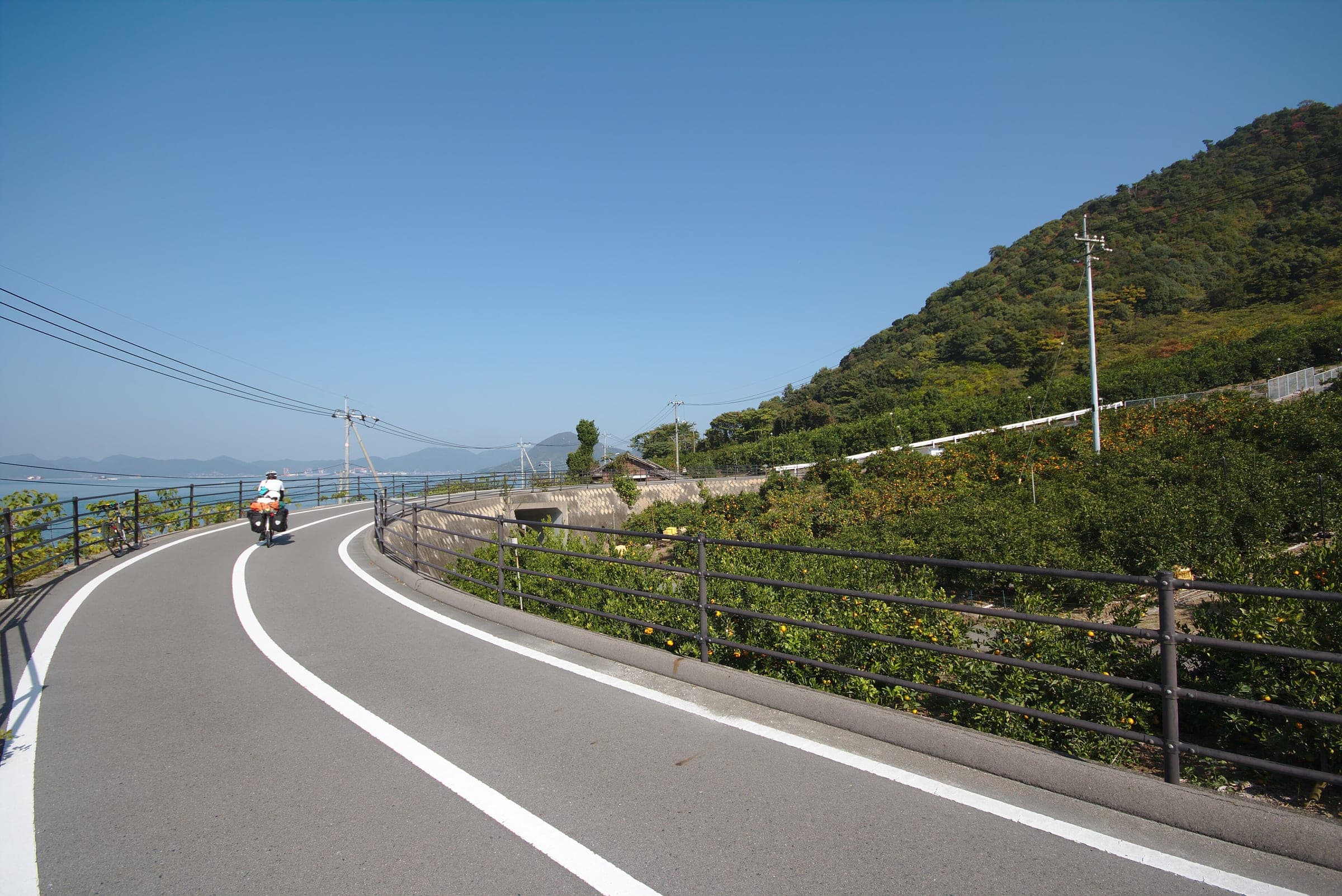
guide · 7 min read
How long does it take to cycle the Shimanami Kaido?
Most riders cross from Onomichi to Imabari in one full day. Split it with a night on Ikuchijima or Omishima if you want the islands, or take a sports e-bike and ride it in a morning, as long as it goes back before the terminal closes.