Feature · 8 min read
How do you ride the Tobishima Kaido as a quieter day after Shimanami?
Start at JR Aki-Kawajiri and cross seven bridges to Okamura, where a 23-minute ferry carries you over to Omishima for the night. The boats set the shape of the day, so plan lunch around them.
By Adam BognarPublished
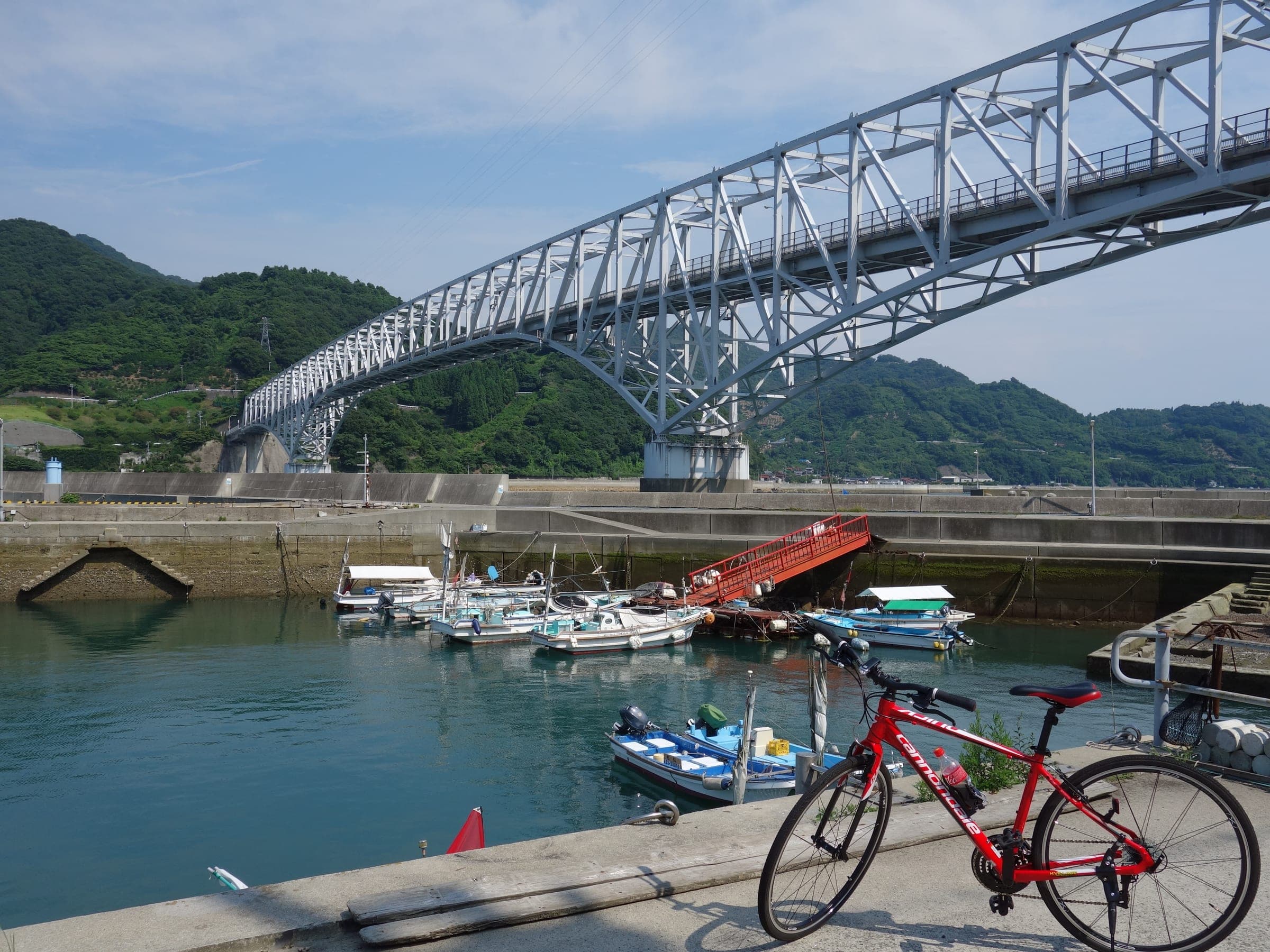
Ride the Akinada Tobishima Kaido from JR Aki-Kawajiri to Okamura island, then put the bike on the ferry to Munakata on Omishima and sleep there. Our build measures the line at 33.7 km with 295 m of climbing, so a rider at 15 km/h spends about 2 hours 15 minutes in the saddle (computed). That leaves most of the day for the old harbour at Mitarai and a long lunch. Plan the afternoon around the boats at the far end. Kure city's timetable shows five sailings a day from Okamura to Munakata, and the last one leaves at 18:05.
The Tobishima Kaido suits a rider who has crossed the Shimanami and wants the same sea with fewer bikes on it. Hiroshima's prefectural road corporation describes it as a chain of seven bridges from Kure across the Akinada islands to Okamura, which belongs to Imabari in Ehime. Six of the islands are part of Kure. We took the distance, the climbing, the tunnels and the wind from our own build along the route, the bridge rules from the road corporation, the sailings from Kure city's timetable dated January 2026, and the rooms and their dated prices from our stay files.
How do you get off Okamura island?
Take the ferry to Munakata if you are sleeping on Omishima, and the Sekizen passenger boat if you want Imabari and a train. Kure city prints all three boats on one sheet and calls the departure times a guide, since the season and the weather can move them.
| Way off Okamura | Where it lands | Sailings (Kure city timetable, January 2026) | Suits | The catch |
|---|---|---|---|---|
| Omishima Blue Line ferry | Munakata on Omishima | Five a day at 9:15, 10:05, 15:00, 15:50 and 18:05; 23 minutes | Riders sleeping on Omishima or heading for Oyamazumi Shrine | Nothing leaves Okamura between 10:05 and 15:00, and the timetable prints no fares |
| Sekizen passenger boat Tobishima | Imabari port via Kooge, Oge and Munakata | Four a day at 6:20, 8:30, 12:30 and 17:35; 58 minutes to Imabari | Riders finishing in Imabari | Nothing sails between 12:30 and 17:35 |
| Sekizen car ferry Dai-ni Sekizen | Imabari port via Kooge and Oge on most sailings | Four a day at 6:50, 9:35, 13:30 and 16:15; 60 to 80 minutes | Riders who miss the passenger boat | Our route file asks you to check with Imabari city that it takes bikes on your sailing |
| Ride back the way you came | JR Aki-Kawajiri | No boat | Riders with a train to catch in Hiroshima | Our build counts one konbini on the line and a 26.5 km stretch without one |
Kure's timetable notes that the Tobishima passenger boat carries bicycles and no other vehicles. It lists no bike rule for the other two boats, so ring the Omishima Blue Line on 0898-32-6713 or Sekizen on 0897-88-2252 before you rely on them. No fare for a rider or a bike appears on the sheet.
What does the Tobishima Kaido ride like?
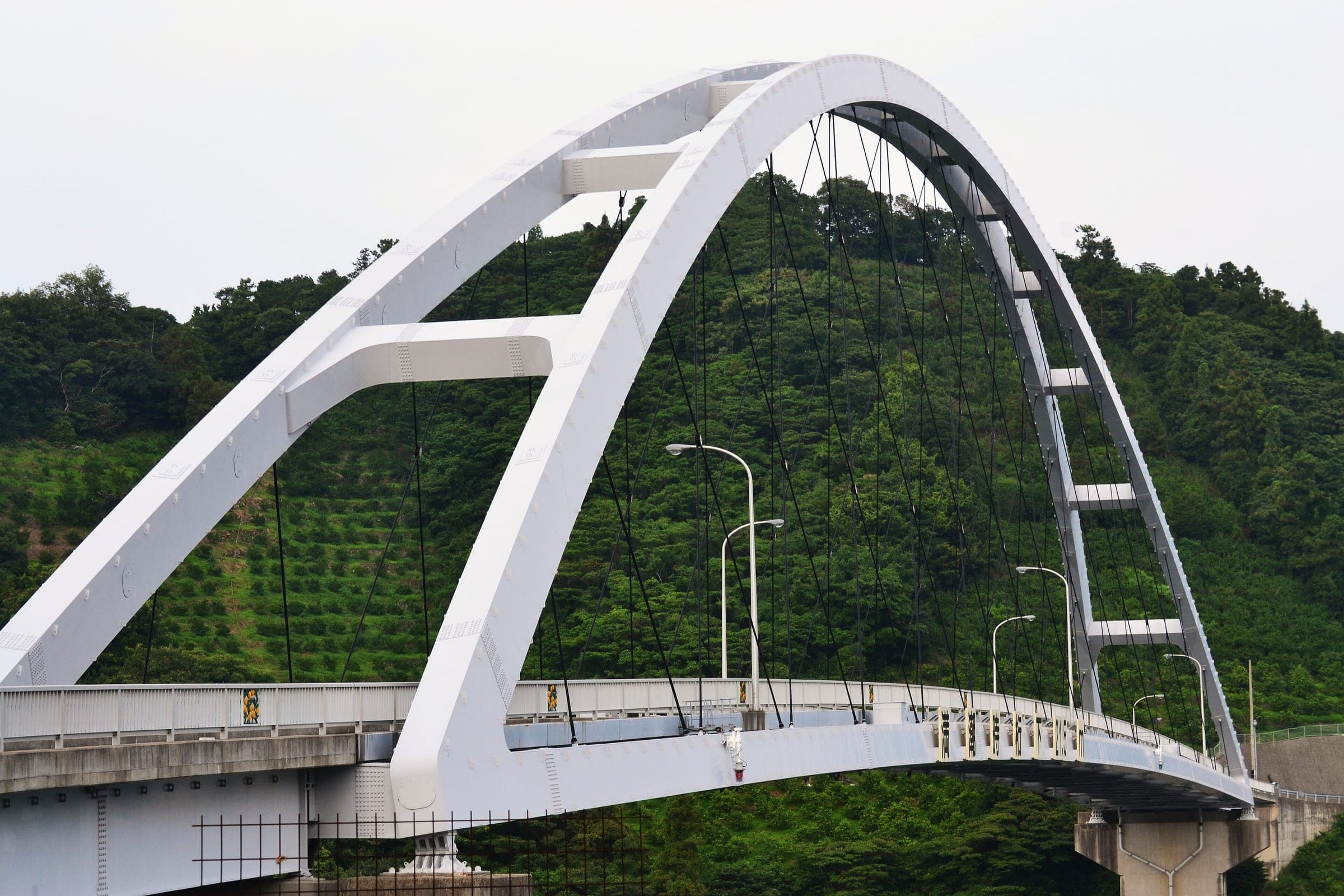
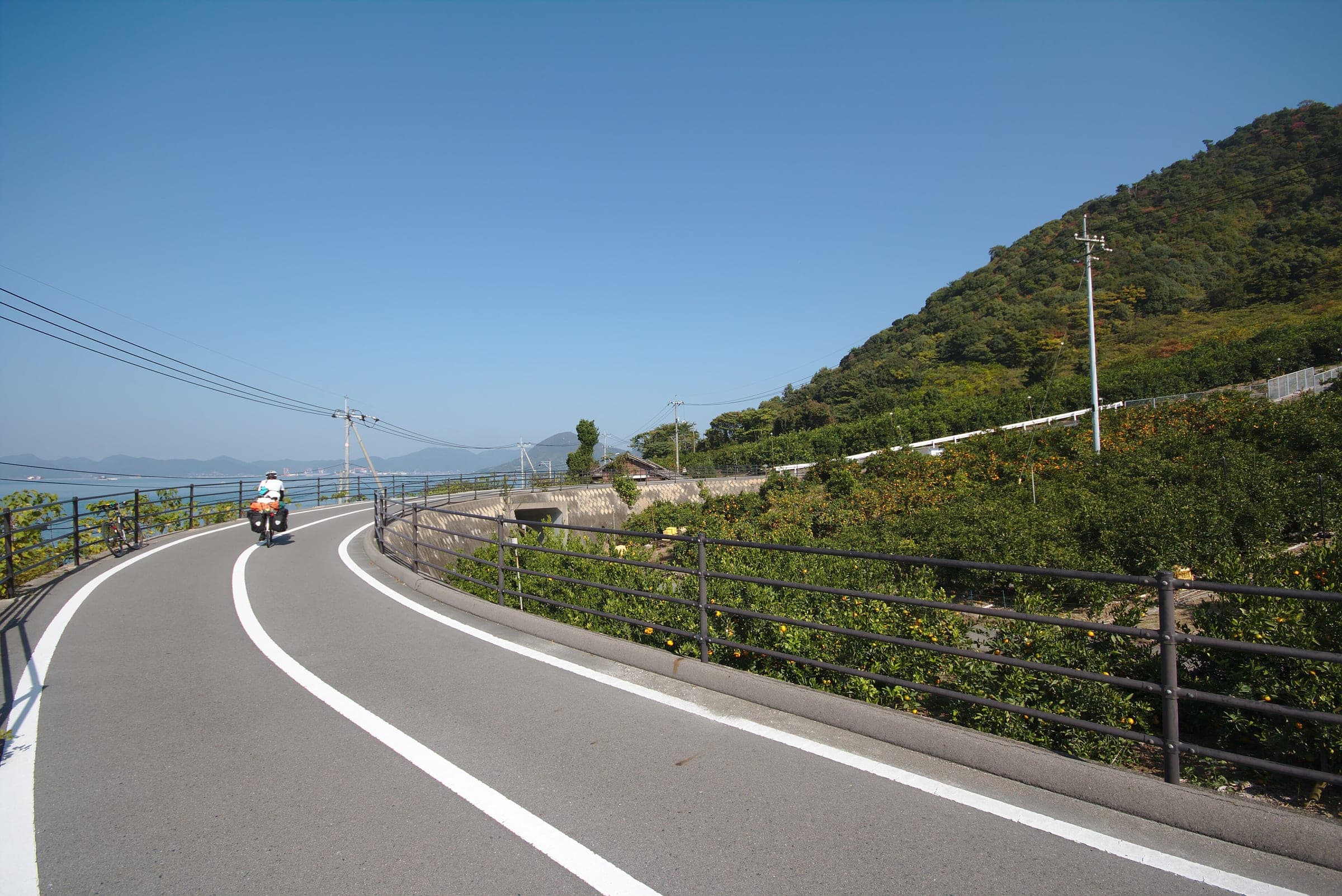
It rides low and close to the water. Our build puts the highest point at 57 m and measures 5.4 km of the line on bridges. Three tunnels add up to 1,225 m, and the longest runs 800 m, so carry a rear light even on a bright day. The road mix we computed from OpenStreetMap comes out at 62% moderate traffic, 20% quiet road, 7% car-free path and 11% busy road. Kure city says you can keep to the gentle coast roads or go looking for the climbs the islands throw up, and our line takes the coast.
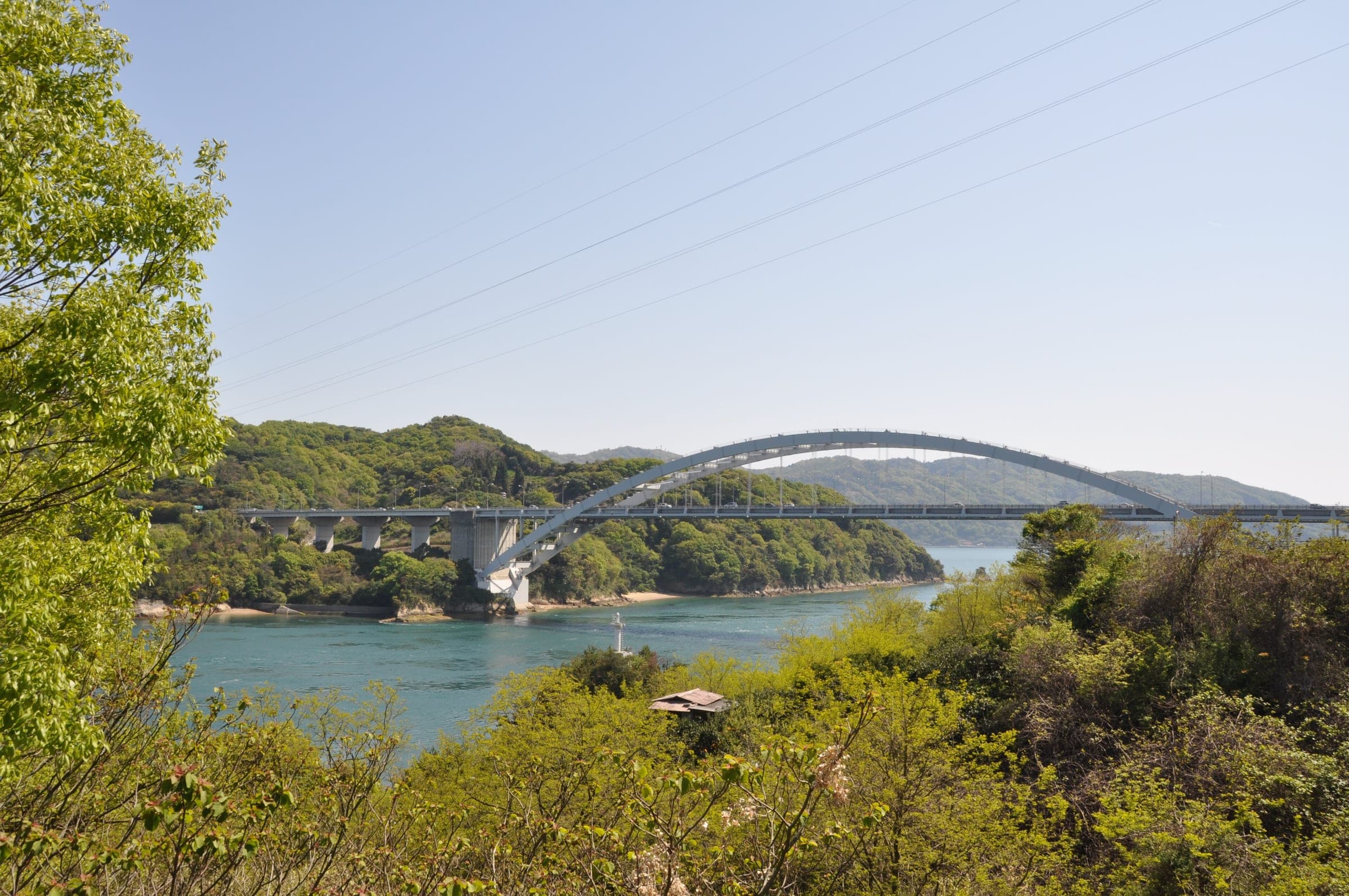
The day begins on the Akinada Bridge. The road corporation opened it on 18 January 2000 and gives its length as 1,175 m, with towers about 130 m above the sea. It's the one toll road on the chain, and the corporation's toll table lists bicycles as free. Start at JR Aki-Kawajiri on the Kure Line, which puts you on the mainland side of the bridge without riding through central Kure. Riders coming from Osaka take the Sanyo Shinkansen, which ran Shin-Osaka to Hiroshima in 86 minutes on Nozomi 101 in the 2026 timetable. Bag the bike for the trains under JR's rinko rules, and our rinko bag guide covers how.
Our build reads the Imabari weather station and puts the average wind at 1.7 m/s, mostly from the east-northeast, across April, May, October and November. Ridden from Kure toward Okamura, that comes out as a headwind on 53% of the line by our count.
Our route file lists no rental shop on the islands, so this day suits riders who bring their own bike. Load the road corporation's Google map of the route before you go, since it marks the public toilets and rest stops island by island.
Where should you stop on the way?
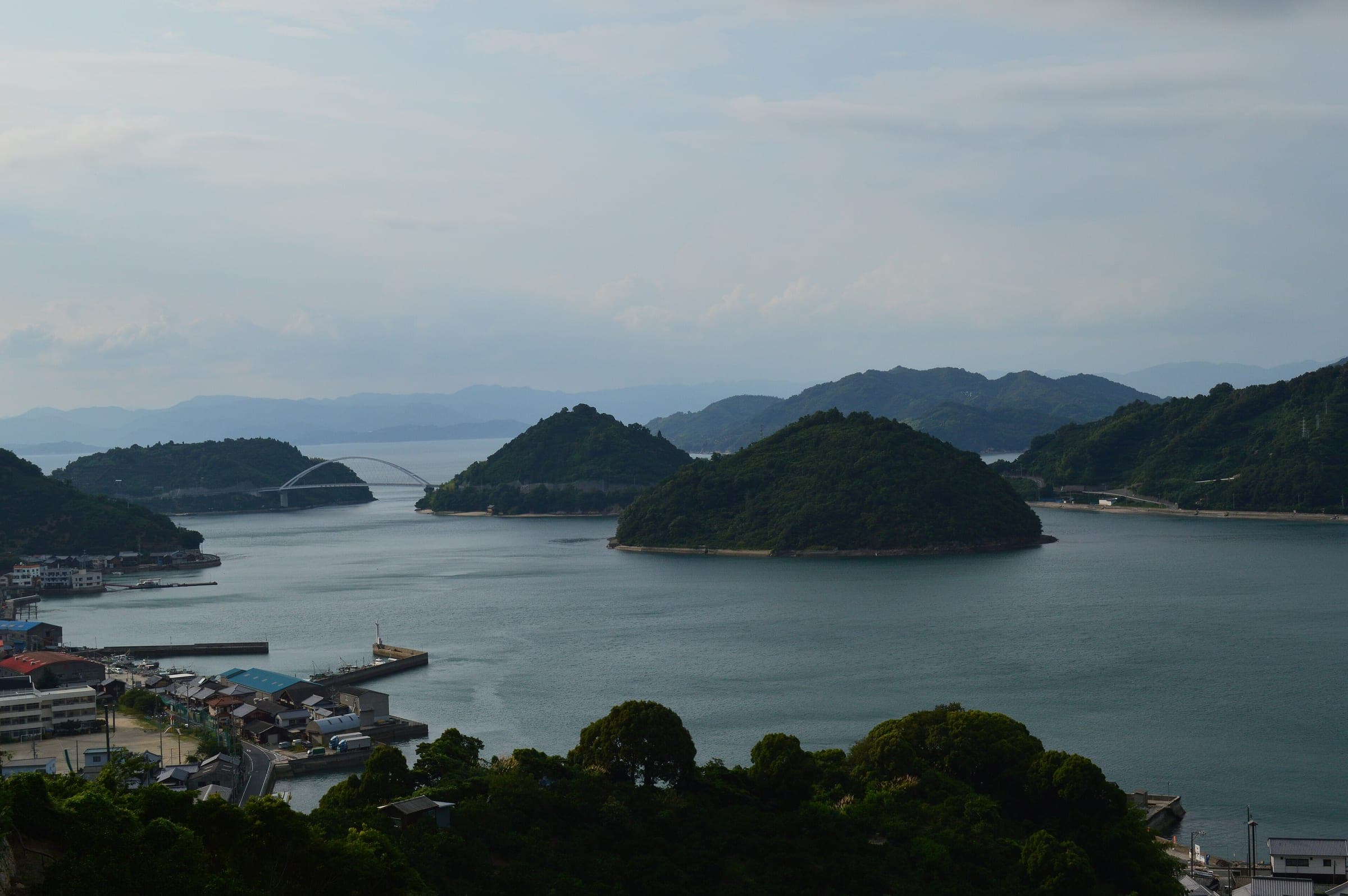
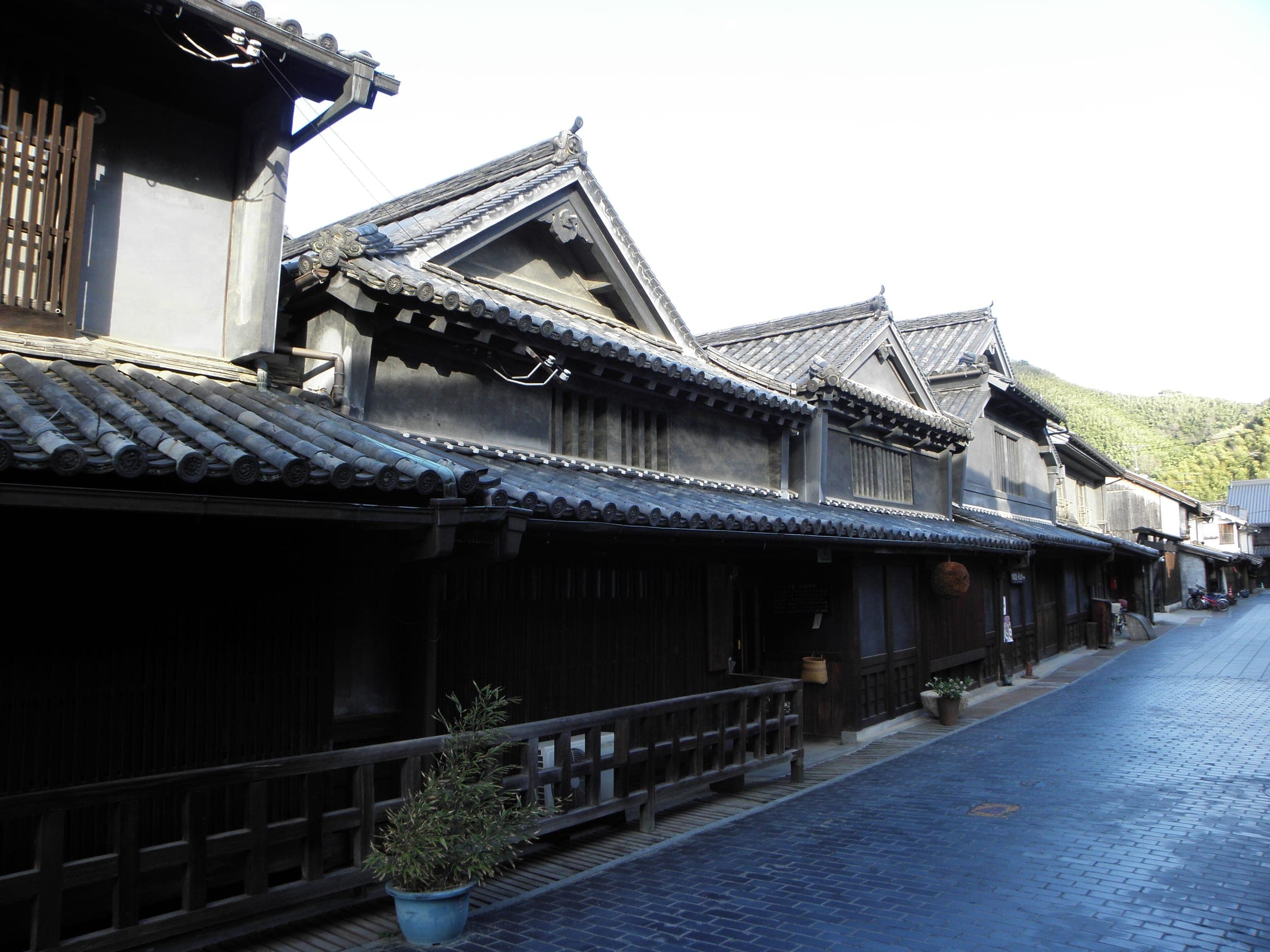
Stop at Mitarai on Osaki-shimojima and stay for lunch. The road corporation's map marks its Tenmangu shrine and the Rekishi no Mieru Oka lookout above the old harbour. The Mitarai rest house is one of Kure's cycle stations, where passing riders borrow simple tools and a bike stand, and Umi-eki Sannoseki on Shimo-kamagari is the other one right on the way. From Mitarai the road crosses to Okamura and ends at the ferry port. The 15:00 and 15:50 boats to Munakata leave a good gap for a slow afternoon, and the 12:30 passenger boat to Imabari suits a rider who has eaten early.
Kure itself rewards a morning before the ride. The city grew around the naval district founded in 1889, and the battleship Yamato was launched there in 1940. Its restaurants serve curries made to the recipes of individual ships and bases. Our Kure page has the story.
Where should you sleep on Omishima?
Sleep at Omishima Ikoi no Ie in Munakata, where the ferry lands. Ryokan Sawaki in Miyaura sits on the approach to Oyamazumi Shrine. Every stay below comes from our files, with its price and the year it applies to. We have no stays on the Tobishima islands themselves yet.
| Stay | Where on Omishima | Price (published, 2026) | Suits | The catch |
|---|---|---|---|---|
| Omishima Ikoi no Ie | Munakata on the west coast | From ¥14,520 a person room only for two sharing; dinner-and-breakfast plans from ¥21,230 | Riders off the ferry who want a seafood dinner and a sea-view bath in an old school | No shop or restaurant stands nearby, check-in ends at 19:00, and its bike policy is unpublished |
| Ryokan Sawaki | Miyaura on the approach to Oyamazumi Shrine | ¥11,500 an adult with dinner and breakfast, guide price | Riders who want a big fish dinner and an indoor bike storeroom | An old Showa-era building with tatami rooms |
| WAKKA | Inokuchi port by the Tatara Bridge | ¥4,800 a bunk bed, guide price | Riders who want bag transfers and a bike taxi by car or boat | Closed every Tuesday |
| I-Link Hostel & Cafe Shimanami | Inokuchi, near the Tatara Shimanami Park rest stop | From ¥5,220 a person, room only | Riders on a budget who want the bike in the room | No breakfast, and the curtain walls let sound through |
| Imabari Station Hotel | Imabari on Shikoku, where the Sekizen boats land | From ¥4,000 a person, room only | Riders catching an early train | Compact rooms and one bath shared by turns |
Ikoi no Ie fills a former primary school, and its bath called Umi no Yu looks straight out to sea. The hotel warns that island restaurants close between 20:00 and 22:30, so take the dinner plan or bring supplies. Sawaki runs its guests to the seawater baths at Mare Gracia Omishima, which charges adults ¥700 in 2026 and closes on Wednesdays.
The map
The map marks every place this piece visits.
Contours come from Copernicus DEM, and the coast and water from OpenStreetMap.
What do you ride on the second day?
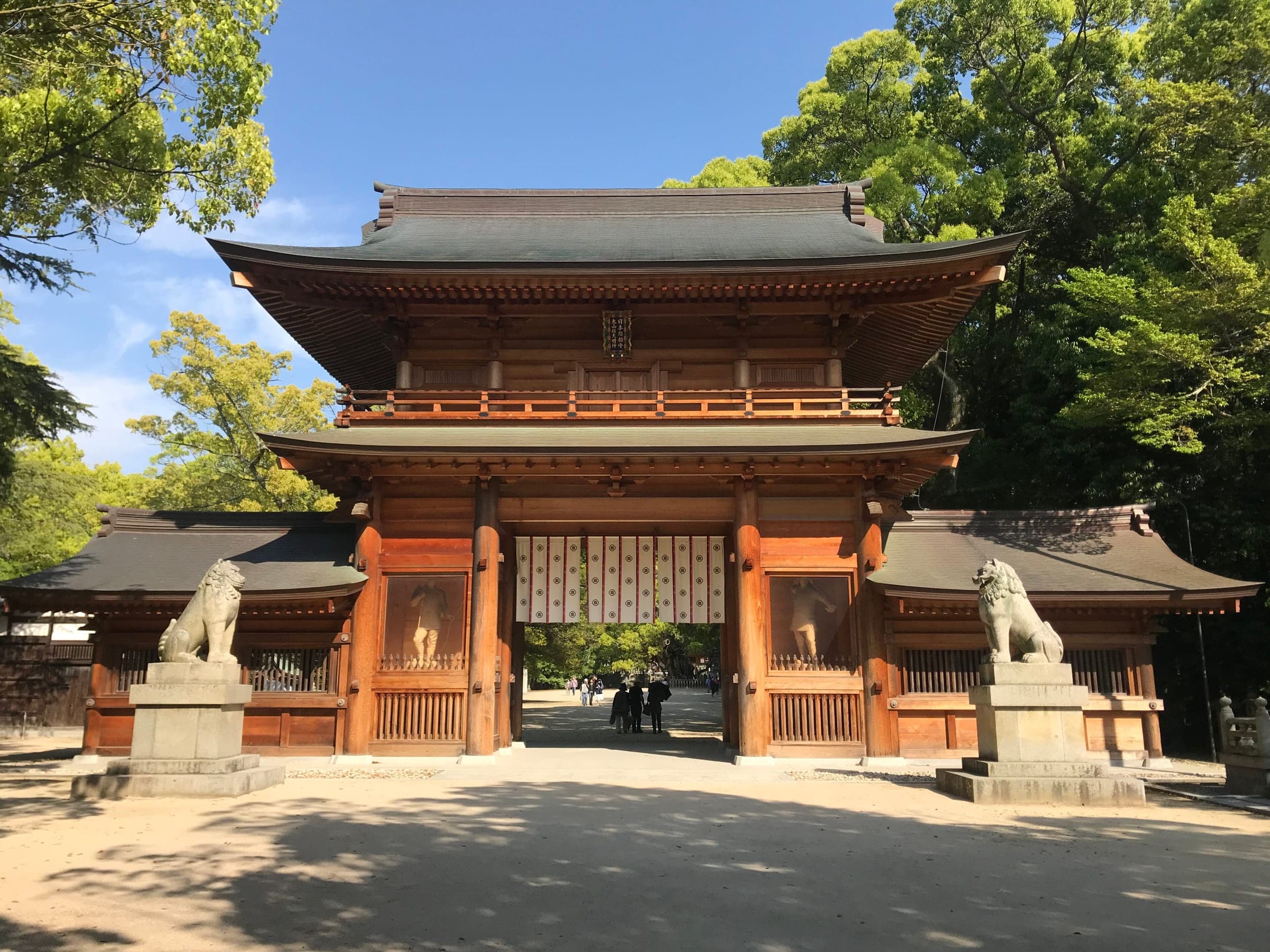
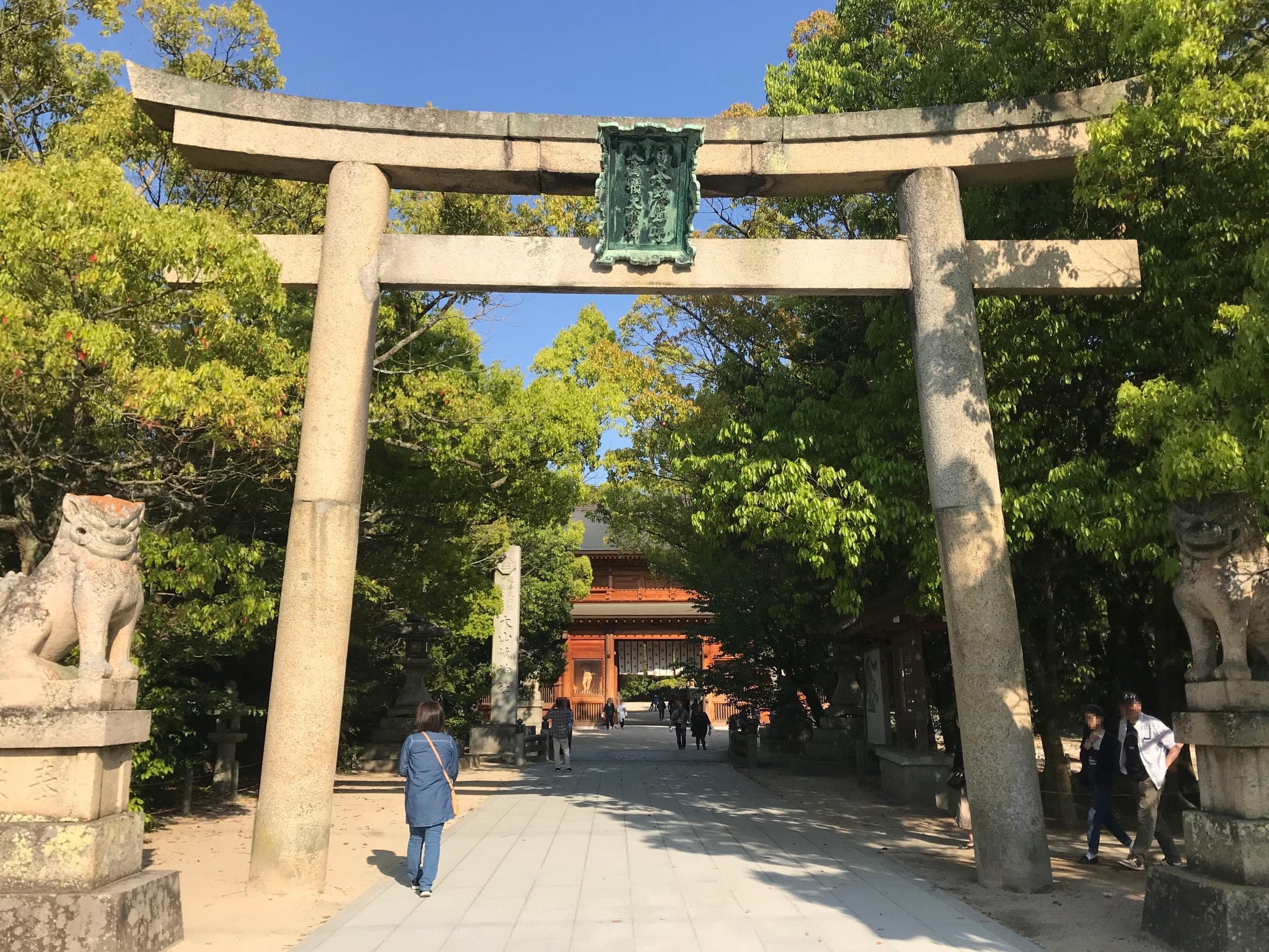
Walk into Oyamazumi Shrine at Miyaura early, then choose how you leave the island. The shrine enshrines a mountain god whom the Iyo fudoki also calls a god of the sea and of crossings, and it has stood at Miyaura since 719. Its treasure hall holds about 80 percent of the armour and weapons in Japan designated National Treasures or Important Cultural Properties. The hall opens at 9:00 and charges adults ¥1,000 in 2026. People come here for prayers and life rites, so leave the bike outside the precinct and step back from any service under way.
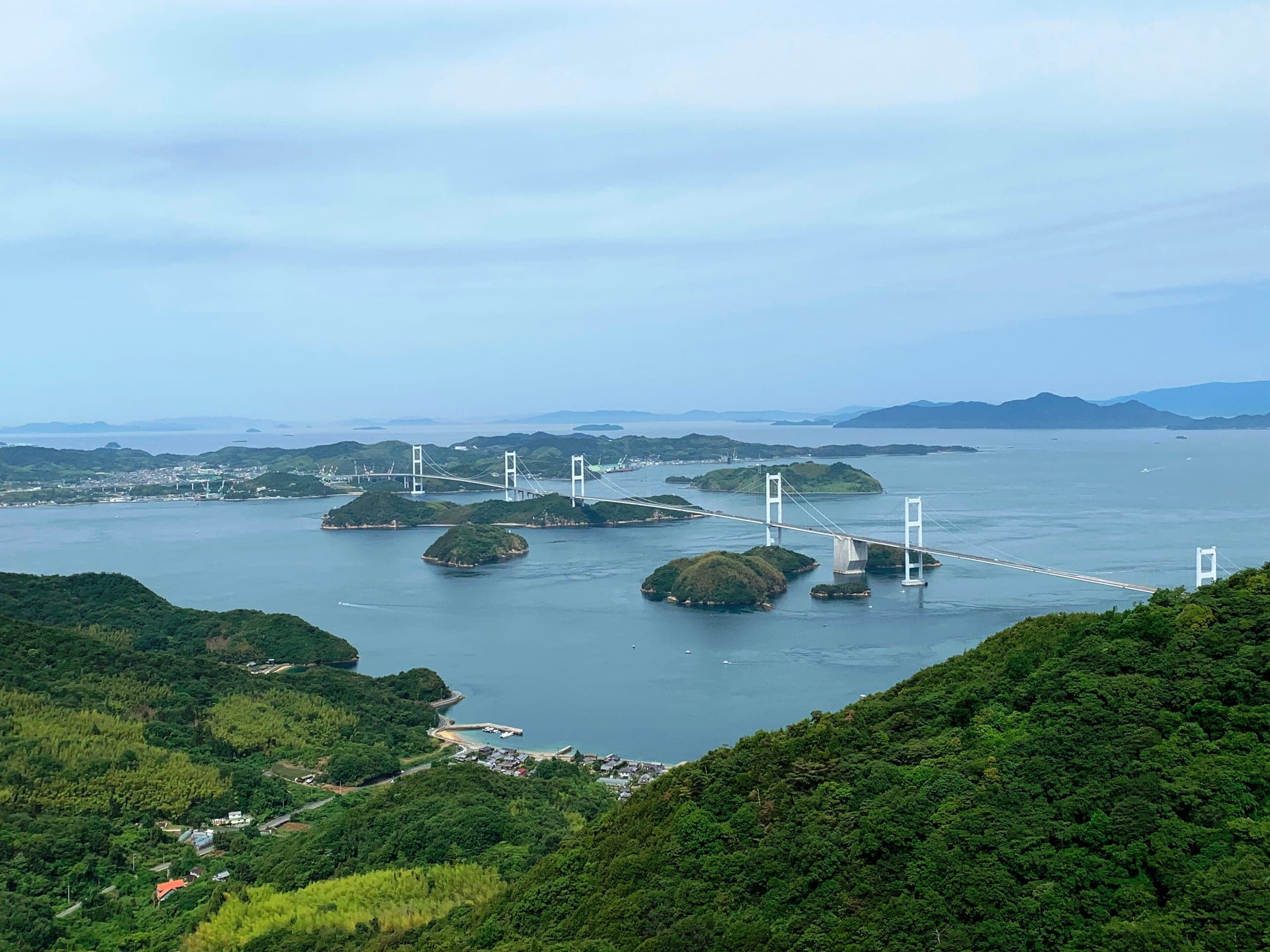
From the shrine you can ride east across the island to the Tatara Bridge and pick up the Shimanami Kaido you already know. The other way off runs north by car ferry from Omishima to Tadanoumi port in Takehara. Takehara grew rich on salt in the second half of the Edo period, and its preserved quarter of warehouses and merchant houses rewards an evening on foot.
Ferries also cross from Tadanoumi to Okunoshima. From 1929 the Imperial Japanese Army made poison gas in secret on that island, and the gas harmed many of the workers and islanders. The Okunoshima Poison Gas Museum, which Takehara city runs, opened in 1988 to set out that suffering and to call for lasting peace. It opens 9:00 to 16:00 with last entry at 15:40 and charges ¥150 to visitors aged 19 and over in 2026. Go to the museum first so the ruins make sense when you reach them. The Ministry of the Environment asks anyone who finds metal debris on the beaches to leave it alone and tell the visitor centre.
Quick answers
How long is the Tobishima Kaido?
Our build measures the Tobishima Kaido at 33.7 km from JR Aki-Kawajiri Station to Okamura Port, with 295 m of climbing. At 15 km/h that is about 2 hours 15 minutes of riding before stops (computed).
Do bicycles pay the Akinada Bridge toll?
No. The Hiroshima Prefectural Road Public Corporation lists bicycles as free on the Akinada Bridge toll road, which is the only toll bridge on the Tobishima Kaido.
How do you get from Okamura to Omishima?
Take the Omishima Blue Line ferry from Okamura to Munakata, which takes 23 minutes. Kure city's January 2026 timetable shows five sailings a day from Okamura between 9:15 and 18:05.
Can you take a bike on the ferry from Okamura to Imabari?
Yes, on the Sekizen passenger boat Tobishima. Kure city's timetable notes that it carries bicycles and no other vehicles, and it reaches Imabari port in 58 minutes. Phone Sekizen on 0897-88-2252 before you rely on the car ferry.
Where should you stay after riding the Tobishima Kaido?
Stay on Omishima. Omishima Ikoi no Ie sits at Munakata, where the Okamura ferry lands, and Ryokan Sawaki serves dinner and breakfast from ¥11,500 an adult (guide price, 2026) on the approach to Oyamazumi Shrine.
We write from operators’ and agencies’ own pages, open map data and published research, and we date every fact we check. How we research.
Sources (15)
- https://www.hprc.or.jp/go_tobishima_kaido/
- https://www.hprc.or.jp/bicycle/1016/
- https://www.hprc.or.jp/akinada-bridge/
- https://www.hprc.or.jp/toll/
- https://www.city.kure.lg.jp/soshiki/67/tobishima-island-cycling.html
- https://www.city.kure.lg.jp/uploaded/life/172317_457585_misc.pdf
- https://www.google.com/maps/d/viewer?mid=1T12Ch6X65V0h7ldqJ9BqDia0ZF9Xzxgx
- https://www.ikoinoie.co.jp/
- https://sawaki-ryokan.com/
- https://wakka.site/
- https://shimanami.bike/
- https://visitshimanami.com/attractions/541/
- https://oomishimagu.jp/
- https://dive-hiroshima.com/explore/130/
- https://www.env.go.jp/content/900409202.pdf
Places in this piece関連
Read next読む
guide · 7 min read
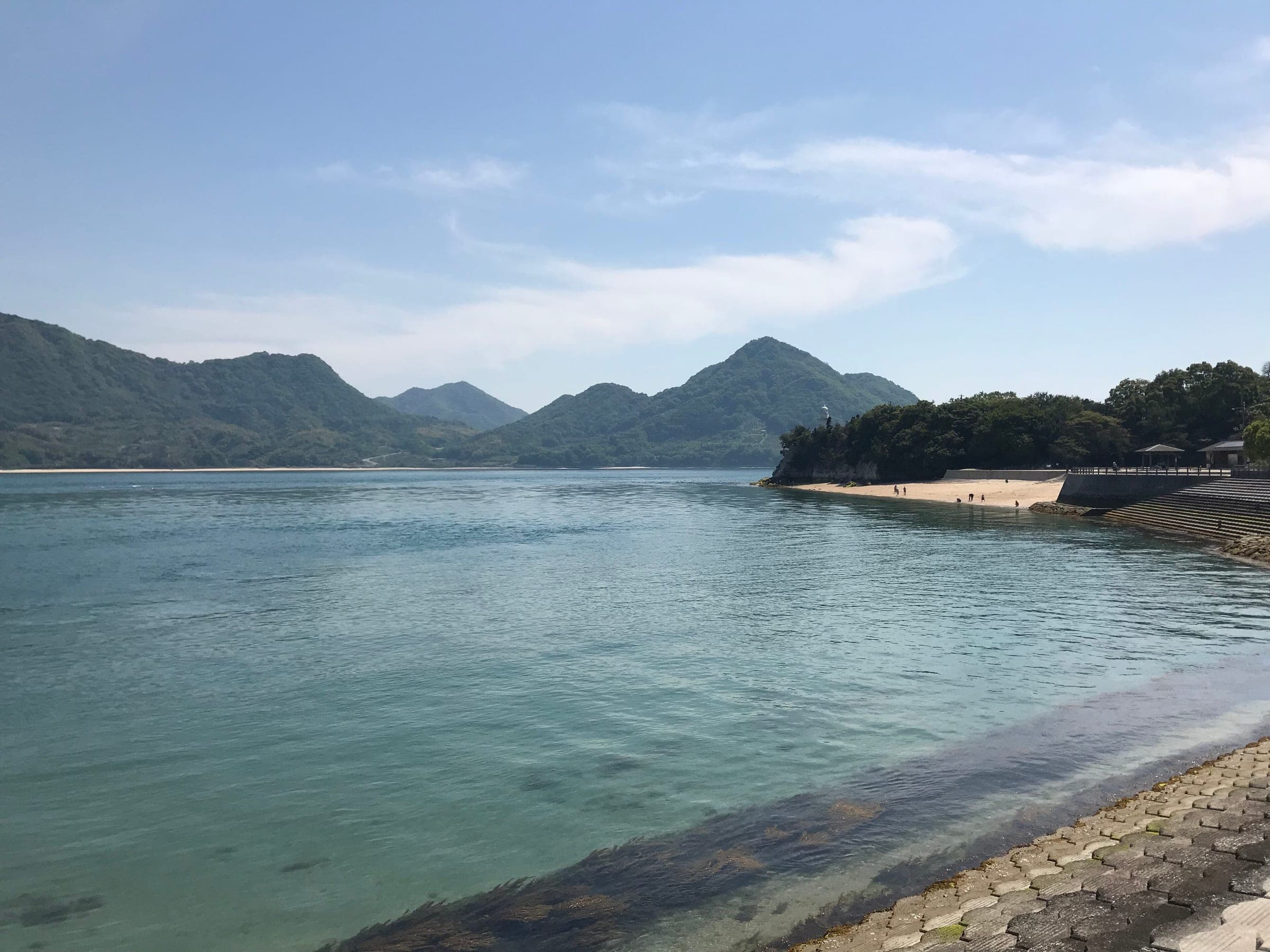
How long does it take to cycle the Shimanami Kaido?
Most riders cross from Onomichi to Imabari in one full day. Split it with a night on Ikuchijima or Omishima if you want the islands, or take a sports e-bike and ride it in a morning, as long as it goes back before the terminal closes.
guide · 6 min read
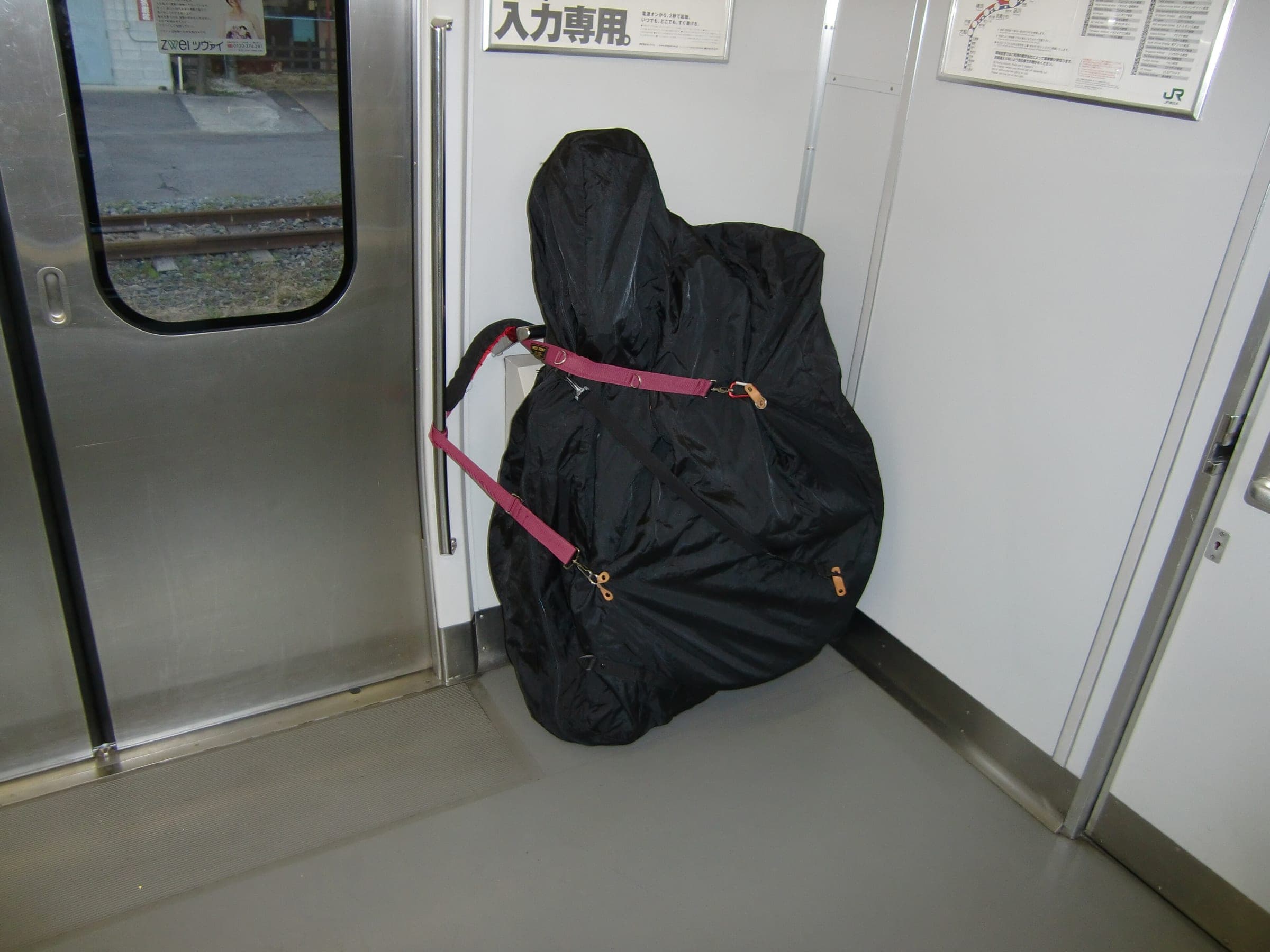
What is a rinko bag, and which one do you need for Japan's trains?
A rinko bag is the soft cover that turns a bike into luggage for Japan's trains. JR wants every part inside it and the whole bag within 250 cm and 30 kg, and a shop like Y's Road in Ueno will match one to your frame.
guide · 6 min read
How do you send skis, boards and bikes ahead in Japan?
Hand a covered ski or board bag to Yamato two days before you ride and it waits at the resort desk. A bike goes only boxed, within 200 cm and 30 kg, and Sagawa's web booking stays down after its September 2026 breach.