Practical guide · 10 min read
How do backcountry gates and rescue costs work at Japan's ski resorts?
Japanese resorts let riders out only through designated gates once a climbing plan is filed, and every resort here that publishes a rescue rule bills the rider. Zao bans riding off its courses altogether.
By Adam BognarPublished
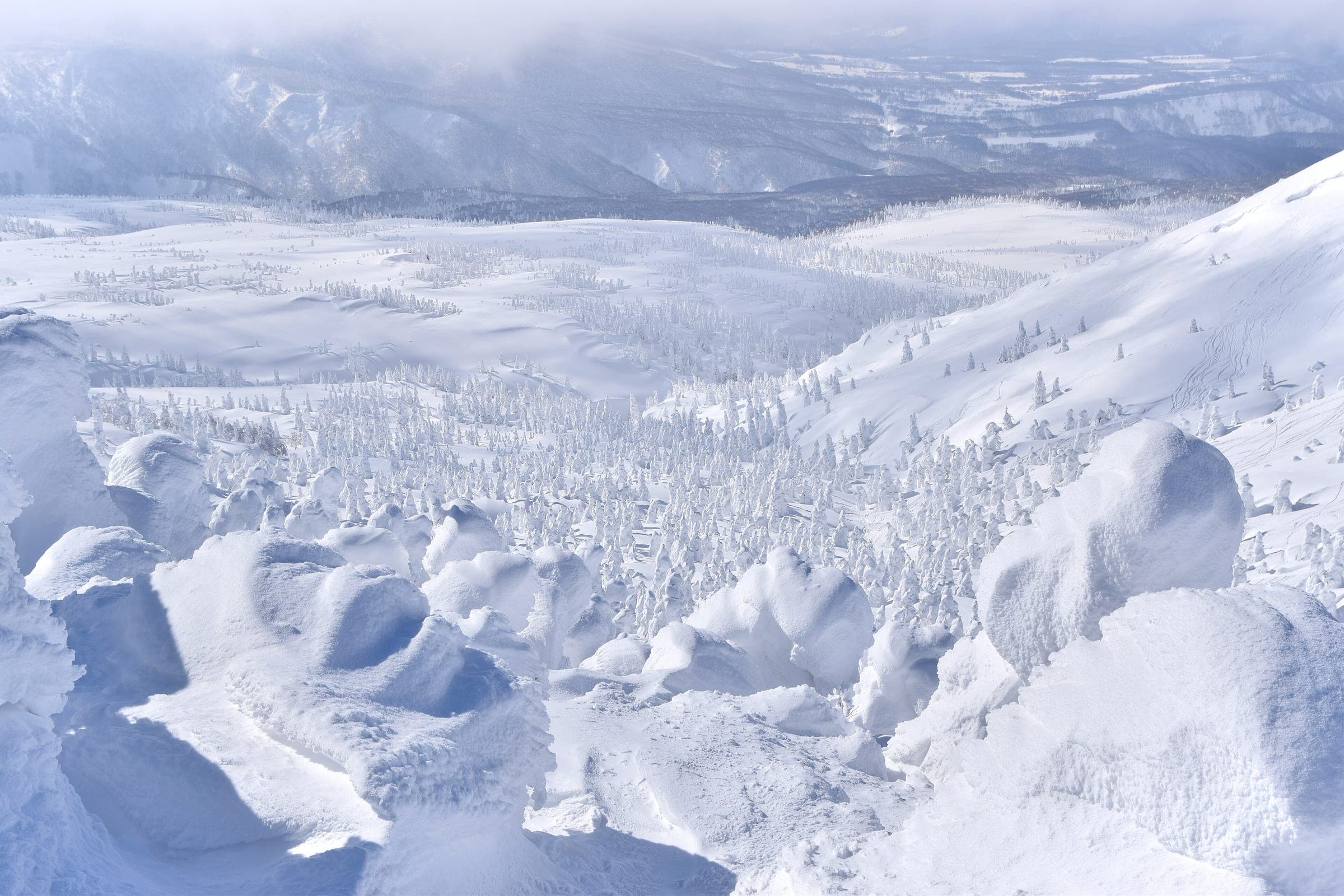
Leave a Japanese ski resort only through a designated gate, with a climbing plan filed and a beacon, probe and shovel you know how to use. Every resort in this guide that publishes a rescue rule bills the person rescued. Goryu in Hakuba charges ¥20,000 an hour for each patroller, and Hakkoda charges ¥30,000 a day for each rescuer. Zao Onsen bans riding off its courses altogether, and from 2026/27 it makes anyone who guides for pay register with the resort first.
We read the published boundary rules of 18 resorts on Honshu and in Tohoku, as they stood when we checked in October 2026, along with the Japan Avalanche Network's bulletin list and our guide operators' pages. This guide names gates and the rules around them. It gives no routes, stashes or lines, and every resort below asks you to read its own rules before you leave the lifts. Hokkaido belongs to our sister site, and Ride Hokkaido's gates and rules guide and avalanche safety guide cover Niseko and the rest of the island.
Which resorts let you leave the boundary?
| Resort | Policy | How you leave | Before you go | Rescue |
|---|---|---|---|---|
| Happo-one | Gates | Designated gates marked G on the map | Climbing registration with the Nagano police; beacon, probe, shovel | Billed to the rider |
| Goryu | Gates | Signed trailhead at the top of the Alps No. 4 lift; out by 14:00 | Registration at the Toomi gondola station or Alps station | Hourly rates, from ¥20,000 per patroller |
| Tsugaike | Gates | Designated gate | Climbing plan; beacon, probe, shovel | Billed to the rider |
| Hakuba Norikura | Gates | Designated gate | Report or disclaimer before the No. 11 pair lift | Billed when a private team goes out |
| Hakuba Cortina | Gates | Designated gate; never partway down a run | Tour plan; beacon, probe, shovel | Billed when a private team goes out |
| Nozawa Onsen | Gates | Two access points at the top of Yamabiko | Entry report recommended | Patrol doesn't rescue past the gates; costs repaid |
| Myoko Suginohara | Gates | Gates only | Climbing plan with the patrol office | Full cost to the rider |
| Madarao | Open | No designated gate | Tour plan, insurance, landowner's permission | No patrol or rescue past the boundary |
| Shiga Kogen | Gates | Exits marked with the side-country sign | Read the side-country map | Full cost to the rider |
| Kagura | Gates | Kaguragamine gate at the top of the No.5 Romance lift | Plan in the box at the gate; beacon, shovel, probe, helmet | Charged to the rider |
| Naeba | Gates | Designated gates | Climbing plan at the patrol post | Every cost to the rider |
| Mt.T | Gates | Designated gates | Beacon essential; guide recommended | Staff, machines, ropeway and lighting billed |
| Zao Onsen | Banned | Riding off the courses is prohibited | Not applicable | Patrol rescues; check costs with the resort |
| NEKOMA | Open | Outside the boundary is unmanaged | Climbing notice through Compass; go with a guide | Billed, including rescues it joins |
| Hakkoda | Open | Only two courses are patrolled | Mountain entry form; never alone | ¥30,000 per rescuer a day |
| Gassan | Open | Managed area west of the lift only | Entry form at the lift's bottom station | Billed at cost outside the area |
Arai Mountain Resort hadn't posted 2026/27 boundary rules on any page we could read by 11 October 2026, so ask its patrol before you ride its free-ride zones or leave the area.
How do the gates work in Hakuba?
Five of Hakuba Valley's ten resorts have designated backcountry gates: Goryu, Happo-one, Tsugaike, Norikura and Cortina. At Jigatake, Kashimayari, Sanosaka, Hakuba47 and Iwatake you stay inside the boundary, and leaving the ski area anywhere else in the valley is prohibited. Hakuba Valley asks you to submit a mountain-climbing registration before you buy a ticket if you plan to use a gate, and it advises inexperienced riders to stay inside the boundaries once the danger rating reaches level 3.
Goryu puts its trailhead at the top of the Alps No. 4 lift. Patrol triggers avalanches on more than 20 known slide paths around the resort before opening, and the terrain outside the ropes slides into the runs, so ducking a rope there puts people below at risk. You may not leave after 14:00 or come back in after the last lift. Tsugaike keeps its TSUGA POW area of ungroomed powder inside the boundary and opens it until 14:00 to riders 18 and over who watch the lecture video, sign the agreement and wear the season's armband. Norikura asks for a mountaineering report or a signed disclaimer before you ride its No. 11 pair lift. At Cortina, crossing the boundary partway down a run is forbidden.
What are Nozawa Onsen's rules?
Nozawa Onsen opens the backcountry through two access points at the top of the Yamabiko area, beside the Yamabiko No. 4 lift's summit station. Close the gate behind you, and never duck the ropes. Patrol doesn't rescue beyond the gates, and you may not come back into the ski area after operating hours. The resort recommends dropping a mountain entry report at a patrol station or the Nagasaka information centre, and its ski area rules make anyone rescued from outside the ski area repay the search and rescue costs. Three people died in the backcountry here in 2023.
What do Myoko, Madarao and Shiga Kogen ask?
Myoko Suginohara lets riders out only through its gates, after they file a climbing plan with the patrol office. Riders who leave anywhere else can be asked to hand back their lift ticket. Filing a plan puts no search duty on the resort, and anyone rescued off the courses or outside the area pays the full cost.
Madarao sets no designated exit and doesn't ban riders from leaving. Beyond its boundary there is no grooming, patrol, avalanche control or rescue. It asks you to check with the landowner before you enter the land outside and to carry insurance that covers search and rescue. Riders new to the area should go with a local guide, and Madarao lists guide services on its site. Its twelve official tree runs sit inside the managed area.
Shiga Kogen marks its side-country exits with a warning sign telling you that you're leaving the ski area, and its side-country map shows where riding outside the runs is tolerated. Everything outside that mapped area is closed, and the resort bills the full cost of any search or rescue beyond the ski area.
How do Kagura, Naeba and Mt.T handle it?
Kagura has one gate, toward Kaguragamine at the top of the No.5 Romance lift, which runs from 1 January. Nobody staffs it. Post a climbing plan in the box there, and carry a beacon, shovel, probe, food and water, GPS and a helmet. The Kirinoto and Karigamine directions are closed to entry, and the resort tells riders never to cross the Kaguragamine ridge. Keep out of stream beds, where snow holes trap riders. Rescues are charged to the rider. Naeba asks for a climbing plan at the patrol post and allows exits only through its gates, and the rider pays every cost of a search outside the area.
Mt.T opens unmanaged terrain of 30 to 50 degrees by its own figures through designated gates. The slopes on both sides of the Tajirizawa A course belong to the Tone-Numata Forest Office, which has made them a no-entry zone. Mt.T marks a beacon as essential and recommends a guide for anyone new to this terrain. Under its terms of use it bills a rescued rider for search staff, snow machines, ropeway running costs, lighting and electricity. In an emergency, call the police on 110.
What changed at Zao Onsen for 2026/27?
Zao Onsen prohibits riding anywhere off its slopes and courses. The resort repeated the ban on 3 February 2026, after patrol rescued a seriously injured rider who had left the course near the Diamond No. 2 pair lift in Diamond Valley the day before.
From 2026/27 Zao also requires every company, group and individual who teaches, guides or leads riders for business on the mountain to register, whether the business is Japanese or based overseas. Applications run from 2 November to 2 December 2026. Registered instructors ride on a dedicated lift ticket, and the resort bans lessons on an ordinary ticket. It is also capping new operators who mainly serve overseas visitors. Book lessons with a school on Zao's registered list. The ski area's rescue line is 023-694-9215.
What does a rescue cost?
You pay at every resort here that publishes a rule. These are the rates the resorts published, as they stood in October 2026.
| Resort | Published rescue rates |
|---|---|
| Goryu | Per hour: ¥20,000 per patroller, ¥10,000 per assistant, ¥5,000 per headquarters staff member, ¥50,000 per grooming machine, ¥10,000 per snowmobile |
| Geto Kogen | Per hour in a no-ride area: ¥18,000 per patroller, ¥6,000 per support staff, ¥20,000 per snowmobile, ¥50,000 per snowcat, ¥135,000 for night lighting |
| Hakkoda | ¥30,000 per rescuer per day, ¥50,000 per emergency ropeway run, ¥10,000 an hour per snowcat, ¥10,000 per emergency lift run |
| Tazawako | Semboku City bills ¥30,000 per searcher per day, plus ¥2,000 for meals and ¥5,000 per vehicle |
| Gassan | At cost outside the managed area; inside it after hours, ¥2,000 an hour per worker with at least five on duty and ¥10,000 an hour per snowcat or snowmobile |
| Happo-one, Tsugaike, Norikura, Cortina, Nozawa Onsen, Suginohara, Shiga Kogen, Kagura, Naeba, Mt.T, NEKOMA | The full cost goes to the rider, with no rate published |
The bill adds up quickly. A two-hour search at Goryu by four patrollers with one snowmobile comes to ¥180,000 at its published rates, by our sum. Check that your travel insurance covers off-piste search and rescue before you leave the boundary, as Madarao and Gassan both advise.
Which avalanche bulletin covers which mountains?
The Japan Avalanche Network publishes daily bulletins in English at data.nadare.jp for Hakuba, Myoko, Kagura, Tanigawa, Hotaka and Tateyama on Honshu, plus two areas in Hokkaido. The nearest areas to the gates in this guide are Hakuba for the valley, Myoko for Suginohara, Kagura for Kagura and Naeba, and Tanigawa for Mt.T.
Zao, Gassan, Hakkoda and the other Tohoku mountains sit outside JAN's named areas. There, check JMA's warnings and advisories for the town below the mountain, which carry an avalanche advisory when JMA issues one. Nozawa Onsen, Madarao and Shiga Kogen each tell riders to read the JAN bulletin before going out, so pick the nearest area and read it with the local signs and patrol boards. Hakkoda and Zao are also active volcanoes, so check JMA's volcano level before you ride to the top.
Should you hire a guide?
Yes, for anyone new to Japanese snow or to the mountain, and several resorts say so themselves. Guides know which gates patrol has opened and where the closures sit. These operators publish 2026/27 prices.
- Hakuba: Bamboo Tail runs Japanese-language tours with JMGA-certified guides from ¥17,050 a person. Evergreen Backcountry Guides works from Tsugaike in English, with group days from ¥31,000 a person. Northern Heights Guiding charges ¥130,000 for a private day for up to five.
- Myoko: Myoko Guiding Co. in Akakura charges ¥141,000 for a private day for up to four, or ¥47,500 a person on an open group day.
- Mt.T: Canyons runs private tours from 15 January to 15 March at ¥120,000 for four, with a 30-minute start before the ropeway opens to the public.
- Hakkoda: Sukayu Guide runs shared tours from ¥7,000 a person, with up to 30 riders a day.
Quick answers
Is off-piste skiing allowed in Japan?
Off-piste skiing in Japan depends on the resort. Hakuba's five gated resorts, Nozawa Onsen, Myoko Suginohara, Kagura, Naeba and Mt.T allow it only through designated gates. Madarao, NEKOMA, Hakkoda and Gassan leave the land outside the boundary to the rider, and Zao Onsen bans riding off its courses altogether.
Who pays for a ski rescue in Japan?
The rider pays at every Japanese resort in this guide that publishes a rule. Goryu bills ¥20,000 an hour per patroller and Hakkoda ¥30,000 a day per rescuer. In Hokkaido, Niseko bills from ¥100,000 according to Ride Hokkaido.
Do you need an avalanche beacon in Hakuba?
Yes, to use a gate. Hakuba's gated resorts ask riders to carry an avalanche transceiver, a probe and a shovel and to file a climbing plan before leaving the boundary.
Where is the avalanche forecast for Japan?
The Japan Avalanche Network publishes daily bulletins in English at data.nadare.jp for Hakuba, Myoko, Kagura, Tanigawa, Hotaka and Tateyama, plus two Hokkaido areas. Elsewhere, JMA's warnings and advisories carry avalanche advisories by town.
What are Zao's new rules for 2026/27?
Zao Onsen prohibits riding off its slopes and courses, and from 2026/27 every business or person who teaches or guides on the mountain must register with the resort and use a dedicated lift ticket. Applications run from 2 November to 2 December 2026.
We write from operators’ and agencies’ own pages, open map data and published research, and we date every fact we check. How we research.
Sources (25)
- https://data.nadare.jp/?locale=en
- https://www.jma.go.jp/bosai/warning/#lang=en
- https://www.hakubavalley.com/en/safetytips_en/
- https://www.happo-one.jp/en/gelande/
- https://www.hakubaescal.com/winter-en/gelande/patrol/
- https://www.tsugaike.gr.jp/snow/gelande/tsugapow
- https://www.hakunori.com/en/trailguide/
- https://www.hgp.co.jp/cortina/ski/hvsafety/
- https://en.nozawaski.com/the-mountain/moutain-info/to-all-back-country-skiers-and-snowborders/
- https://www.princehotels.co.jp/ski/myoko/winter/coursemap/safety.html
- https://www.madarao.jp/for-safe-skiing
- https://shigakogen-ski.or.jp/side-country/pdf/SideCountry01_j.pdf
- https://www.princehotels.co.jp/ski/kagura/winter/coursemap/safety.html
- https://www.princehotels.co.jp/ski/naeba/winter/coursemap/safety.html
- https://tanigawadake-joch.com/en/mt-t/backcountry/
- https://zaomountainresort.com/ski_news/ski_news-6765/
- https://zaomountainresort.com/ski_news/ski_news-7284/
- https://zaomountainresort.com/ski_news/ski_news-7201/
- https://www.nekoma.co.jp/feature/safety/
- https://www.getokogen.com/winter/01trail/index.html
- https://www.tazawako-ski.com/pdf/20200110_localrules.pdf
- https://hakkoda-ropeway.jp/en/wp-content/uploads/2026/01/rule_en.pdf
- https://mt-gassan.com/snow/local-rule/
- https://ridehokkaido.com/guides/avalanche-safety
- https://ridehokkaido.com/guides/gates-and-rules
Places in this piece関連

Read next案内
Practical guide · 8 min read
Should you ski Hakuba or Niseko?
Hakuba suits riders who want big alpine vertical and ten resorts on one ticket, a train ride from Tokyo. Niseko suits riders who want four linked resorts, lift-served gates under one set of rules and lights on every evening.
Practical guide · 9 min read
When is the best time to ski in Japan?
Mid-January to the end of February brings the most snow on Honshu and in Tohoku. Book around New Year and the 2027 holiday weekends, or wait for March and April, when the days run long and spring prices kick in.
Practical guide · 8 min read
Where can you ski on a day trip from Tokyo?
In winter the Shinkansen stops inside GALA Yuzawa's base building. Kagura has the biggest terrain within reach of Echigo-Yuzawa, and Mt.T in Minakami has the steepest, an hour from Tokyo plus a bus.