Snow feature · 11 min read
When should you ride Zao and Hakkoda for the snow monsters?
February is the month. Zao Ropeway puts its snow monsters at full size then, on a big ticketed mountain above a sulphur onsen village. Hakkoda gives one ropeway and two ungroomed courses through its own fir groves, with tour routes opening from early March.
By Adam BognarPublished
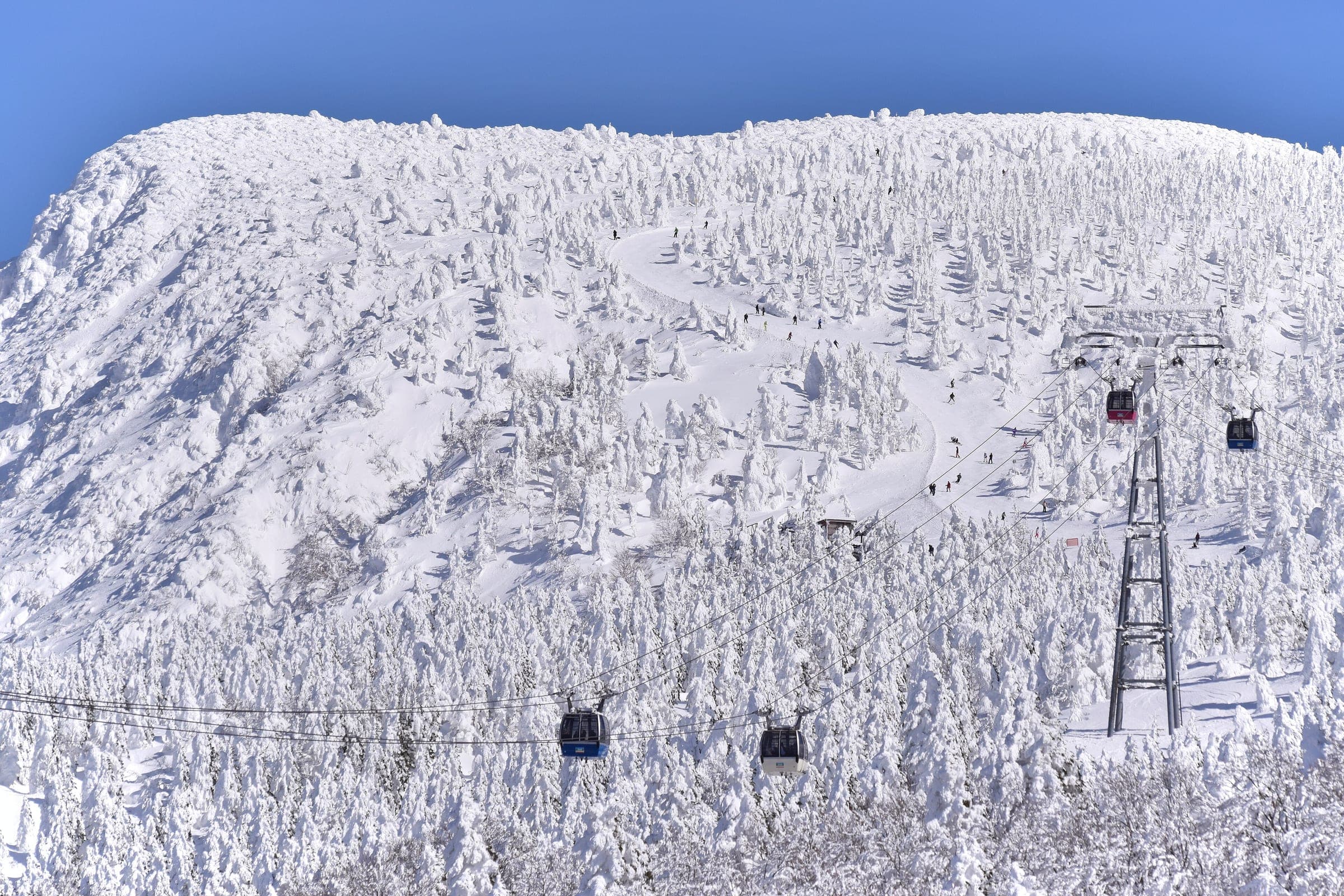
Go in February. Zao Ropeway's own guide puts its snow monsters at full size that month, after the firs start icing over in November and December and build through January, and warmer air thins them through March. Zao suits riders who want a big ticketed mountain with a 10 km run through the trees and a sulphur onsen village at the bottom. Strong riders head north to Hakkoda for a single ropeway and its ungroomed courses past rime-crusted groves, and its tour routes open from early March. Hakkoda's ropeway publishes no calendar for its juhyo, so the February advice rests on Zao's guide.
We wrote this from our pages for both mountains, which draw on the Zao Ropeway, the Zao Onsen tourism association, the Hakkoda Ropeway, Sukayu Onsen and JMA, all checked on 11 October 2026. Both mountains are active volcanoes, and the access limits at each alert level come from JMA's own criteria.
What are the snow monsters?
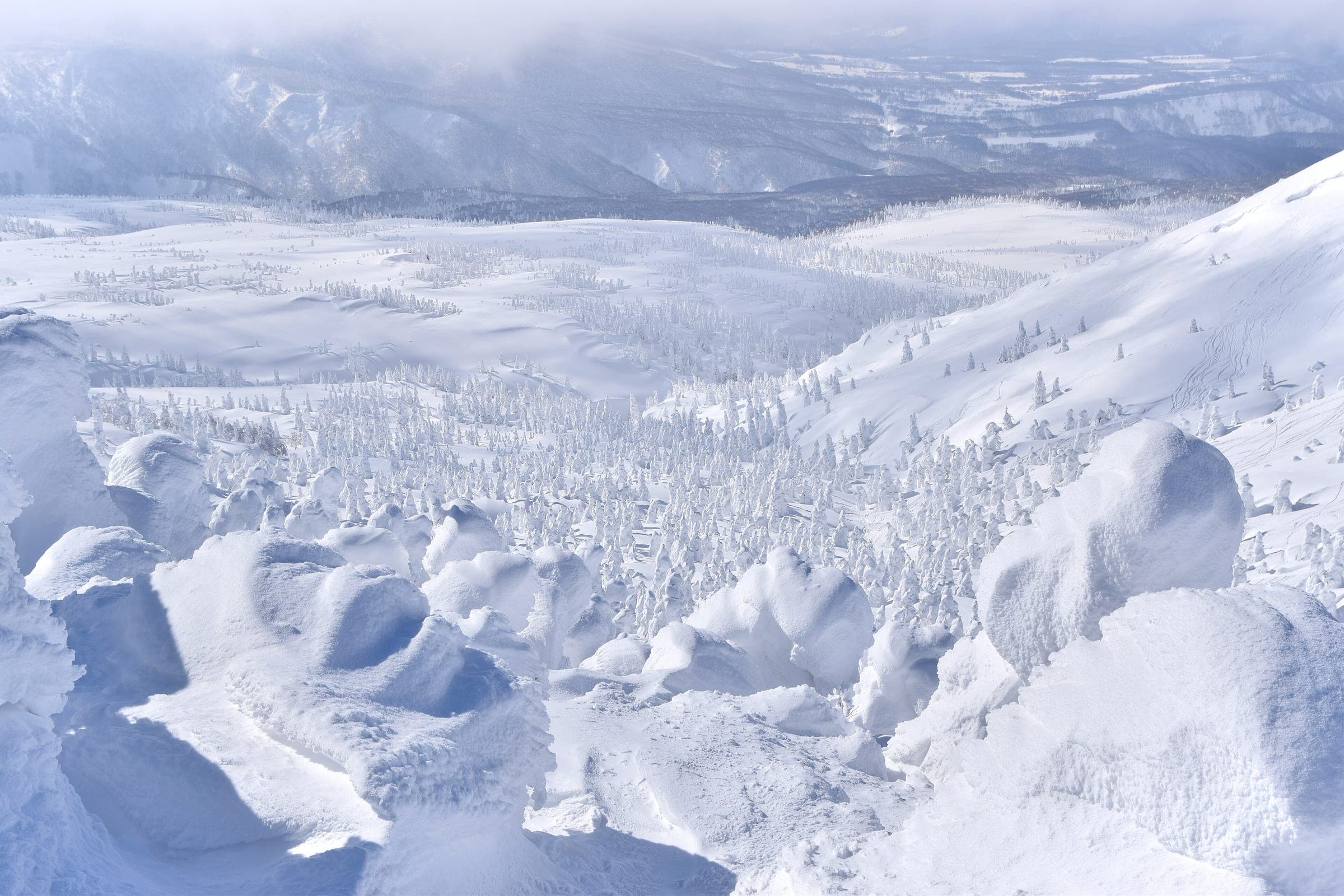
They are Maries firs, which Zao calls Aomori firs, buried in rime and snow on the upper slopes. Supercooled cloud droplets freeze onto the branches as shrimp-tail ice, and snow packs into the gaps until the whole mass hardens. That cycle repeats all winter. By the end the trees have turned into the hunched white figures Japan calls juhyo.
The weather that builds them makes for hard days at the top. Zao Ropeway warns that January and February bring few clear days at its summit station, with winds of 10–15 m/s and average temperatures of −10 to −15 °C. Rain in March can bring the trees down in a day. Dress for −10 °C or colder even when the village sits in sunshine, and bring goggles for the wind.

How do Zao and Hakkoda compare?
| Zao Onsen | Hakkoda | |
|---|---|---|
| Getting there from Tokyo | Tsubasa to Yamagata in 161 min (¥11,670, 2026), then the Yamako bus to Zao Onsen in 37 min (¥1,200, October 2026) | Hayabusa to Shin-Aomori in 178 min, Aomori Station in 3 hr 46 min (¥18,110, 2026), then the JR bus in about 80 min (¥1,290) |
| Lift to the snow monsters | Zao Ropeway: 7 min on the lower line, 10 min on the upper funitel to Jizo Sancho Station at 1,661 m | Hakkoda Ropeway: about 10 min to Sancho Koen Station at 1,324 m |
| Skiing | 30 lifts over 305 ha; the Juhyogen course winds about 10 km from the summit | One ropeway; the Direct course runs 3.5 km and the Forest course 5 km, both ungroomed |
| Adult ticket, 2026/27 | ¥9,000 a day at peak, ¥8,000 regular (published) | Rides only: ¥1,550 one way, ¥12,000 for eleven rides (from 1 August 2026, published) |
| Ikon Pass | Seven days on the full pass, five on Base | No |
| Night | Uwanodai slope 17:00–21:00 nightly, 19 December 2026 to 28 February 2027 | None |
| Leaving the courses | Banned | Open under the Mt. Hakkoda Local Rules, with an entry form and billed rescue |
| Season | 12 December 2026 (planned) to 5 May 2027 at the latest | Early December to early May in a typical year; no 2026/27 date set by 11 October 2026 |
| Main drawback | Sightseers share the summit ropeway | The ropeway stops in winds of 25 m/s or more |
How does Zao's ropeway reach the snow monsters?
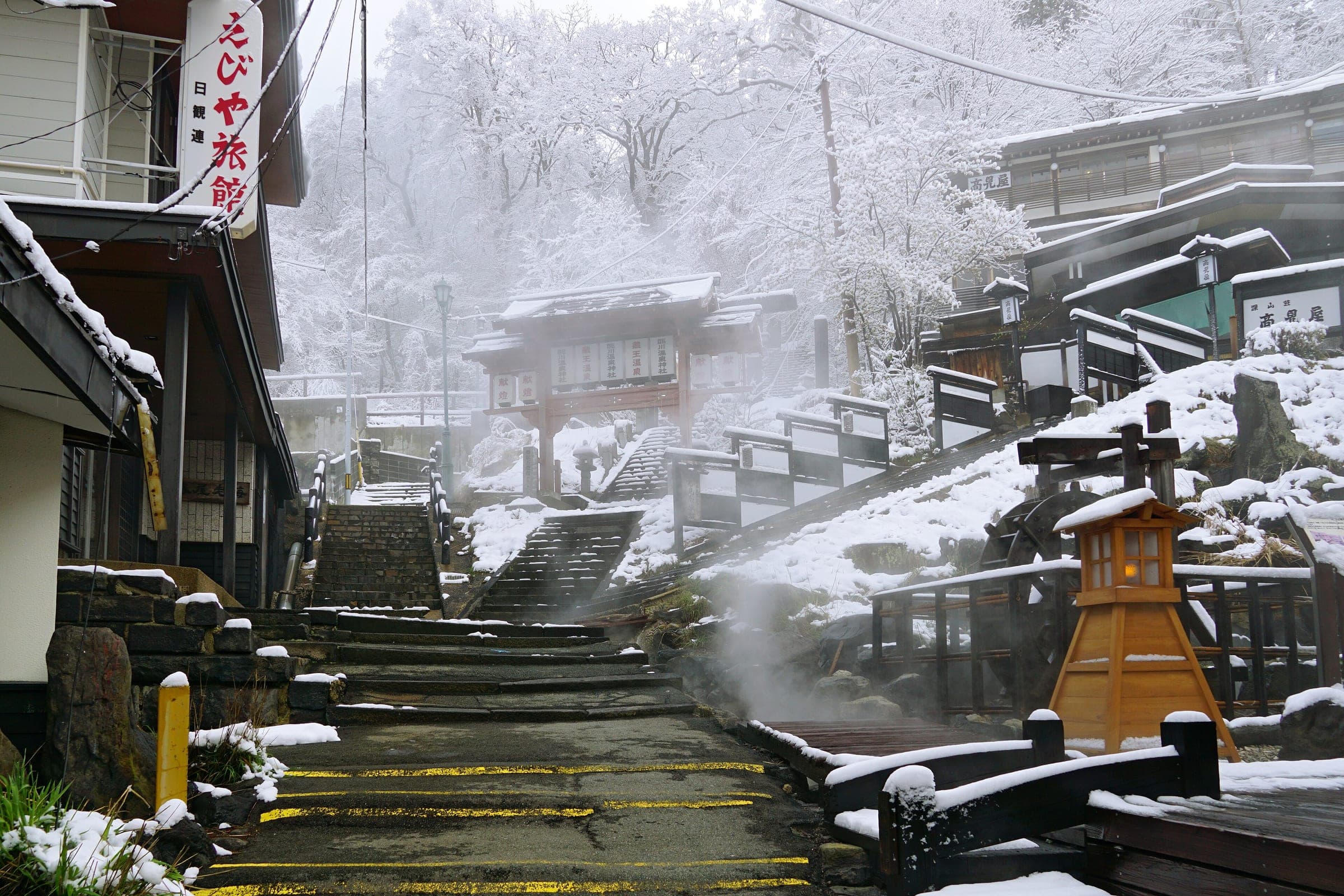
Ride the Zao Ropeway out of the village. The lower line takes seven minutes to Juhyo Kogen Station at 1,331 m, and the upper funitel takes ten more to Jizo Sancho Station at 1,661 m, right among the trees. Skiers ride on their lift ticket, and a sightseer's return to the top costs ¥4,400 for an adult in 2026. The upper line has no step or gap at the platform, and the operator says wheelchair users can ride it.
The sightseers matter for your morning. Ride up first thing and save the village slopes for the afternoon, because the summit ropeway fills with visitors who came only for the view. The English and Japanese pages give slightly different winter hours, so check the day's times at the station.
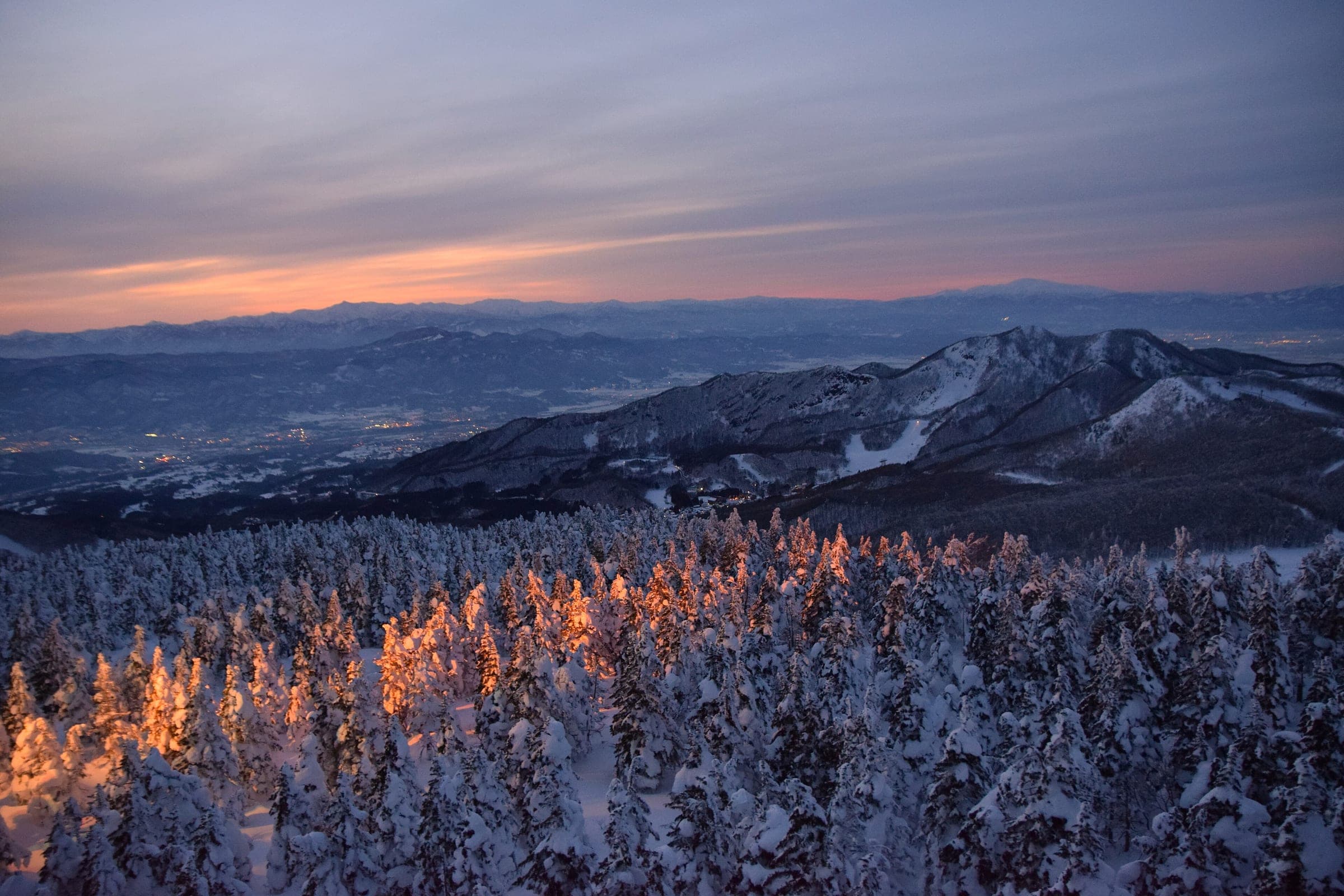
After dark the ropeway lights the trees in colour from 17:00 to 21:00, with the last car up at 19:50. Skis and boards stay down for the light-up. A heated snowcat called the Night Cruiser takes small groups from Juhyo Kogen Station into the lit forest on a 75-minute tour. JTB sells its seats online from 14:00 seven days ahead, and the ropeway takes no phone bookings. The 2025/26 light-up ended on 22 February 2026, and the ropeway posted its 2026/27 dates as a scanned notice on 4 October 2026.
What is the skiing like at Zao?
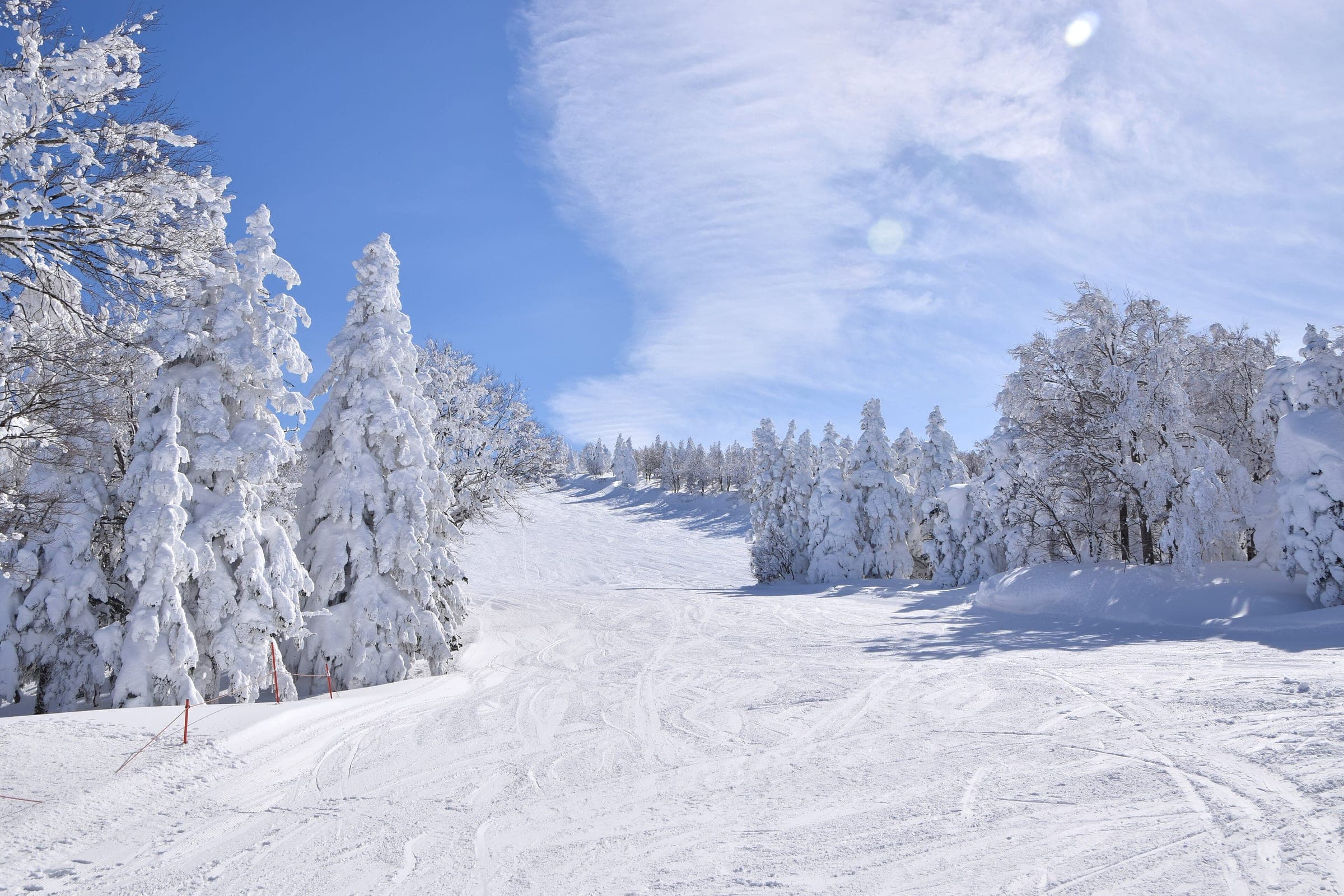
Zao is the bigger mountain by far, and the resort grades 80 per cent of it for beginners and intermediates. Thirty lifts link 14 open slopes over 305 ha on one Zao Onsen ticket, and four of them are the ropeways and the Sky Cable gondola. The Juhyogen course leaves Jizo Sancho Station through the snow monsters and winds about 10 km back toward the village. The tourism association says beginners can manage it if they take the upper section slowly in a snowplough.
Lower down the pitch changes. The Hanenkamm A and B courses are the FIS-certified expert runs, and they open with a 38° wall that only the Yokokura Wall matches. The Chuo slope opens early and usually keeps its snow until May. Peak days cost ¥9,000 from 26 December 2026 to 3 January 2027 and again from 30 January to 28 February 2027, which covers the snow-monster weeks. Regular days in January cost ¥8,000.
Zao prohibits riding anywhere off its slopes and courses. From 2026/27 it also makes anyone who teaches or guides for pay register with the resort, so book lessons only with a school on its registered list.
The map
The map marks every place this piece visits.
Contours come from Copernicus DEM, and the coast and water from OpenStreetMap.
What is the skiing like at Hakkoda?
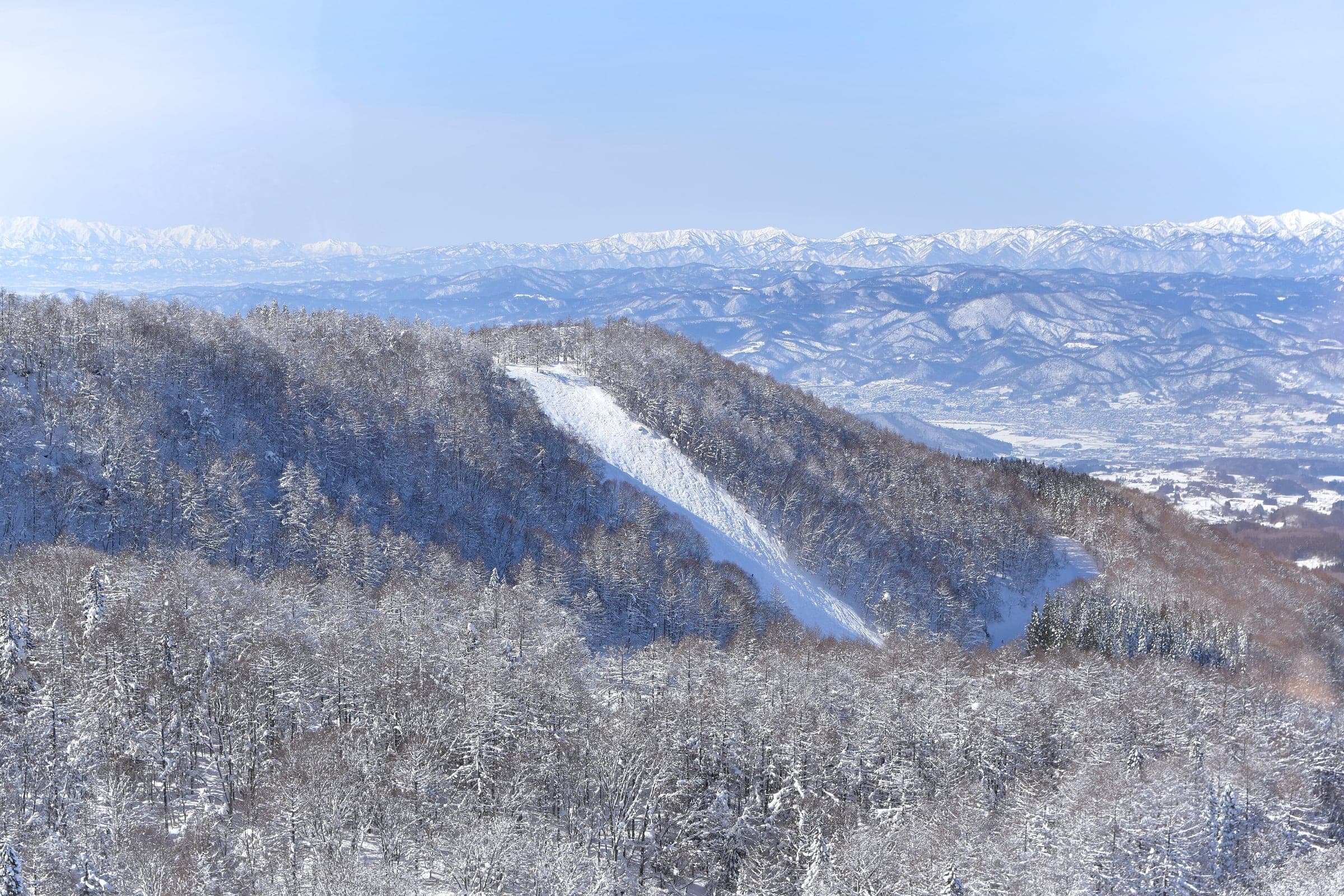
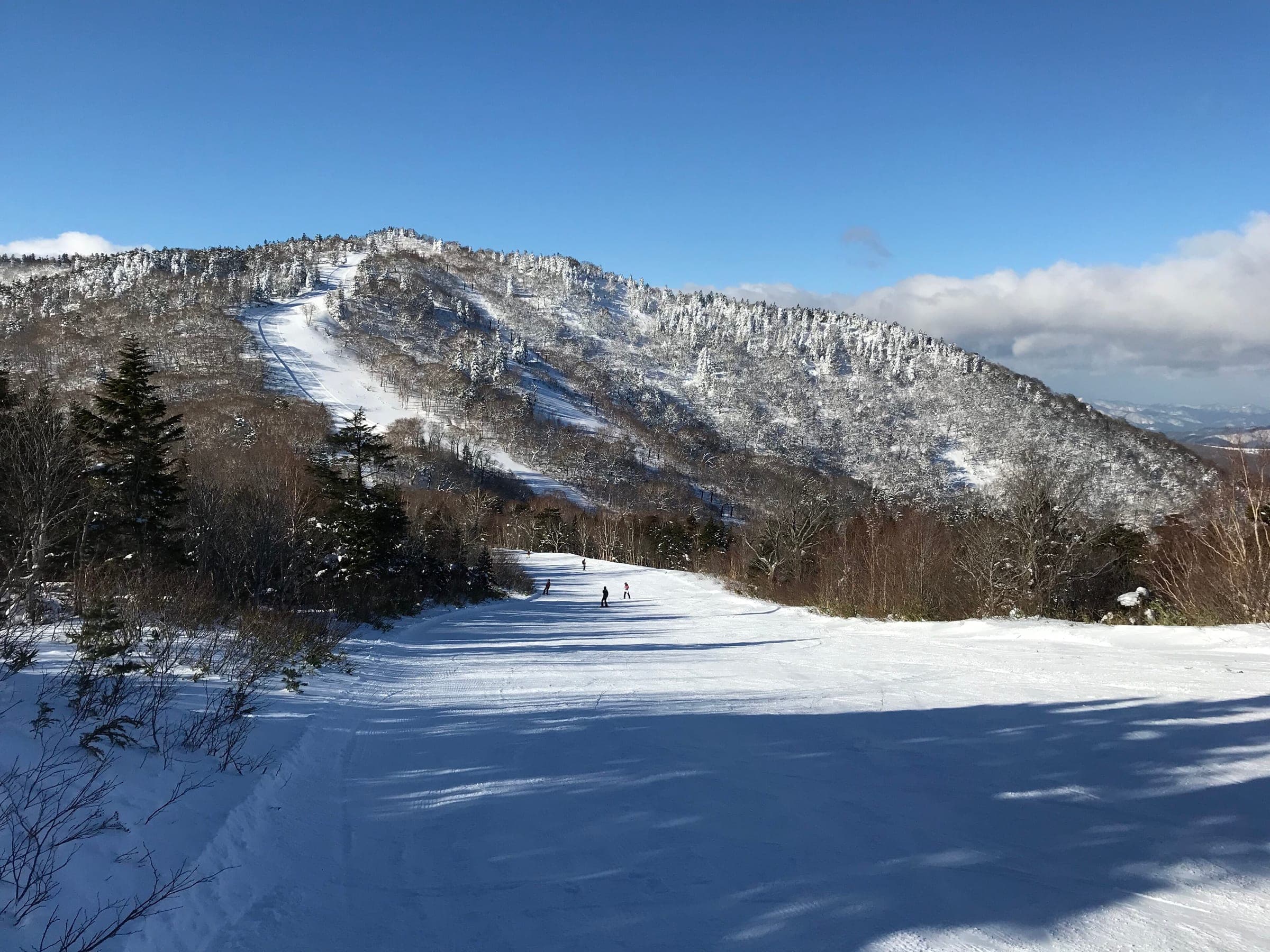
Hakkoda suits strong riders only, since its single ropeway serves two long ungroomed courses. The cabin climbs to Sancho Koen Station at 1,324 m on Mt. Tamoyachi in about ten minutes. The ropeway describes the Direct course as lined with snow monsters, with groves of rime-crusted firs spreading right beside you for its 3.5 km. The Forest course drops steeply for about a kilometre and then eases into a long run through the trees, 5 km in all. Both are graded intermediate to advanced. Poles and nets mark their edges, and patrol sweeps them.
You pay by the ride. From 1 August 2026 an adult pays ¥1,550 one way or ¥2,500 return, and the eleven-ride ticket at ¥12,000 covers one rider only. Cars run every 15 to 20 minutes, with the last one up at 15:40 until the end of February and 16:20 from March. Hakkoda rents no gear and teaches no lessons, and beginners ride at the groomed Hakkoda Kokusai area beside the base station.
The snow is the draw. JMA's Sukayu station stands at 890 m below the ropeway, and its 1991–2020 normals add up to 1,645 cm of new snow from November to April by our sum, with 454 cm in January. The normal deepest snow on the ground reaches 373 cm in February, and JMA's record depth there of 566 cm came on 26 February 2013. Wind is the catch. The ropeway stops at 25 m/s, so check the summit report on the operator's homepage before you leave Aomori.

What do the tour routes ask of you?
They ask for a guide or full avalanche gear and a plan. Six named routes leave the summit and come down at Sukayu Onsen, Hotel Jogakura, Hakkoda Onsen or the Tashiro plateau, never at the ropeway base. The routes to Sukayu and Jogakura usually open in early March, and the longer routes toward Hakkoda Onsen and Tashiro wait until early April. The ropeway warns of cornices and crevasses out there, and nobody patrols them.
The Mt. Hakkoda Local Rules require a mountain entry form for every route and forbid entering alone. Search and rescue anywhere outside the two courses is billed at ¥30,000 per rescuer per day, ¥50,000 for each emergency ropeway run and ¥10,000 an hour per snowcat, plus logistics and meals. Sukayu Guide runs shared tours from 19 December 2026 to 6 May 2027 at ¥7,000 a day, and Hotel Jogakura's guide charges ¥6,600.
The Japan Avalanche Network's daily bulletins don't cover Hakkoda or Zao. Check JMA's warnings and advisories for Aomori city, which carry an avalanche advisory when JMA issues one, and ask the guides about the day's snowpack. Aomori Prefecture says black bears wake from hibernation in early spring, so carry a bell on the April routes and check the prefecture's Kuma Log Aomori map. Our gates and rescue guide covers both mountains' rules.
What do the volcanic alert levels mean on each mountain?
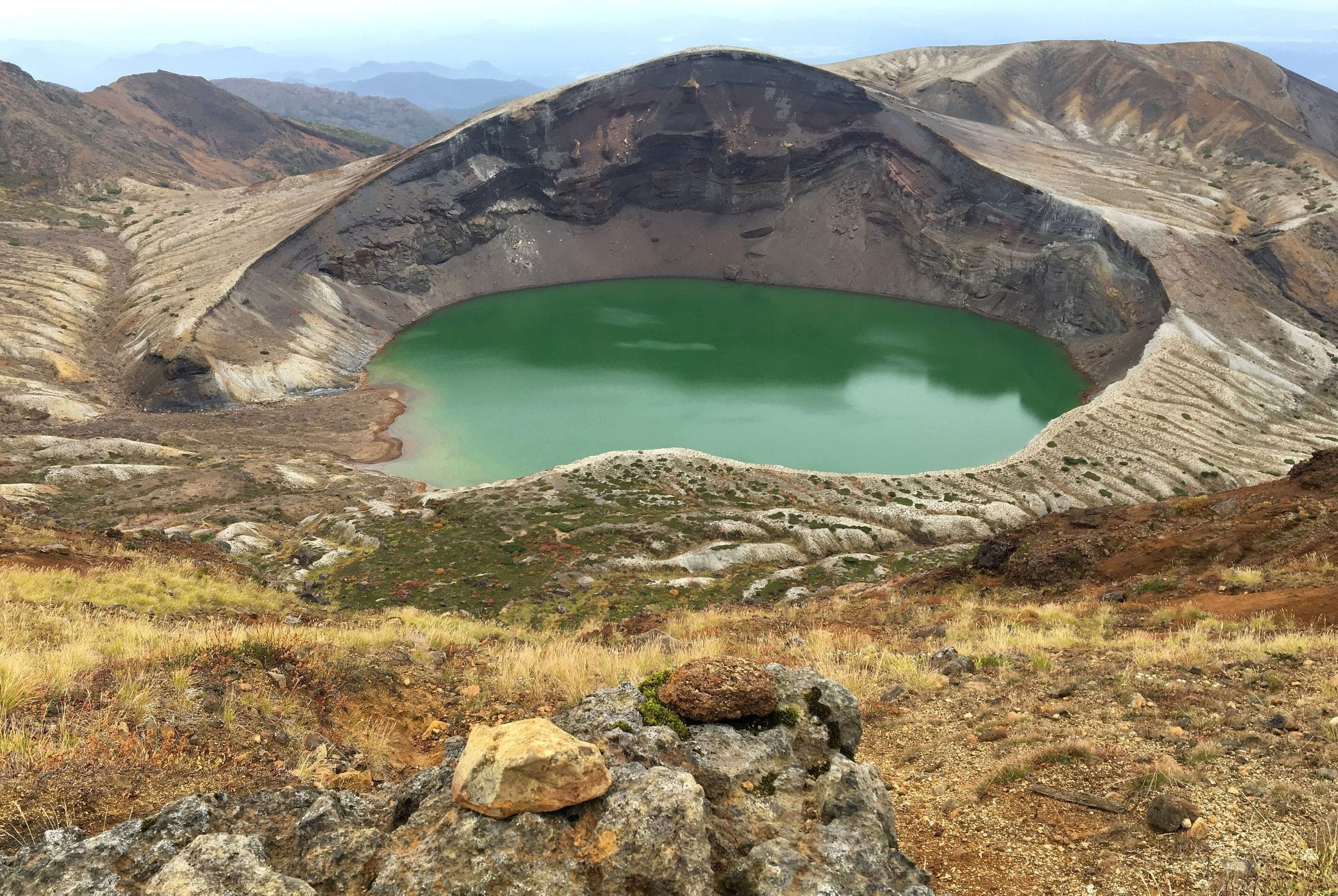
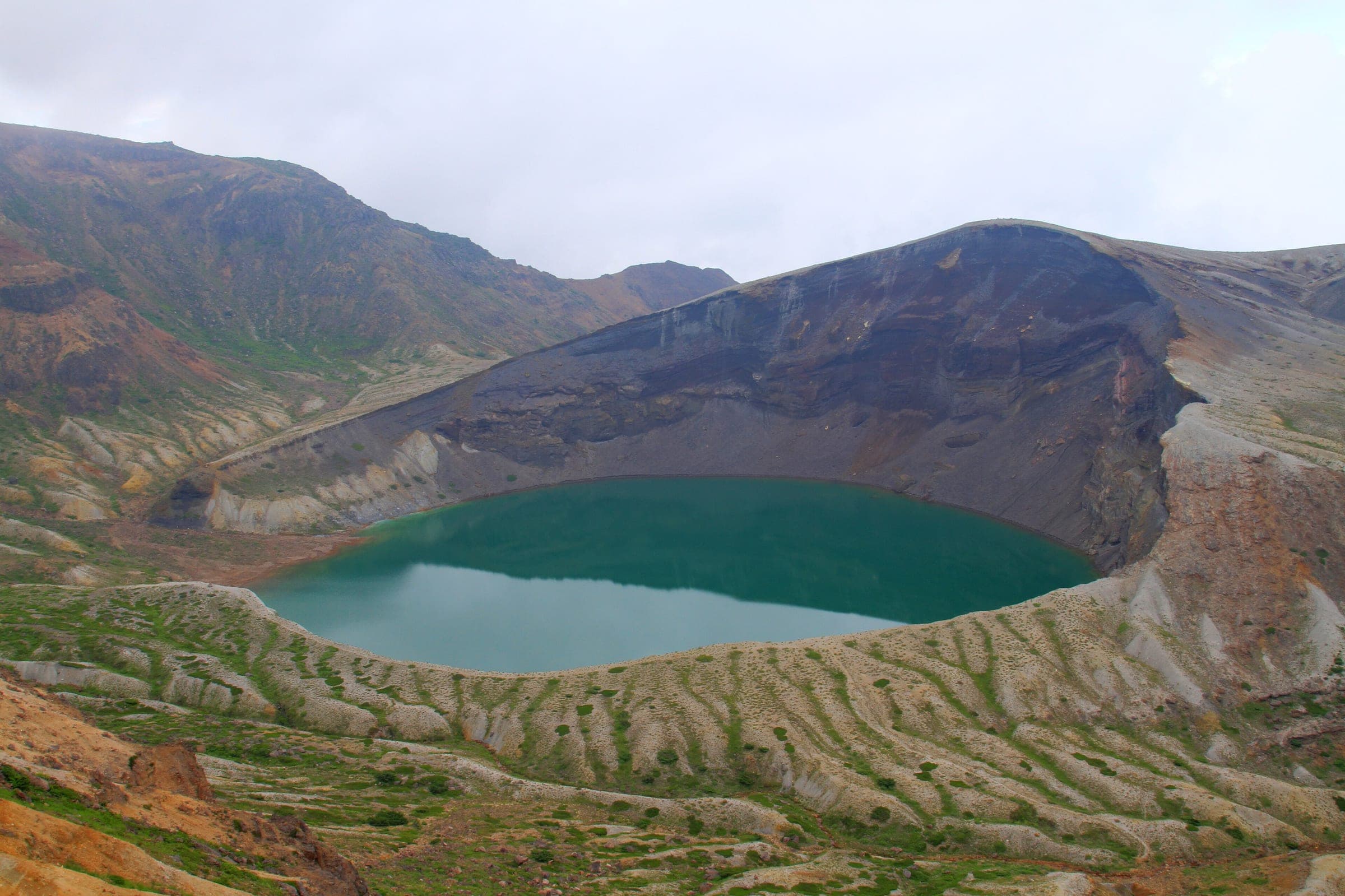
Both volcanoes sat at JMA's Level 1 on 11 October 2026. JMA labels that level a reminder that the volcano is active. Read JMA's Zaozan page and Hakkodasan page on the morning you ride up.
On Zao, JMA's criteria tie Level 2 to restrictions within about 1.2 km of the Umanose caldera around the Okama crater. Level 3 calls for entry restrictions and covers eruptions that reach up to about 3.5 km from Okama. The crater lies on the far side of the range from the ropeway, and the Zao Echo Line road to it shuts for the winter from 4 November 2026 to 23 April 2027.
On Hakkoda, Level 2 restricts access within about 2 km of Odake and about 1 km of Jigokunuma. Level 3 brings entry restrictions on the mountain, and JMA's scenario for that level carries large blocks up to about 3 km from Odake and pyroclastic flows up to about 6 km, with meltwater mudflows possible within about 6 km in the snow season. JMA's map of the restriction zones marks the facilities around the Hakkoda Ropeway, and its leaflet names the hot-spring buildings on the west side near Jigokunuma as a zone that may need early evacuation.
Where do you soak at the end of the day?
Zao's three public baths and Sukayu's great cypress hall are the two soaks to plan around. The three public baths in Zao Onsen open from 6:00 to 22:00 every day, and you drop ¥300 into the box at the door. The water runs strongly acidic at pH 1.25 to 1.6 by the tourism association's count, so take off rings and watches before you get in, because the acid turns metal black. The big Dai-Rotenburo above the village closes for the whole ski season.
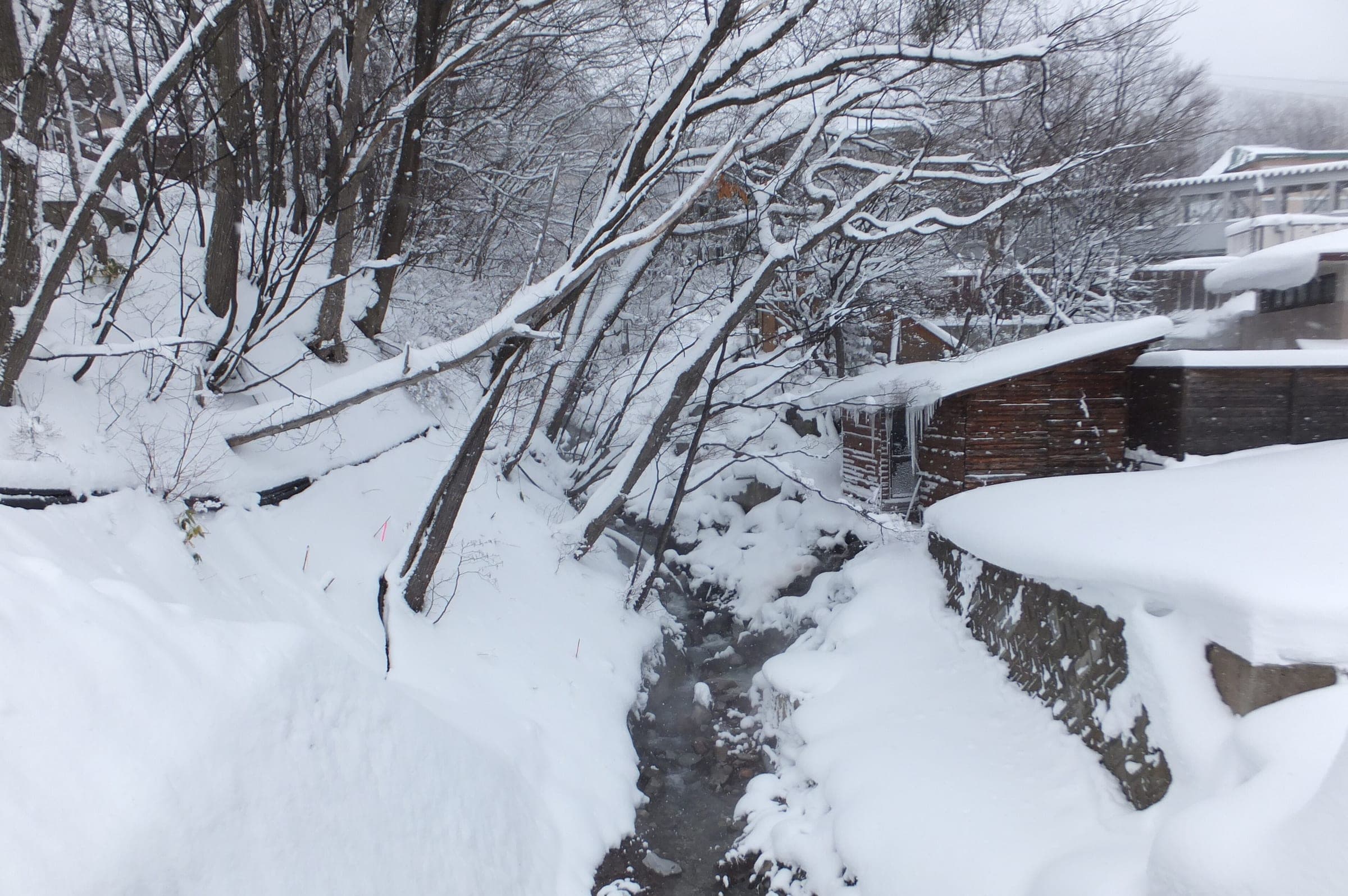
At Sukayu, the Hiba Sennin-buro is a 160-mat hall of Aomori cypress with no pillars in the bathing space, and it has taken bathers since 1684. The bath is mixed. Sukayu rents yuami-gi bathing wraps for ¥500, and only its own wraps may go in the water. From 1 December 2026 day bathing runs 9:00 to 16:00 for ¥1,500 with towels included, and the separate Tama-no-yu baths stay split by sex. The inn has not said whether the 8:00 women-only hour continues for day visitors under the new times.
Where should you stay and eat?
Sleep in Zao Onsen village, or beside the ropeway at Hakkoda. KAI Zao opens on 15 October 2026 directly in front of the Chuo Ropeway, so this winter is its first. Jalan lists room-only stays from ¥20,350 a person when two share. Zao Kokusai Hotel sits across a bridge from the Yokokura slope, though guests with tattoos cannot use its baths. Le Vert Zao sits a minute's walk from the Nakamori slope, with room-only stays from ¥11,000 a person. Jingisukan is lamb grilled on a domed iron pan, and Zao Onsen tells its own story of the dish taking shape here in the late 1940s. Robata sells itself on that story, and Jingisukan Lodge at the foot of Uwanodai raises its own sheep.
At Hakkoda, Sukayu Onsen Ryokan starts at ¥11,495 a person with dinner and breakfast for two sharing a plain toji-wing room with the toilet down the hall. The winter JR bus from Aomori ends at its door, and the ropeway is about 15 minutes back down the road for ¥460. Hotel Jogakura leans hardest toward skiers, with a drying room and a free 8:45 bus to the ropeway on tour days. Dinner and breakfast there start at ¥16,300 a person. Hakkoda Hotel costs from ¥39,600 a person with dinner and breakfast, and its guests bathe free in Sukayu's great hall. Lunch at Sukayu means a bowl of its buckwheat-only soba at Onimen-an, open 10:00 to 16:30.
Which mountain suits you?
Pick Zao if your group mixes skiers with people who only want to see the trees, or if you hold an Ikon Pass. The ropeway carries everyone to the same summit, and the evening light-up and the village baths keep non-skiers busy. The trade-off is a summit ropeway shared with sightseers and a ban on leaving the marked courses.
Hakkoda rewards confident riders with deep, ungroomed snow and a guide's company on the March routes. Plan a spare day into any Hakkoda trip, because a windy forecast can keep the ropeway shut. Riders with both weeks to spare can take the Tsubasa to Yamagata in February and the Hayabusa north to Aomori in March.
Quick answers
When are the Zao snow monsters at their best?
Zao's snow monsters peak in February, according to Zao Ropeway's guide. The trees grow through January and start to thin and collapse as March warms up.
How much is the Zao Ropeway to see the snow monsters?
A return on the Zao Ropeway to Jizo Sancho Station at 1,661 m costs ¥4,400 for an adult in 2026. Skiers ride on their 2026/27 lift ticket, which costs ¥9,000 a day at peak.
Can you see snow monsters at Hakkoda?
Yes. The Hakkoda Ropeway's Direct course runs 3.5 km beside groves of rime-crusted firs below Sancho Koen Station at 1,324 m. The ropeway publishes no peak dates for them.
Can you ski off-piste at Zao or Hakkoda?
Zao Onsen bans riding off its slopes and courses. Hakkoda leaves the land beyond its two patrolled courses open under its local rules, with a mountain entry form and rescues billed at ¥30,000 per rescuer per day.
Are Zao and Hakkoda active volcanoes?
Yes. JMA kept both Zaozan and Hakkodasan at volcanic alert Level 1 on 11 October 2026. Level 2 restricts access around each crater, and Level 3 brings entry restrictions on the mountain.
How much does the Hakkoda Ropeway cost for skiers?
The Hakkoda Ropeway charges ¥1,550 for an adult one way from 1 August 2026. An eleven-ride ticket costs ¥12,000 and a snow-season pass for 1 December to 5 May costs ¥72,500.
We write from operators’ and agencies’ own pages, open map data and published research, and we date every fact we check. How we research.
Sources (22)
- https://zaoropeway.co.jp/winter/juhyo.php
- https://zaoropeway.co.jp/winter/guide.php
- https://zaoropeway.co.jp/winter/en.php
- https://zaoropeway.co.jp/winter/juhyo_illusion.php
- https://zaomountainresort.com/winter/
- https://zaomountainresort.com/chrage/
- https://zaomountainresort.com/juhyo-fes/
- https://zaomountainresort.com/about/
- https://www.zao-machi.com/news/257.html
- https://www.data.jma.go.jp/vois/data/report/activity_info/212.html
- https://www.data.jma.go.jp/vois/data/filing/level_kijunn/212_level_kijunn.pdf
- https://hakkoda-ropeway.jp/en/ski/
- https://hakkoda-ropeway.jp/en/fare_time/
- https://hakkoda-ropeway.jp/en/wp-content/uploads/2026/01/rule_en.pdf
- https://hakkoda-ropeway.jp/access/
- https://www.data.jma.go.jp/vois/data/report/activity_info/203.html
- https://www.data.jma.go.jp/vois/data/filing/level/PDF/level_203.pdf
- https://sukayu.jp/information1/
- https://sukayu.jp/information4/
- https://www.data.jma.go.jp/stats/etrn/view/nml_amd_ym.php?prec_no=31&block_no=1079&year=&month=&day=&view=
- https://www.jma.go.jp/bosai/warning/#lang=en
- https://www.pref.aomori.lg.jp/soshiki/kankyo/shizen/kuma_cyuui.html
Places in this piece関連
Read next読む
Practical guide · 10 min read
How do backcountry gates and rescue costs work at Japan's ski resorts?
Japanese resorts let riders out only through designated gates once a climbing plan is filed, and every resort here that publishes a rescue rule bills the rider. Zao bans riding off its courses altogether.
Practical guide · 9 min read
When is the best time to ski in Japan?
Mid-January to the end of February brings the most snow on Honshu and in Tohoku. Book around New Year and the 2027 holiday weekends, or wait for March and April, when the days run long and spring prices kick in.
Practical guide · 7 min read
Is the Ikon Pass or the Epic Pass better for skiing in Japan?
Ikon gives seven days at each of ten Japanese mountains for 2026/27, eight of them on Honshu. Epic gives five back-to-back days across Hakuba's ten resorts, plus Rusutsu in Hokkaido.