Practical guide · 6 min read
What does JaPow mean?
JaPow is skier slang for Japan's powder snow, a blend of Japan and pow. The snow comes from cold northwesterly winds that cross the Sea of Japan and unload on the mountains facing it, with January the snowiest month at every JMA station we keep near a ski area.
By Adam BognarPublished
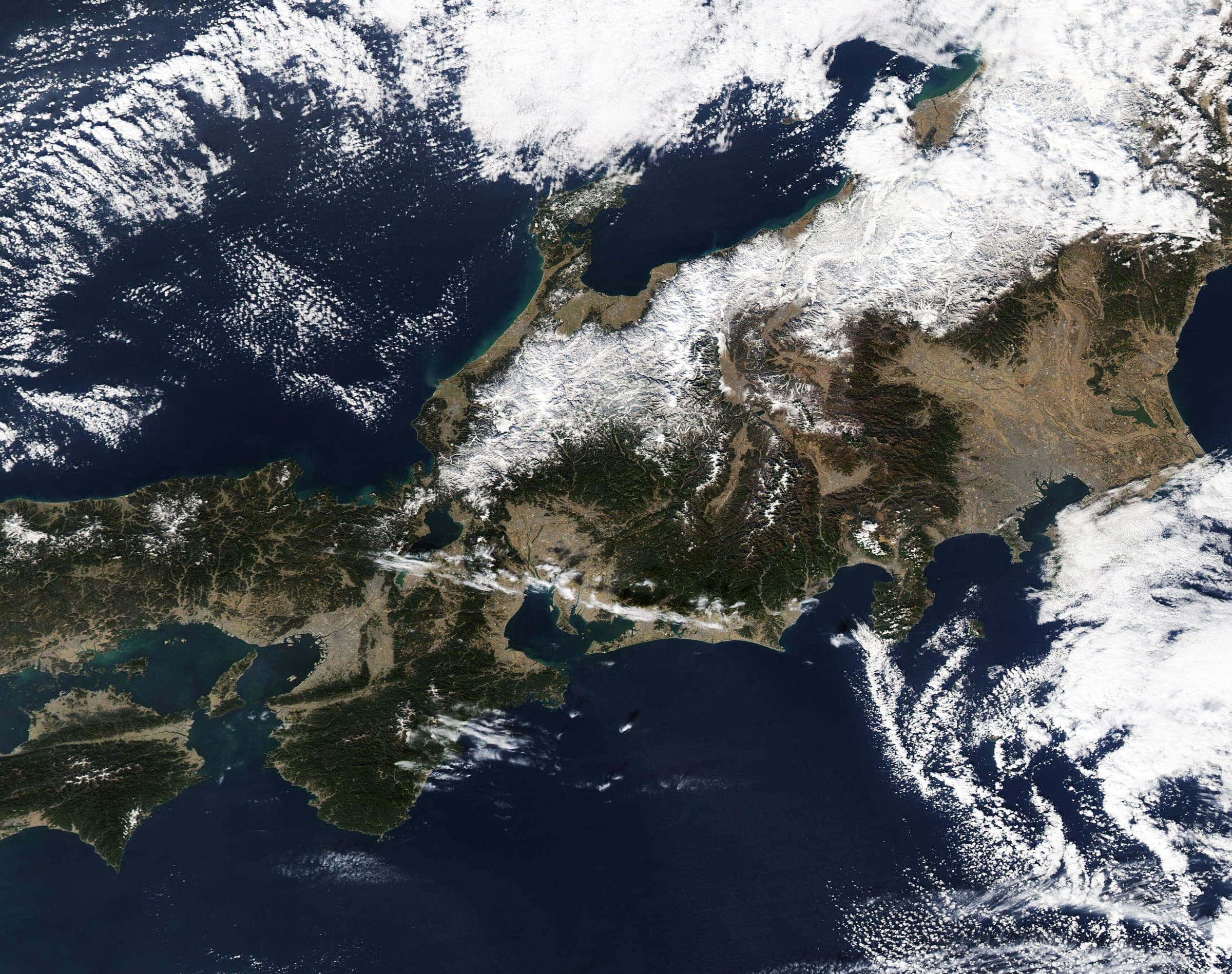
JaPow is skier and snowboarder slang for the powder snow of Japan's mountains. The word blends "Japan" with "pow", which riders say for powder, and Wiktionary records it as that blend and defines it as the low-humidity powder of Japan's Snow Country. The snow behind the word comes from the winter monsoon. JMA describes cold northwesterly winds carrying Siberian air across the Sea of Japan and bringing heavy snow to the side of the country that faces it, and its normals put more than 3.5 m of new snow into an average January at four of the stations in our files.
This guide explains the word from the dictionary record and the weather from JMA's own climate pages and its 1991–2020 normals, which we keep for ten stations near ski areas across Honshu and Tohoku. Every snow figure below is JMA's, measured on valley floors and at mountain onsen below the lifts. Hokkaido's snow belongs to our sister site, and Ride Hokkaido covers it.
Where does the word JaPow come from?
It's a blend of two English words, Japan and pow, and riders spell it JaPow, Japow or japow. Wiktionary files it as English skiing slang, and one of its editors has proposed moving the entry to a capital J because the books that use the word spell it that way. We found no source that names who first used it or dates its first appearance, so we won't guess at either.
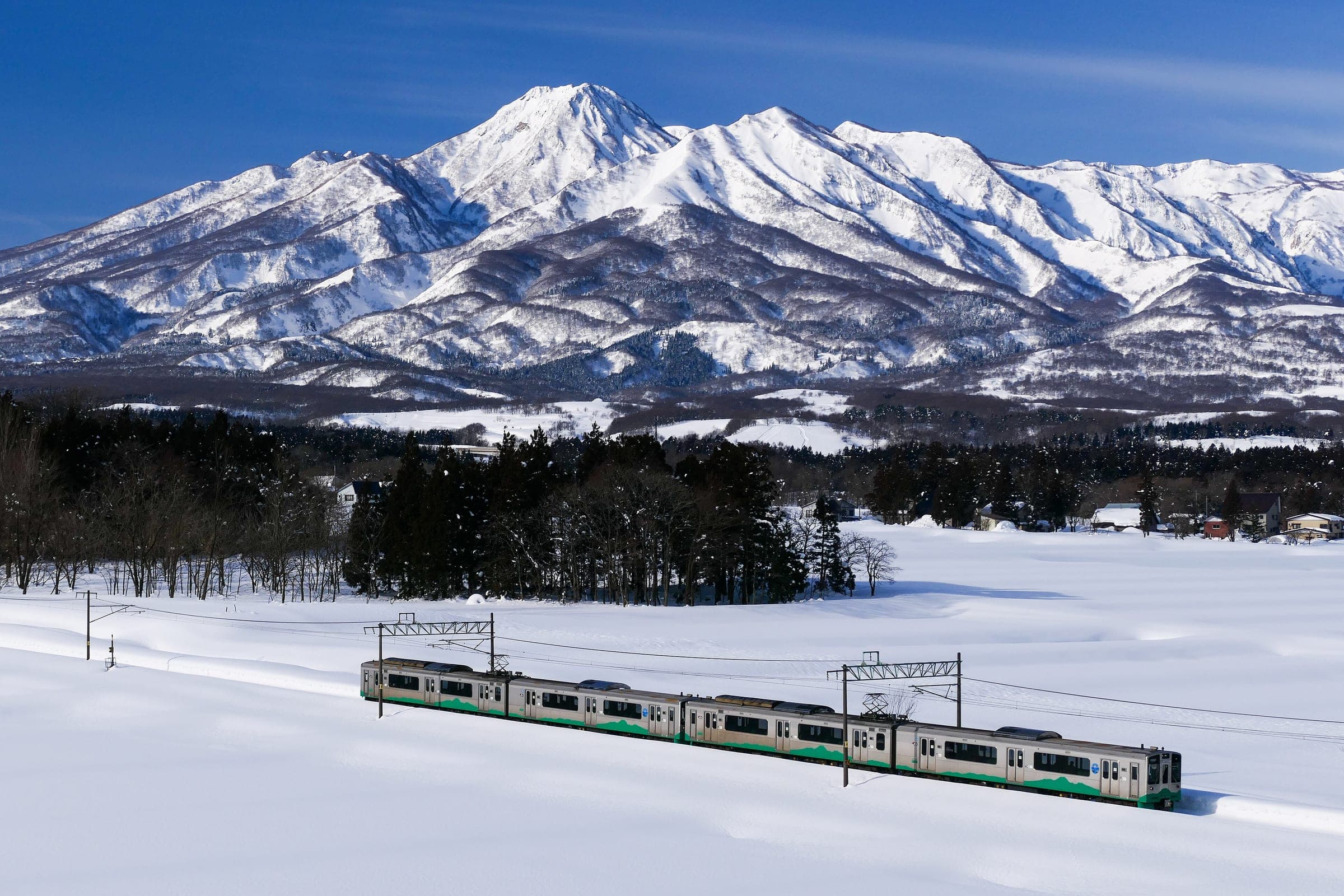
The dictionary's phrase "Snow Country" has a home of its own. Kawabata Yasunari wrote his novel Snow Country in the Kasumi room at the Takahan inn above Yuzawa between 1934 and 1937, and Yuzawa's valley station records 377 cm of new snow in an average January.
What makes Japan's snow?
The winter monsoon. As JMA explains on its climate of Japan page, the Siberian High builds over the Eurasian continent in winter while the Aleutian Low deepens over the North Pacific. Northwesterly winds between them carry cold air from Siberia across the Sea of Japan, where it picks up moisture. When that air reaches Japan's mountains it drops heavy snow on the Sea of Japan side, upstream of the mountains, and leaves the Pacific side downstream in sunshine.
JMA's regional pages say the same for Hokuriku, where the snow falls hardest in the mountains, and for Tohoku. JMA also notes that cold northwesterly flows and snow or rain on the Sea of Japan side start increasing in November, and the first lifts turn late that month.
What do JMA's figures show?
They show deep snow and very little sun on the Sea of Japan side of the mountains in January. These are JMA's 1991–2020 normals for the month.
| JMA station (height) | Mountains above it | New snow in January | Sunshine in January | Mean daily low and high |
|---|---|---|---|---|
| Sukayu (890 m) | Hakkoda | 454 cm | 11.8 h | −10.0 °C to −5.1 °C |
| Sekiyama (350 m) | Myoko Kogen | 385 cm | 58.1 h | −2.7 °C to 3.3 °C |
| Yuzawa (340 m) | Naeba and Kagura | 377 cm | 45.8 h | −3.2 °C to 2.8 °C |
| Nozawa Onsen (576 m) | Nozawa Onsen | 366 cm | 58.9 h | −4.7 °C to 1.7 °C |
| Minakami (524 m) | Tanigawadake | 296 cm | 81.1 h | −4.4 °C to 2.6 °C |
| Hakuba (703 m) | Hakuba Valley | 216 cm | 71.3 h | −7.2 °C to 1.4 °C |
| Kusatsu (1,223 m) | Kusatsu-Shirane | 175 cm | 153.0 h | −7.8 °C to −0.4 °C |
| Iwate-Matsuo (275 m) | APPI and Hachimantai | 122 cm | 82.7 h | −7.9 °C to 0.8 °C |
| Takayama (560 m) | Okuhida | 117 cm | 92.9 h | −4.8 °C to 3.2 °C |
| Yamagata (152.5 m) | Zao | 103 cm | 79.6 h | −3.1 °C to 3.3 °C |
| Ajiro (66.9 m) | Izu coast, Pacific side | no snow normal | 147.4 h | 3.9 °C to 10.7 °C |
The pattern matches JMA's description. The stations that face the Sea of Japan storms sit under cloud for most of January, with 45.8 hours of sunshine at Yuzawa and 11.8 at Sukayu, and they log the heaviest snow. Ajiro on the Pacific coast of the Izu peninsula gets 147.4 hours of January sun and keeps no snow normal at all. JMA's most frequent wind direction is west-northwest at Sukayu all winter, and northwest at Yuzawa and at Hikone on Lake Biwa in January and February, in line with the monsoon. Valley stations such as Hakuba's read their local valley winds instead, so we don't read much into those.
The cold holds the snow through the season. Sukayu's mean daily high in January is −5.1 °C, so an average January day there never climbs above freezing. The snowpack builds through the winter, and the deepest snow on the ground peaks in February at every snow station in the table, at 373 cm at Sukayu and 202 cm at Yuzawa.
Where in Japan is the snow deepest?
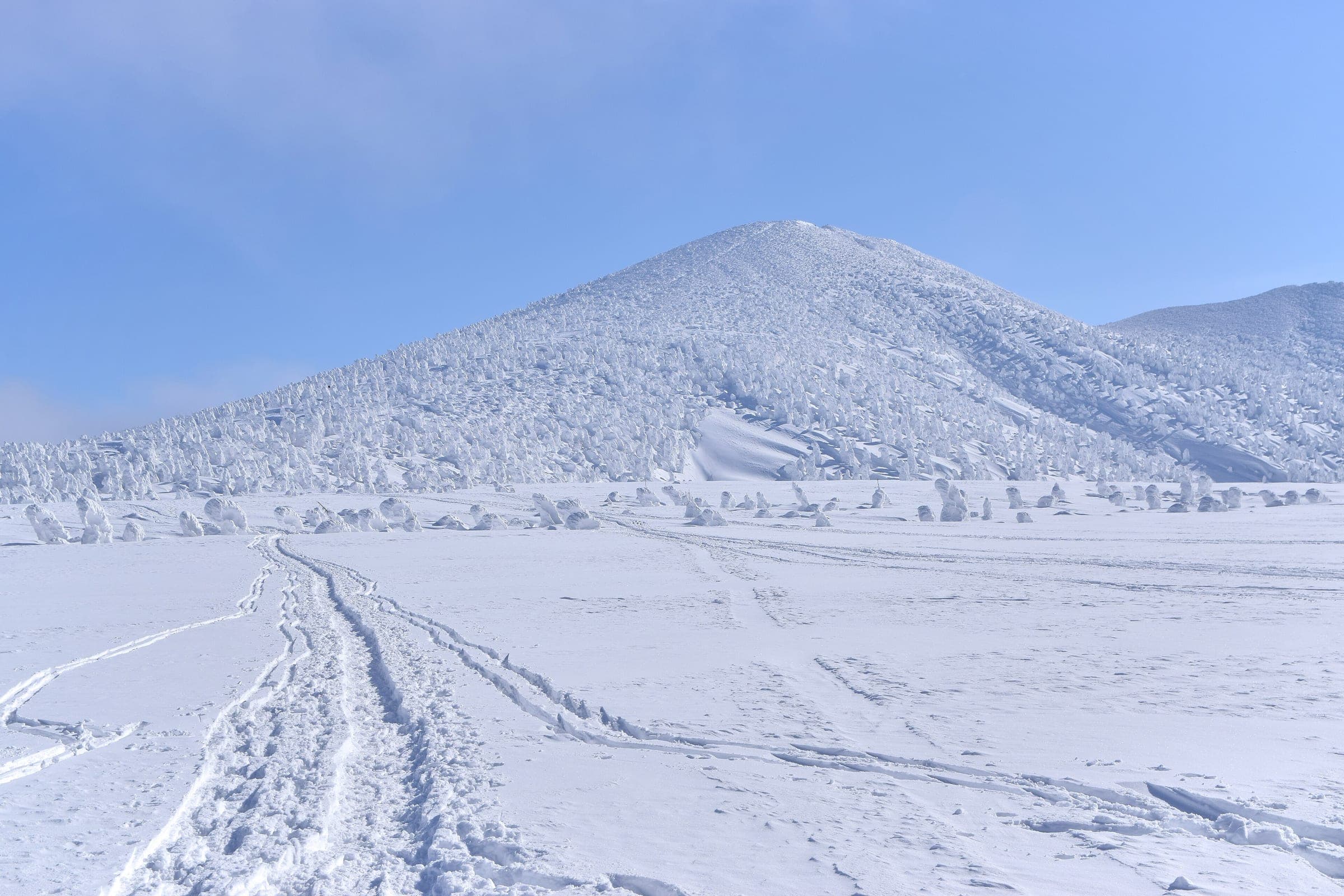
Of the stations in our files, Sukayu in the Hakkoda mountains of Aomori gets the most, with 454 cm of new snow in an average January and 373 cm on the ground at its February peak. The Hakkoda Ropeway climbs above that station, and outside its two patrolled courses the resort leaves the mountain to the rider. On the Niigata side, Sekiyama below Myoko Kogen and Yuzawa below Kagura both pass 3.7 m of new snow in January. Every one of these figures comes from a valley floor or an onsen below the lifts, and the slopes above them run colder.
In Hokkaido, Kutchan below the Niseko resorts averages 12.6 m of snow a season by the town's own records, according to Ride Hokkaido. The town keeps its own records, so compare them with JMA's normals with care. Our Hokkaido page hands you over to Ride Hokkaido for the island.
When is the best time for powder?
January and February. January brings the most new snow at all ten JMA stations we keep near ski areas, and the snow on the ground runs deepest in February. Our month-by-month guide lays out the season with the holidays to avoid, and it points to JMA's seasonal outlook for winter 2026/27, which JMA issued in September with El Niño at a record strength. Off-piste powder sits behind resort gates with rules and rescue bills of their own, and our gates and rescue guide covers each one.
Quick answers
What does JaPow mean?
JaPow means Japanese powder snow. The word blends "Japan" with the riders' slang "pow" for powder, and Wiktionary defines it as the low-humidity powder snow of Japan's Snow Country.
Why does Japan get so much snow?
Japan gets heavy snow because cold northwesterly winds from Siberia pick up moisture over the Sea of Japan in winter and drop it on the mountains that face the sea, as JMA describes. Yuzawa's JMA station averages 377 cm of new snow in January.
Which month has the most snow in Japan?
January has the most new snow at all ten JMA stations we keep near Japanese ski areas, from 103 cm at Yamagata to 454 cm at Sukayu in the Hakkoda mountains. The snow on the ground peaks in February.
Is Japanese powder only in Hokkaido?
No. Honshu's mountains facing the Sea of Japan get heavy snow too, and JMA's January normals give 385 cm of new snow at Sekiyama below Myoko and 366 cm at Nozawa Onsen. Ride Hokkaido covers Hokkaido's resorts.
Is Japanese snow dry?
Japan's powder falls in deep cold, and Wiktionary defines the word as low-humidity powder. Sukayu in the Hakkoda mountains averages a January daily high of −5.1 °C, and Hakuba's valley station a daily low of −7.2 °C.
We write from operators’ and agencies’ own pages, open map data and published research, and we date every fact we check. How we research.
Sources (11)
- https://en.wiktionary.org/wiki/japow
- https://www.data.jma.go.jp/cpd/longfcst/en/tourist_japan.html
- https://www.data.jma.go.jp/cpd/longfcst/en/tourist/file/Hokuriku.html
- https://www.data.jma.go.jp/cpd/longfcst/en/tourist/file/Tohoku.html
- https://www.data.jma.go.jp/stats/etrn/view/nml_amd_ym.php?prec_no=31&block_no=1079&year=&month=&day=&view=
- https://www.data.jma.go.jp/stats/etrn/view/nml_amd_ym.php?prec_no=54&block_no=0998&year=&month=&day=&view=
- https://www.data.jma.go.jp/stats/etrn/view/nml_amd_ym.php?prec_no=54&block_no=0544&year=&month=&day=&view=
- https://www.data.jma.go.jp/stats/etrn/view/nml_amd_ym.php?prec_no=48&block_no=0393&year=&month=&day=&view=
- https://www.data.jma.go.jp/stats/etrn/view/nml_amd_ym.php?prec_no=48&block_no=0396&year=&month=&day=&view=
- https://www.data.jma.go.jp/stats/etrn/view/nml_sfc_ym.php?prec_no=50&block_no=47668&year=&month=&day=&view=
- https://ridehokkaido.com/towns/kutchan
Places in this piece関連
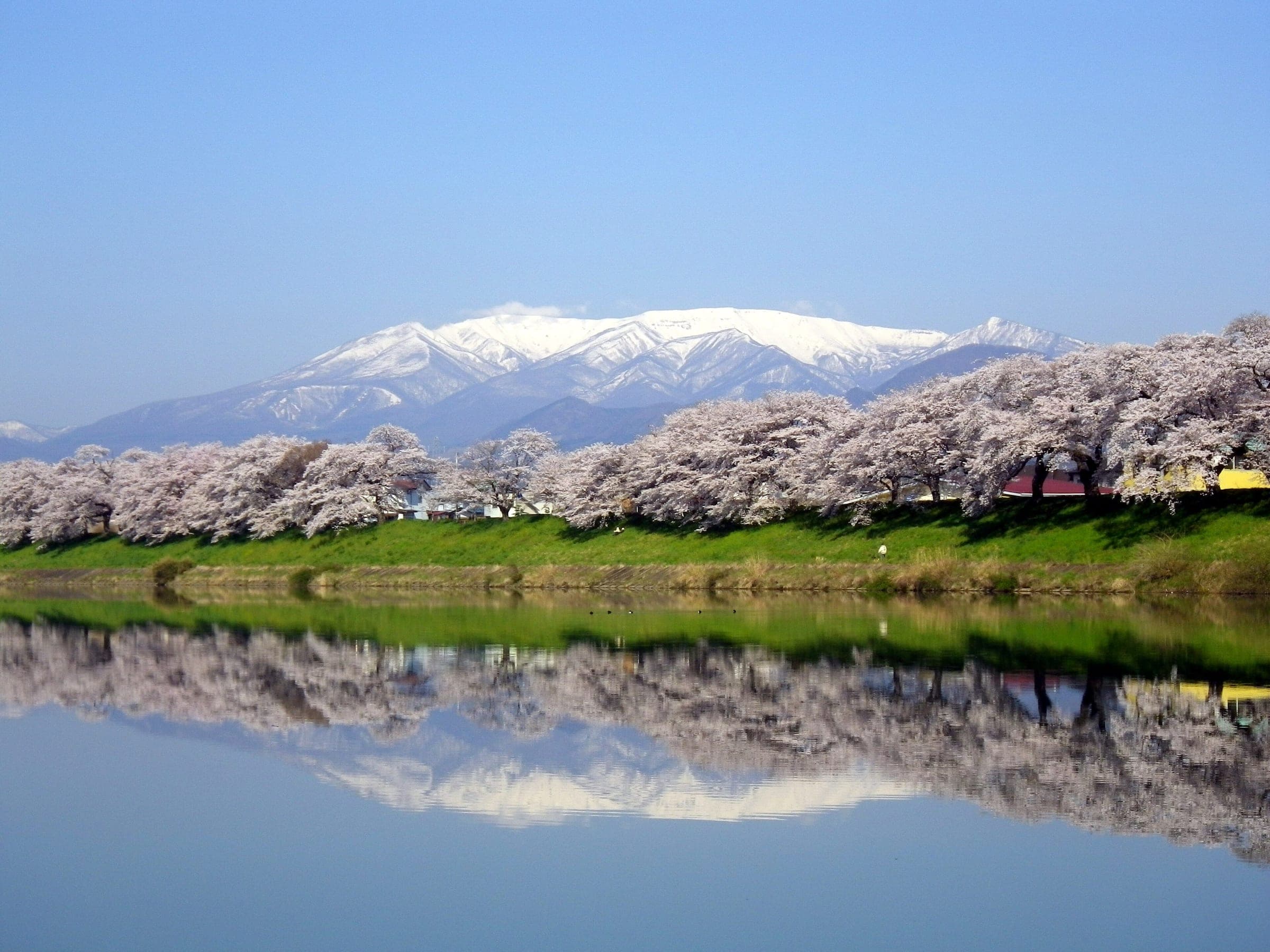
Read next案内
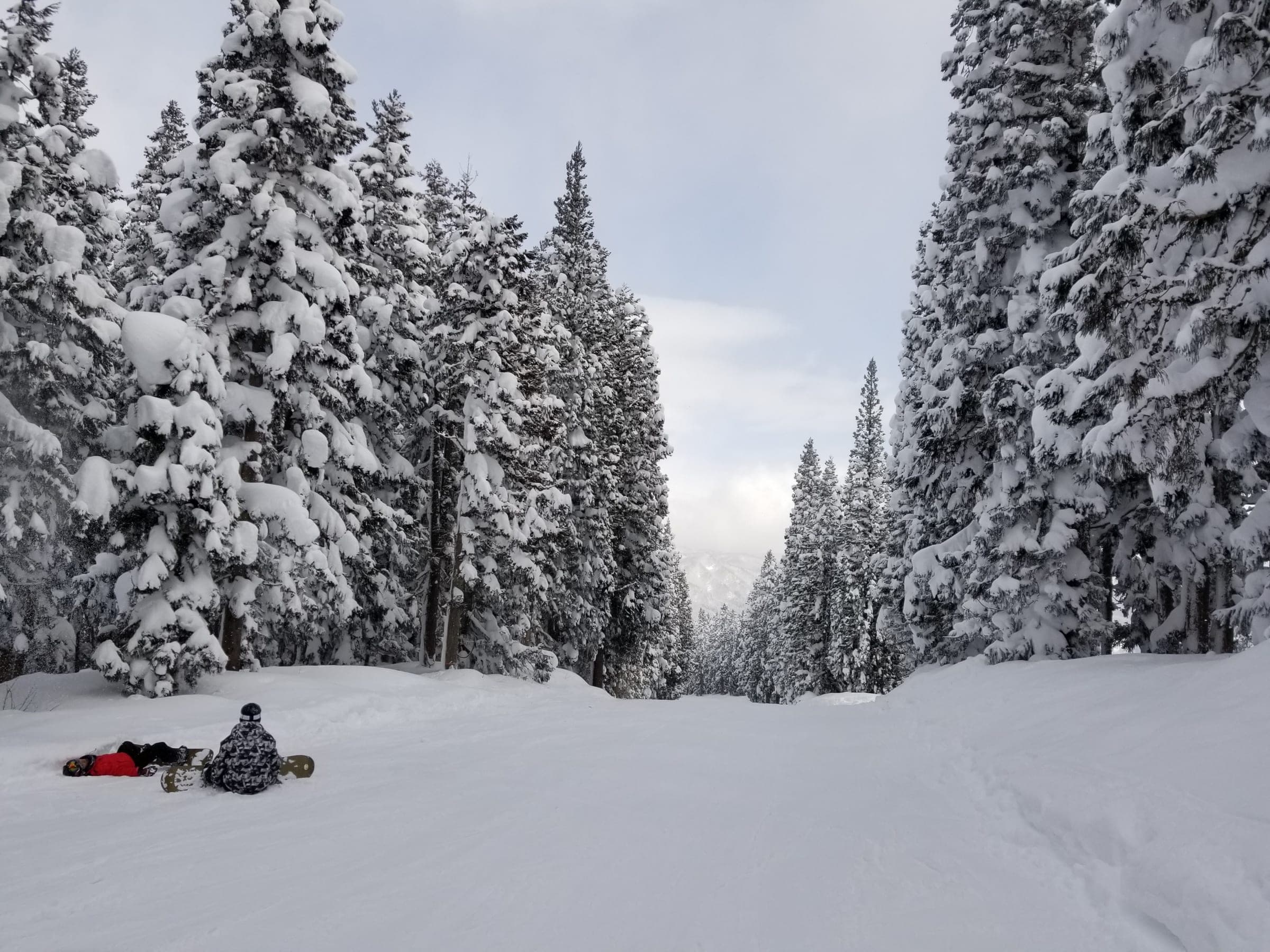
Practical guide · 9 min read
When is the best time to ski in Japan?
Mid-January to the end of February brings the most snow on Honshu and in Tohoku. Book around New Year and the 2027 holiday weekends, or wait for March and April, when the days run long and spring prices kick in.
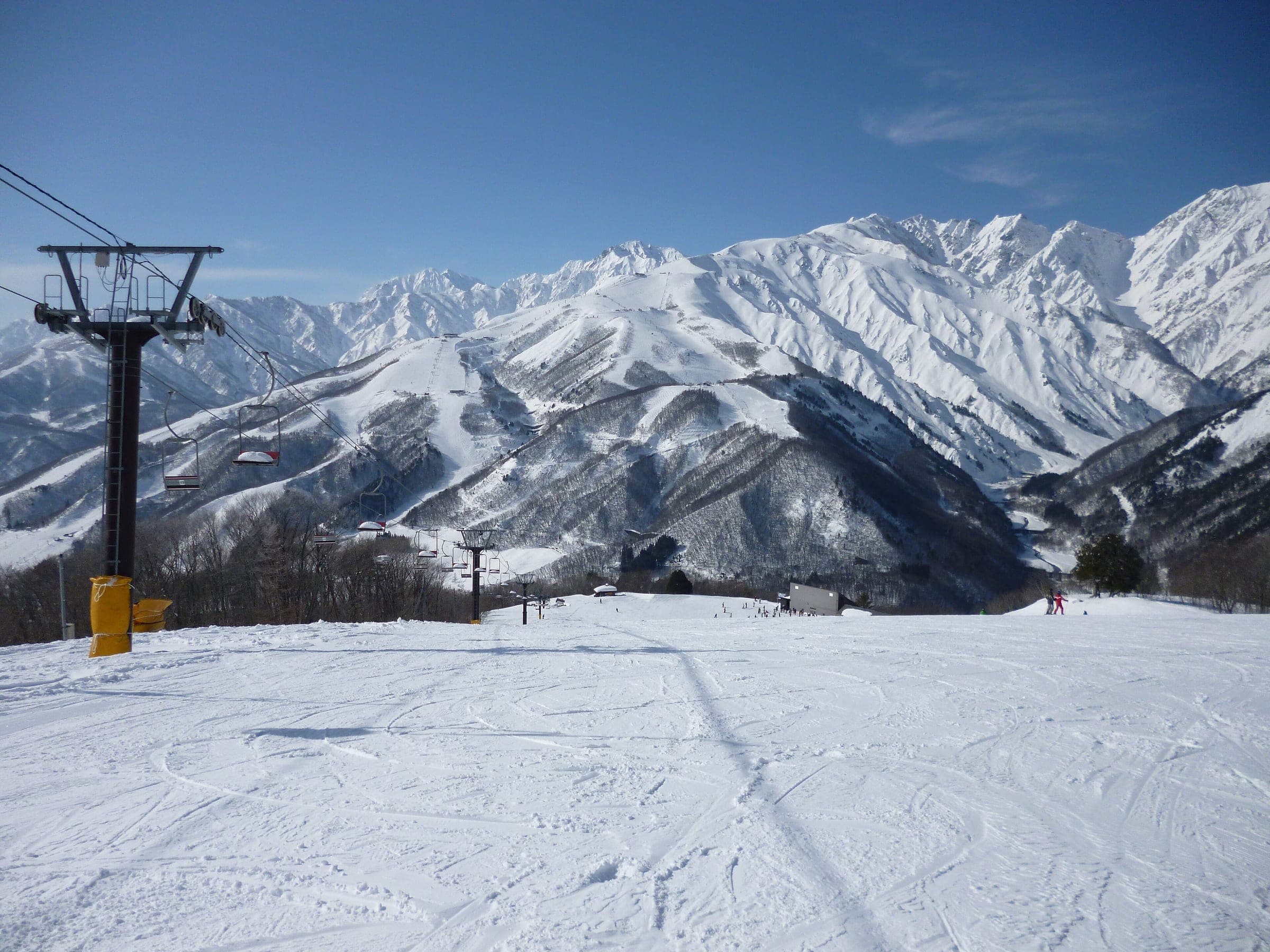
Practical guide · 8 min read
Should you ski Hakuba or Niseko?
Hakuba suits riders who want big alpine vertical and ten resorts on one ticket, a train ride from Tokyo. Niseko suits riders who want four linked resorts, lift-served gates under one set of rules and lights on every evening.
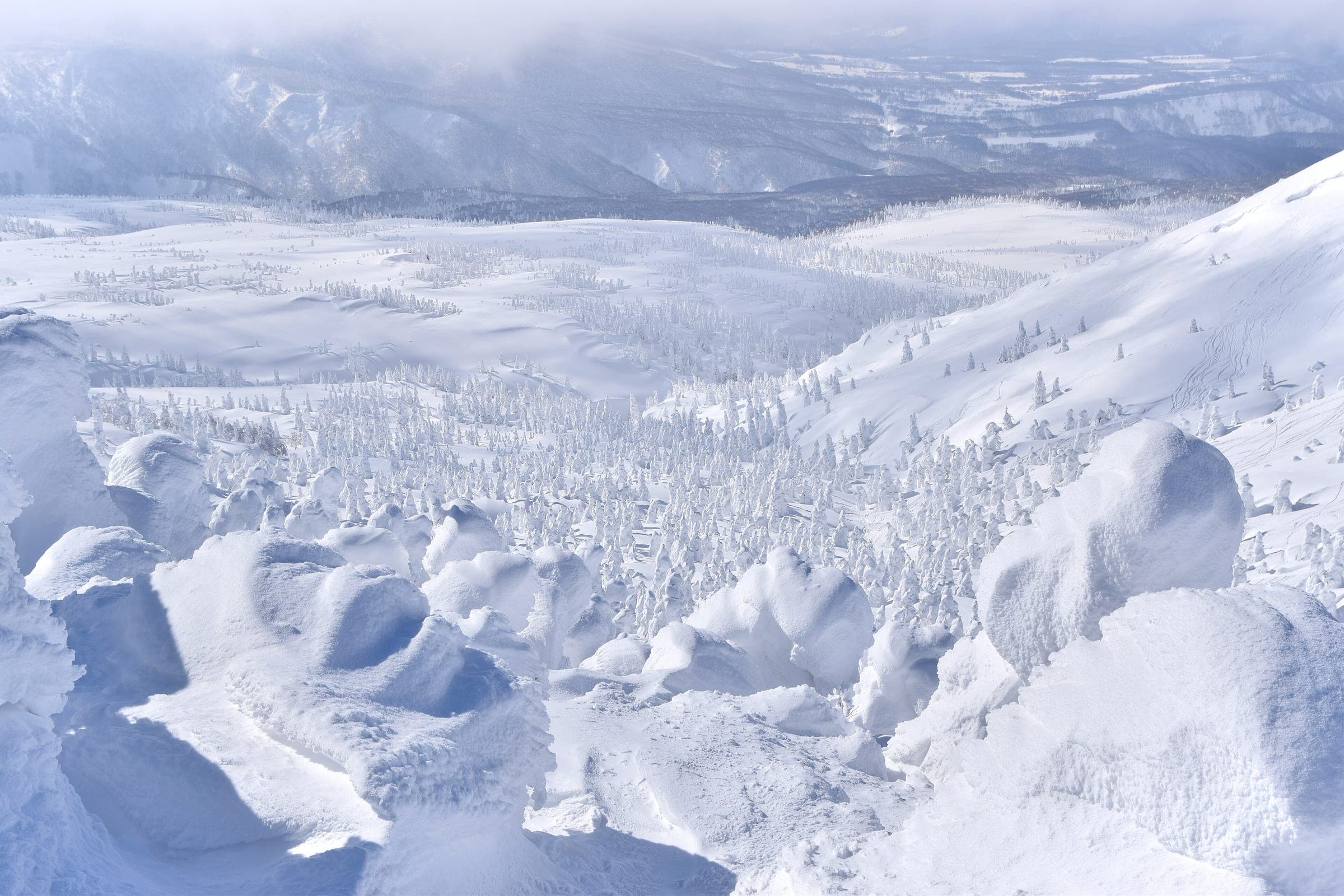
Practical guide · 10 min read
How do backcountry gates and rescue costs work at Japan's ski resorts?
Japanese resorts let riders out only through designated gates once a climbing plan is filed, and every resort here that publishes a rescue rule bills the rider. Zao bans riding off its courses altogether.