Perry Road
ペリーロード34°40′ N 138°57′ EOld town1854 (Perry's marches to Ryosen-ji);…
Perry Road in Shimoda follows the Hiraname River to Ryosen-ji, the temple where the shogunate and Commodore Perry signed the Shimoda Treaty in 1854, and it suits an unhurried evening walk under willows and gas lamps; the lane has no parking, so come by train or leave the car at the free car park of Michi-no-Eki Kaikoku Shimoda Minato.
Photo Fumihiko Ueno · Wikimedia Commons · CC BY 3.0 and others, credited in the gallery
Visiting with care · Open to visitors
Guided walks are booked by form at least two weeks ahead, or by phone up to 16:00 the day before. The association takes no guide bookings during the Kurofune Matsuri on the third weekend of May, on weekends during the June hydrangea festival, in August or from 28 December to 5 January.
- There is no parking on Perry Road; it lies about 15 minutes on foot from Izukyu-Shimoda Station.
- Ryosen-ji at the end of the lane is a working temple and a nationally designated cultural property, so treat its main hall as a place of worship as well as the room where the treaty was signed.
- Many of the namako-kabe houses are homes and working shops, so take photos from the lane and keep doorways clear.
Related places
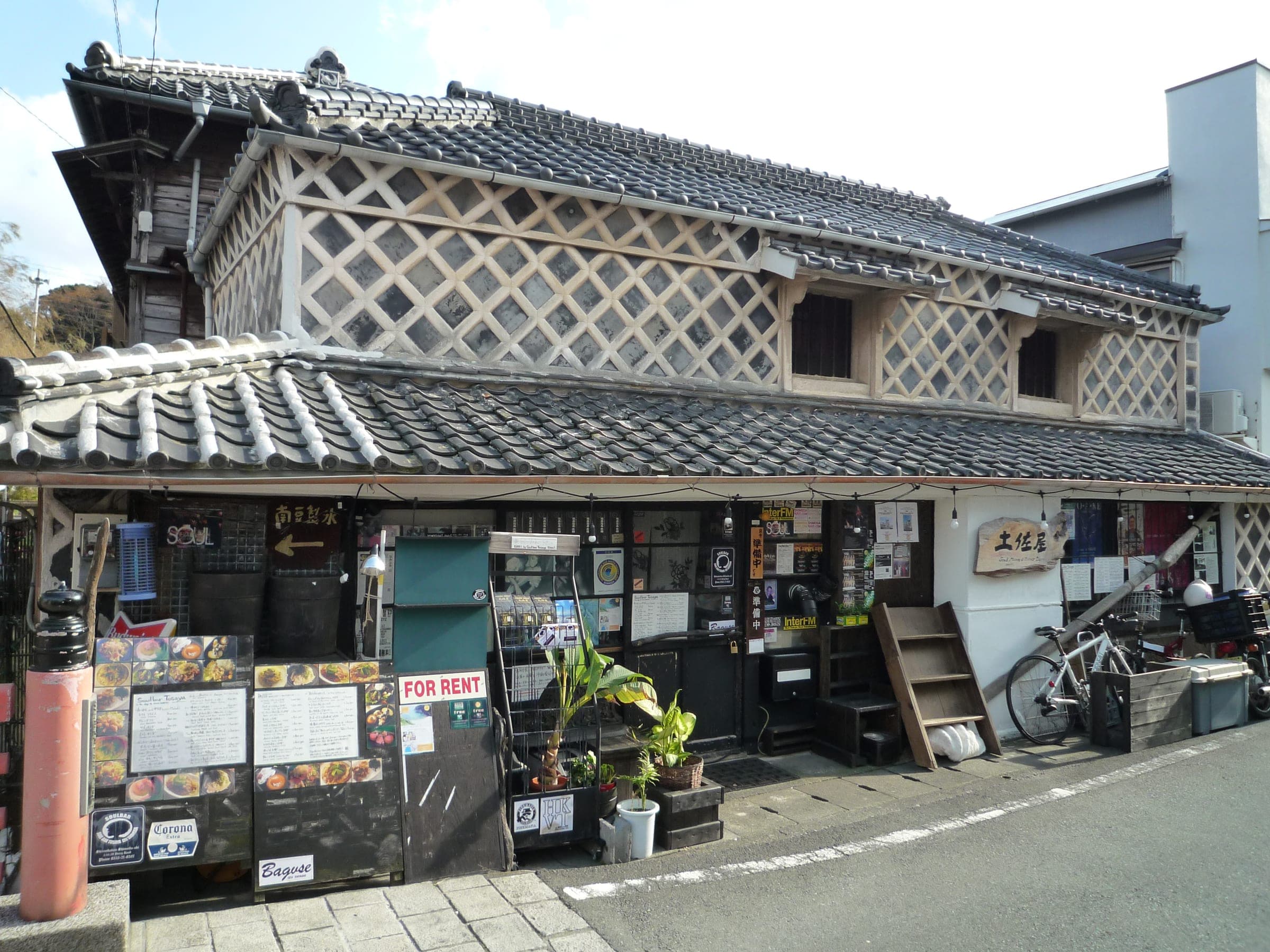
Perry's sailors marched this way to Ryosen-ji more than once while they negotiated the Shimoda Treaty, the 13 supplementary articles to the Kanagawa Treaty. On the first day of talks, 13 May 1854 by the old calendar, about 300 sailors with fixed bayonets paraded behind four cannon and a band, to the astonishment of the town. The treaty was signed in Ryosen-ji's main hall on 22 May, and the Japanese delegates are said to have sat on stacked tatami so their eyes met those of the Americans in chairs.
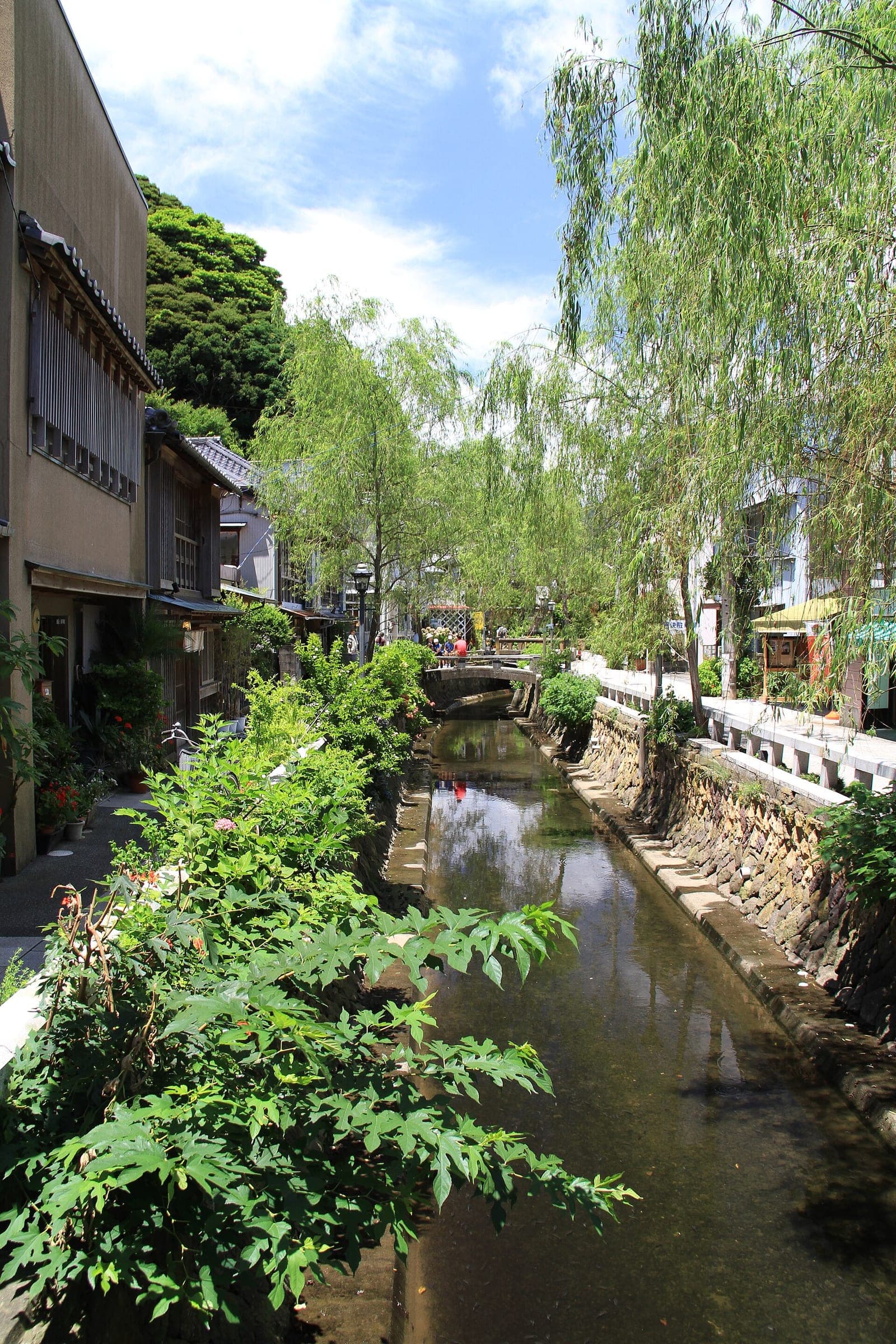
The lane keeps the look of Shimoda's old pleasure quarter from the days when songs counted three thousand ships in and out of the port. Stone paving runs beside the Hiraname River under a line of willows, with stone balustrades and gas lamps. The houses use namako-kabe, walls of flat tiles set in raised white plaster joints that look like sea cucumbers, and Izu stone, which is soft to carve and resists fire. Most of them date from the late Edo period through Taisho. Shizuoka gave the lane its top townscape award in 1994.
Ryosen-ji keeps a treasure museum of Shimoda's history and re-enacts the treaty signing during the Kurofune Matsuri each May. Choraku-ji, where the Japan–Russia treaty was signed, and Shimoda Park, known for its hydrangea festival, sit in the same district.
Worth knowing
- Walk it after dark as well, when the gas lamps light the stone paving.
- Book the one-hour guided walk two weeks ahead through Shimoda's tourism association; in summer heat the association runs only the one-hour courses.
Quick answers about Perry Roadよくある質問
Why is it called Perry Road?
Commodore Perry and his men marched along this lane to Ryosen-ji in 1854 to negotiate the Shimoda Treaty, which was signed in the temple's main hall on 22 May.
How far is Perry Road from Shimoda Station?
Shimoda city puts Perry Road about 15 minutes on foot from Izukyu-Shimoda Station. There is no parking on the lane.
Can you visit Perry Road?
Open to visitors. There is no parking on Perry Road; it lies about 15 minutes on foot from Izukyu-Shimoda Station.
What are the opening hours of Perry Road?
Perry Road is open perry Road is a public lane open at all hours. The gas lamps along it light the paving after dark.
How should you behave at Perry Road?
At Perry Road: Ryosen-ji at the end of the lane is a working temple and a nationally designated cultural property, so treat its main hall as a place of worship as well as the room where the treaty was signed. Many of the namako-kabe houses are homes and working shops, so take photos from the lane and keep doorways clear.
Within 12 km
Places to eat and drink nearby食
Within 12 km